

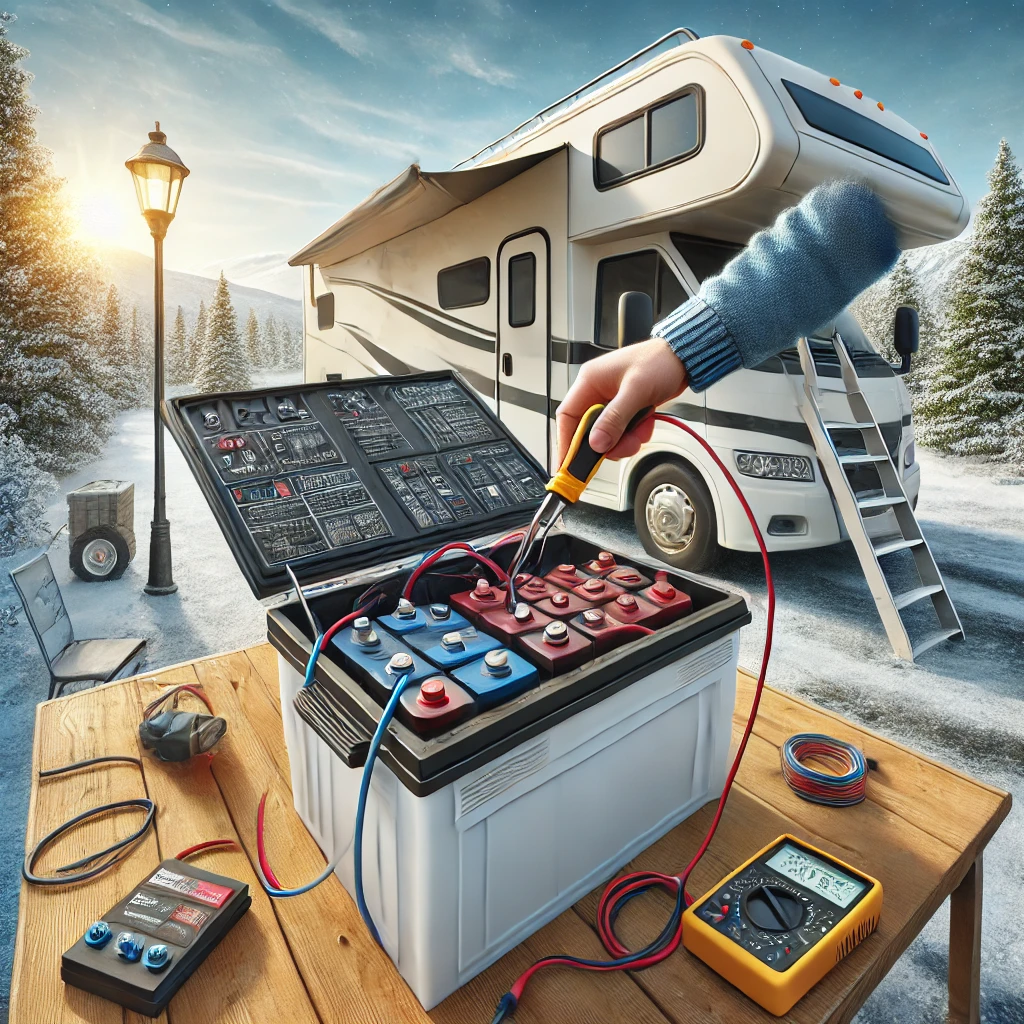
Bringing Your RV Battery Back to Life After Winter
Winter can be tough on your RV’s battery. Whether you stored your rig for the season or kept it running through the cold months, your battery has likely taken a hit. Temperature fluctuations, long periods of inactivity, and improper storage can lead to capacity loss, corrosion, or even total failure.
Before you hit the road this spring, take a moment to check if your RV battery is still in good shape. A few simple steps can save you from unexpected power issues when you’re miles away from the nearest service station.
How Winter Affects RV Batteries
-
Cold Weather Drains Battery Power
Freezing temperatures can zap your battery’s capacity. In extreme cold, lead-acid batteries can lose up to 50% of their charge, while lithium batteries shut down entirely below certain temperatures. If you didn’t keep your battery insulated or charged during winter, it might be weaker than expected. -
Sulfation Buildup
If your battery was left discharged during storage, sulfation may have formed on the plates. This reduces its ability to hold a charge and can lead to permanent damage if not addressed early. -
Corrosion and Loose Connections
Moisture buildup from condensation or melting snow can cause corrosion on the battery terminals. Loose or dirty connections can also reduce efficiency and lead to electrical malfunctions. -
Self-Discharge Over Time
Even when not in use, RV batteries naturally lose charge over time. If your battery wasn’t on a trickle charger or disconnected properly, it could be significantly drained or even dead by the time spring arrives.
How to Test and Revive Your RV Battery
✅ Step 1: Inspect for Damage
- Check for cracks, bulging, or leaks. If your battery has physical damage, it’s time for a replacement.
✅ Step 2: Clean the Terminals
- Corrosion can block proper power flow. Use a mixture of baking soda and water to clean the terminals and tighten any loose connections.
✅ Step 3: Check Voltage Levels
- Use a multimeter to test the voltage.
- Fully charged lead-acid battery: 12.6V or higher
- Needs charging: Below 12.4V
- Dead or damaged: Below 11.8V (consider replacing)
✅ Step 4: Recharge and Maintain
- If your battery is low, charge it slowly with a quality charger. Avoid rapid charging, as it can cause overheating and shorten the lifespan.
✅ Step 5: Perform a Load Test
- A load test will reveal if your battery holds a charge under usage conditions. Many auto shops and RV dealers offer this service, or you can use a load tester yourself.
When to Replace Your RV Battery
If your battery struggles to hold a charge even after proper maintenance, it may be time for a replacement. Most lead-acid batteries last 3–5 years, while lithium batteries can last over a decade with proper care.
If you need a new battery, consider your travel style. Frequent boondockers may benefit from lithium batteries due to their longer lifespan and ability to handle deep discharges. Meanwhile, casual campers may find traditional deep-cycle batteries sufficient.
Final Tips for Battery Longevity
- Keep it Charged: Never store a discharged battery. Keep it on a trickle charger if you’re not using your RV regularly.
- Insulate in Winter: Use battery blankets or remove and store batteries in a temperature-controlled space to prevent freezing.
- Check Fluid Levels (Lead-Acid Batteries): If low, add distilled water to maintain performance.
- Monitor Performance: If your lights flicker, your appliances act sluggish, or your battery drains faster than usual, it may need servicing or replacement.
Get Your RV Spring-Ready
A dead battery is the last thing you want when heading out for spring camping. With a few proactive steps, you can ensure your battery is reliable, helping you power your adventures without a hitch.
Before setting off, take time to inspect, test, and charge your battery. A little prep now will prevent frustration later—because nothing ruins an RV trip faster than realizing your home on wheels won’t start.
Time to hit the road with confidence! 🚐⚡