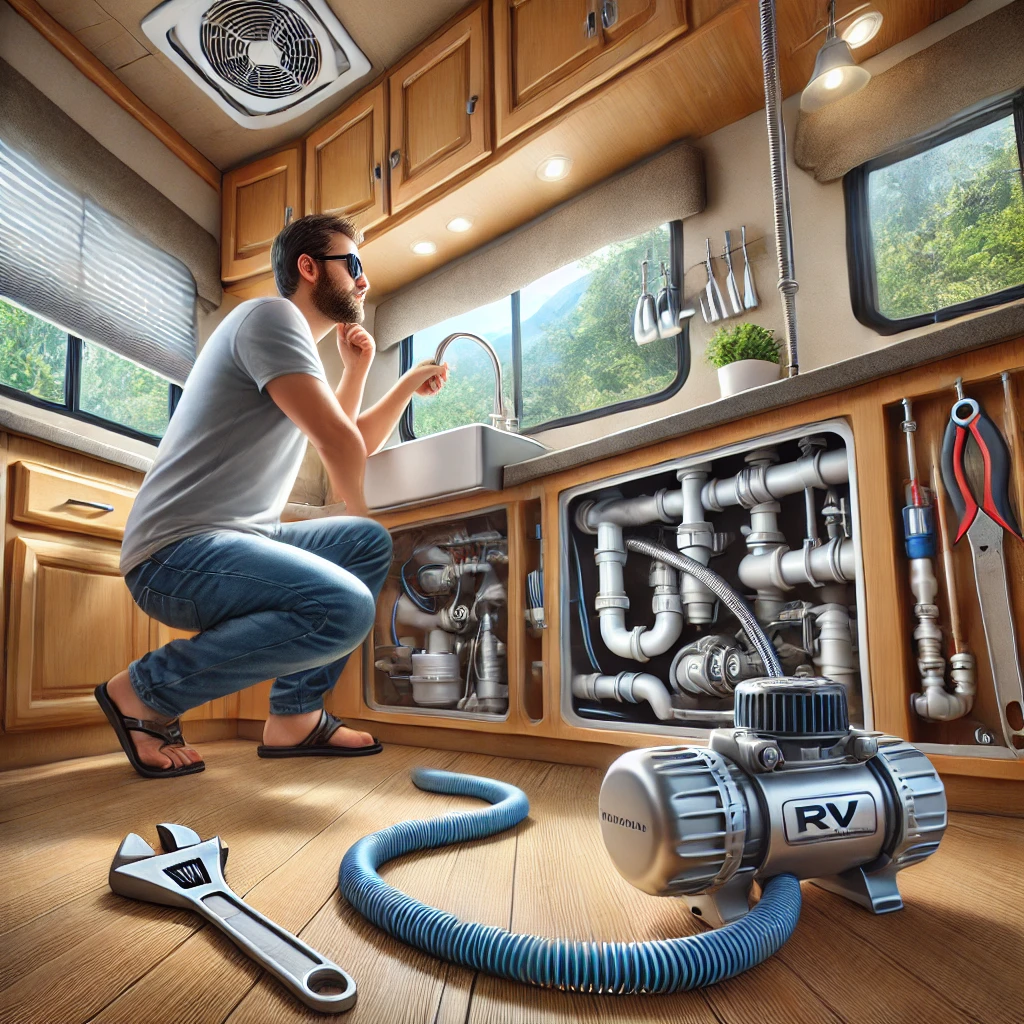
Your RV’s plumbing system is one of those things you don’t think about—until something goes wrong. A slow drain, weak water pressure, or that dreaded sewer smell can turn a dream trip into a nightmare. The key is recognizing early warning signs before a full-blown plumbing disaster strikes.
If you’ve noticed any of these five red flags, it’s time to consider upgrading your RV plumbing system before it’s too late.
1. Weak or Inconsistent Water Pressure
If your shower feels more like a trickle than a rinse, your RV’s water pressure system might be struggling.
Possible Causes:
- A clogged water filter slowing the flow.
- Kinked or undersized water lines limiting pressure.
- A failing water pump struggling to maintain flow.
- Sediment buildup in pipes reducing efficiency.
Upgrade Solutions:
✔ Replace or clean your water filter regularly.
✔ Upgrade your water pump to a higher PSI model.
✔ Install a water pressure regulator to prevent campground water from damaging your pipes.
🌟 Pro Tip: Many RVs come with small, factory-installed water pumps that barely get the job done. Upgrading to a more powerful pump (like a variable-speed water pump) can make a huge difference.
2. Foul Smells Coming from Your Sink or Bathroom
If your RV smells more like a sewer than a vacation, it’s time to investigate.
Possible Causes:
- A dry P-trap allowing odors to escape.
- A clogged or failing vent pipe causing gases to back up.
- A black tank vent issue forcing odors inside.
- Mold or mildew buildup in plumbing lines.
Upgrade Solutions:
✔ Install a vent fan in your bathroom to improve airflow.
✔ Check and clean your gray and black tank vents.
✔ Upgrade to an odor-eliminating P-trap that holds water better.
✔ Use a holding tank treatment to break down waste and control smells.
🌟 Pro Tip: Consider installing a 360-degree vent cap to pull odors out of your RV instead of letting them linger inside.
3. Slow Drains or Frequent Clogs
If your sinks or shower aren’t draining like they used to, it’s a sign that something is backing up in your system.
Possible Causes:
- Hair, grease, or food particles clogging the pipes.
- A poorly designed RV plumbing layout with inefficient drainage angles.
- A failing or clogged gray tank vent restricting water flow.
- Hard water causing mineral buildup inside pipes.
Upgrade Solutions:
✔ Switch to a flexible, high-flow drain hose for better drainage.
✔ Use an enzyme-based drain cleaner instead of harsh chemicals.
✔ Install a sink strainer to catch hair and debris before they enter the pipes.
✔ Upgrade to a better P-trap system that holds water and prevents odors.
🌟 Pro Tip: If you’re parked at a site with hard water, installing a water softener can reduce mineral buildup in your pipes over time.
4. Water Leaks (Even Small Ones!)
A tiny leak may seem harmless, but over time, it can lead to major water damage, mold, and expensive repairs.
Possible Causes:
- Loose or cracked water line fittings.
- Aging PEX tubing becoming brittle.
- Leaky faucets or showerheads wasting water.
- A failing water pump or hot water heater connection.
Upgrade Solutions:
✔ Replace old water lines with high-quality PEX tubing.
✔ Upgrade to brass or metal fittings (instead of plastic) for durability.
✔ Install a leak detection system that alerts you to leaks before they cause damage.
✔ Swap out cheap factory-installed faucets with higher-quality, leak-resistant models.
🌟 Pro Tip: If you spend time boondocking, fixing leaks is even more critical since every drop of water matters when you're off-grid.
5. Your RV’s Plumbing is Just… Old
If your RV is 10+ years old, chances are its plumbing wasn’t built to last forever. Even if you’re not seeing leaks or slow drains yet, an aging system can fail when you least expect it.
Signs Your Plumbing System is Aging:
- Cracking or brittle pipes from years of expansion and contraction.
- Rust or corrosion on fittings or water heater connections.
- Old-style plumbing fixtures that waste water and clog easily.
Upgrade Solutions:
✔ Replace aging pipes and fittings before they fail.
✔ Upgrade to an energy-efficient tankless water heater for endless hot water.
✔ Install quick-connect plumbing fittings for easier maintenance.
✔ Consider upgrading to a composting toilet to reduce black tank plumbing issues.
🌟 Pro Tip: If your RV still has plastic faucets and fixtures, upgrading to residential-quality components will improve both durability and water efficiency.
Final Thoughts: Upgrade Before It’s Too Late!
Ignoring plumbing issues in your RV can lead to messy, expensive, and trip-ruining problems. By keeping an eye out for weak water pressure, slow drains, leaks, odors, and aging components, you can upgrade your system before disaster strikes.
Quick Recap: 5 Signs Your RV Plumbing Needs an Upgrade
✔ Weak water pressure – Time for a better pump or regulator.
✔ Bad smells – Check vent pipes, traps, and black tank systems.
✔ Slow drains & clogs – Upgrade to high-flow drain lines.
✔ Water leaks – Replace aging pipes and fittings.
✔ Old plumbing system – Time for a full refresh.
🚐 Have you upgraded your RV plumbing? Share your best tips in the comments!