Transitioning to full-time RV living is exciting, but the first month can be overwhelming. You’re adjusting to a smaller space, learning how everything works, and figuring out a new routine—all while constantly moving.
The good news? With the right mindset and preparation, you can avoid common mistakes, stay comfortable, and fully embrace the RV lifestyle. Here’s how to survive—and thrive—during your first month on the road.
1. Give Yourself Time to Adjust
The biggest mistake new RVers make is trying to do too much, too fast.
What to Expect in the First Month:
✔ Learning how your RV systems (electricity, water, propane) work
✔ Adjusting to small-space living
✔ Understanding campsite setup and breakdown
✔ Figuring out where to dump tanks, get water, and park overnight
✔ Dealing with unexpected maintenance issues
How to Make It Easier:
- Slow down. Start with short trips and longer stays at each location.
- Give yourself grace. Things will go wrong—expect it, and roll with it.
- Don’t overpack. You don’t need as much as you think.
🌟 Pro Tip: Plan a “shakedown trip” before going full-time—a short practice run to test your setup.
2. Plan (But Don’t Overplan) Your Route
New RVers often try to see too much too quickly. The reality? Constantly moving is exhausting.
How to Avoid Travel Burnout:
✔ Stay at least a few days in each place – Give yourself time to settle.
✔ Use a travel app – Apps like Campendium or RV LIFE Trip Wizard help plan stops.
✔ Know where you’ll sleep each night – Have a backup plan in case a campground is full.
✔ Factor in drive time – Limit travel to 200-300 miles per day for a stress-free pace.
🌟 Pro Tip: Plan your first few stops in advance, then stay flexible after that.
3. Master RV Setup & Breakdown Routines
Setting up and tearing down camp gets easier with practice, but the first few times can feel overwhelming.
RV Setup Checklist:
✅ Park on a level site (use leveling blocks if needed).
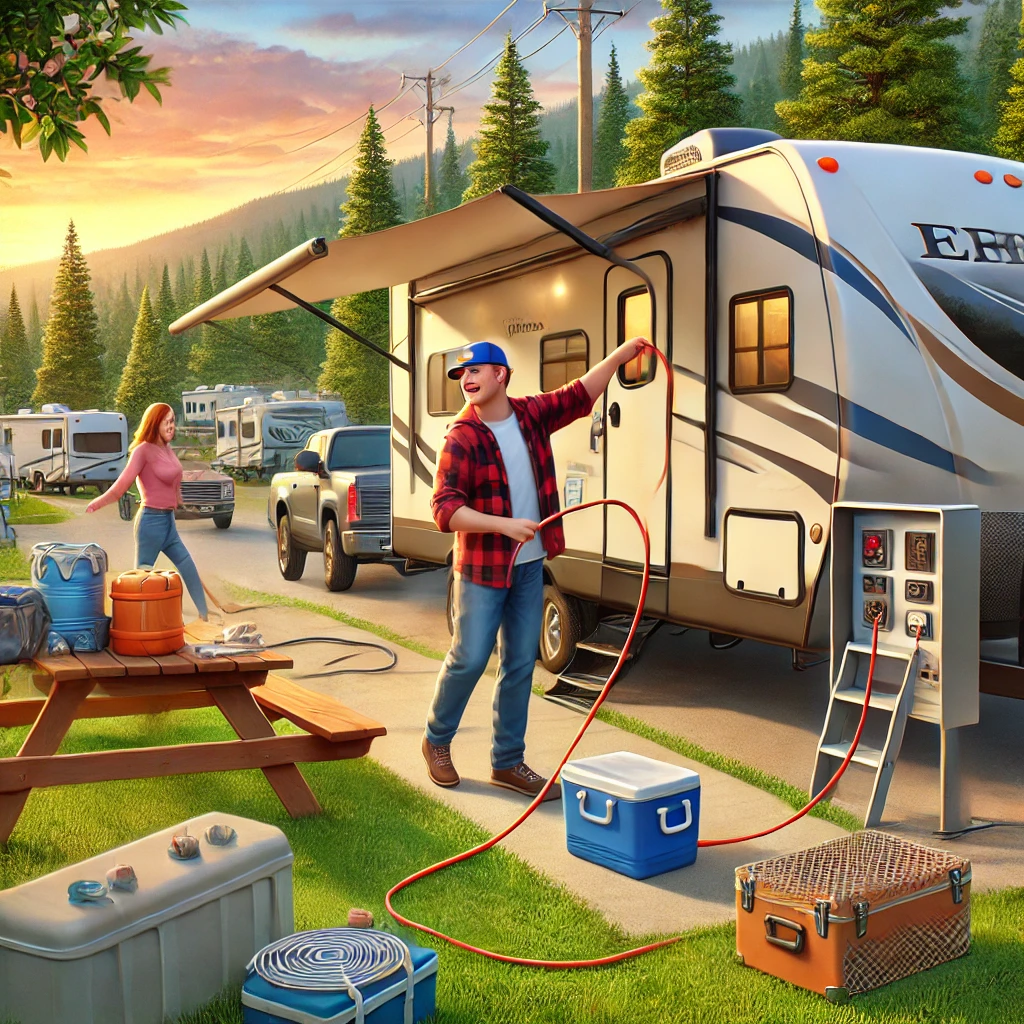
✅ Connect electric, water, and sewer hookups.
✅ Extend slides and awnings carefully.
✅ Secure stabilizer jacks and wheel chocks.
✅ Set up camp chairs, rugs, and outdoor gear.
RV Breakdown Checklist:
✅ Dump tanks properly before leaving (black first, then gray).
✅ Turn off propane and check that everything inside is secure.
✅ Retract slides & awnings fully before driving.
✅ Check tire pressure before hitting the road.
🌟 Pro Tip: Use a checklist to avoid forgetting anything (especially at first).
4. Learn the Basics of RV Systems
You don’t need to be an expert, but understanding the essentials will save you frustration.
Key RV Systems to Know:
✔ Electricity – Know how to connect to 30-amp or 50-amp power. Learn what you can run at the same time.
✔ Water – Learn how to connect fresh water and use a pressure regulator.
✔ Sewer – Know how to dump tanks properly and use RV-safe toilet paper.
✔ Propane – Understand how propane powers your stove, fridge, and water heater.
🌟 Pro Tip: Keep a basic tool kit on hand for quick fixes.
5. Get Comfortable with RV Maintenance
Your RV is your home now—keeping it maintained will prevent costly repairs.
Basic RV Maintenance Must-Knows:
✔ Check tire pressure regularly – Prevents blowouts.
✔ Inspect seals and seams – Avoids leaks.
✔ Keep up with oil changes and engine maintenance (for motorhomes).
✔ Clean and flush holding tanks – Keeps odors away.
🌟 Pro Tip: Watch YouTube tutorials or join RV Facebook groups for troubleshooting tips.
6. Stick to a Budget & Track Expenses
Your first month will reveal unexpected costs. Tracking spending helps you adjust to your new financial reality.
Biggest Expenses to Watch:
💰 Campground fees – Can range from $10 to $100+ per night.
💰 Fuel – Costs depend on how much you move.
💰 RV maintenance & repairs – Things break. Expect it.
💰 Food – Grocery costs may go up if you’re not meal planning.
How to Stay on Budget:
✔ Use discount camping memberships (Passport America, Thousand Trails, KOA).
✔ Mix paid campgrounds with boondocking (free camping on public lands).
✔ Cook meals in your RV instead of eating out.
🌟 Pro Tip: Apps like GasBuddy help find the cheapest fuel along your route.
7. Find Reliable Internet & Cell Service
If you’re working from the road or need reliable internet, don’t rely on campground Wi-Fi.
Best Options for RV Internet:
📡 Cellular hotspots – AT&T, Verizon, and T-Mobile offer mobile internet plans.
📡 Starlink for RVs – A satellite internet option for remote camping.
📡 Public Wi-Fi backups – Coffee shops, libraries, and truck stops.
🌟 Pro Tip: Use coverage maps (like OpenSignal or CellMapper) to check service in your destination before you go.
8. Be Ready for Unexpected Challenges
Even with the best planning, things will go wrong. The key is staying flexible and patient.
Common First-Month Challenges:
🚧 Getting lost – GPS isn’t perfect; always have a backup map.
🚧 Forgetting to secure something inside – Items will shift during travel.
🚧 Running out of propane or water – Always check before boondocking.
🚧 Dealing with RV park rules – Every campground has different policies.
🌟 Pro Tip: If something goes wrong, take a deep breath—every RVer has been there.
9. Connect with the RV Community
One of the best parts of RV life is the welcoming community.
Ways to Meet Other RVers:
✔ Attend campground social events.
✔ Join Facebook groups or RV forums.
✔ Use apps like RVillage or Meetup to find travelers near you.
✔ Strike up conversations at dump stations, laundromats, or campfires.
🌟 Pro Tip: RVers love to help—don’t be afraid to ask questions!
Final Thoughts: Your First Month is Just the Beginning
The first month of full-time RVing is a learning curve, but it’s also an adventure. With patience, flexibility, and a willingness to learn, you’ll gain the skills and confidence to make the most of your new life on the road.
Quick Recap: How to Survive Your First Month as a Full-Time RVer
✔ Take it slow – Don’t rush your travels.
✔ Plan basic stops, but stay flexible.
✔ Learn RV systems – Power, water, propane, and waste.
✔ Stick to a budget – Campground fees and fuel add up fast.
✔ Check tire pressure and do regular maintenance.
✔ Find reliable internet if working remotely.
✔ Be ready for unexpected problems – They will happen.
✔ Meet other RVers – The community is your best resource.
🚐 What’s your biggest question about full-time RVing? Let us know in the comments!