
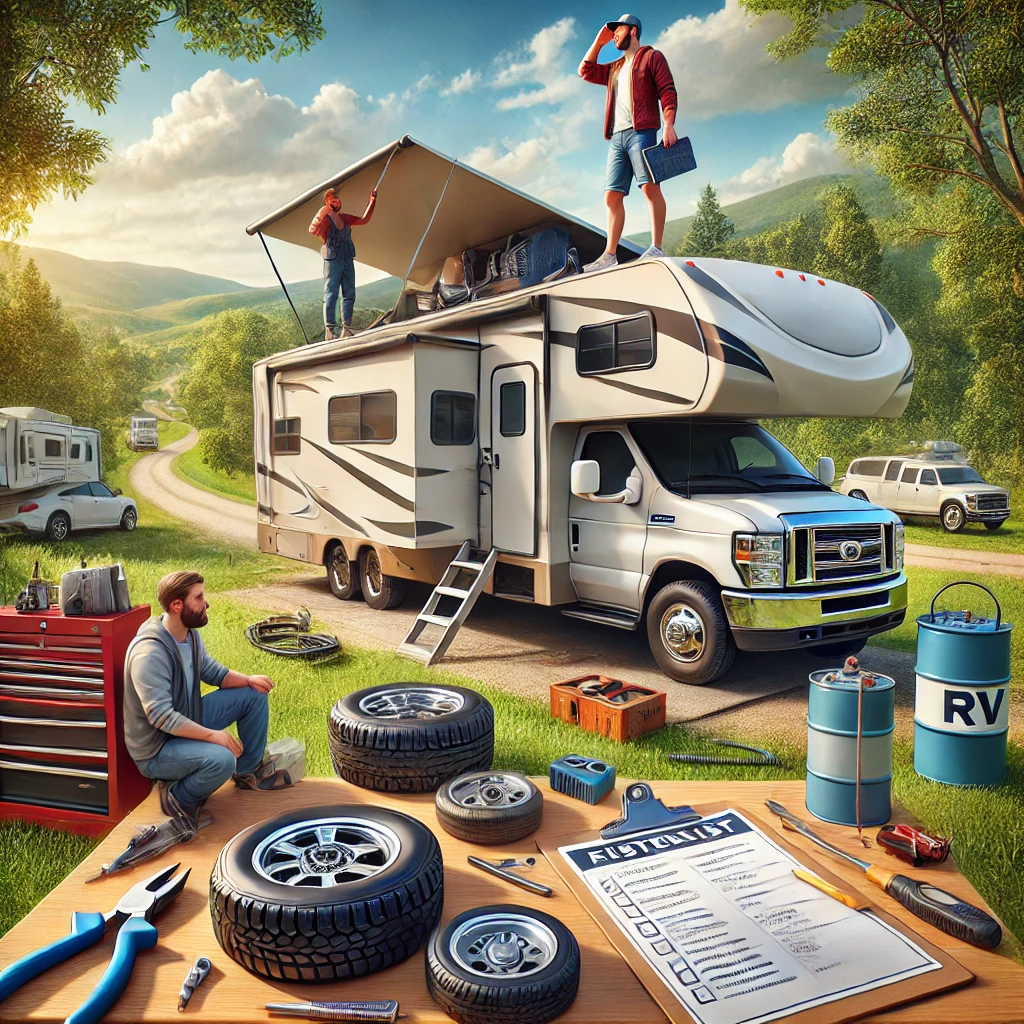
Buying a used RV can be a great way to save money, but even the best deals come with a few hidden issues. Before you hit the road, it’s important to inspect, repair, and upgrade key systems to prevent unexpected breakdowns.
Whether your used RV is a few years old or a vintage fixer-upper, here’s what you should fix first to ensure a safe and smooth journey.
1. Inspect & Repair the Roof (Leaks Are Costly!)
The roof is one of the most vulnerable parts of an RV. Even small cracks in the seals or caulking can lead to serious water damage, mold, and rot.
What to Do:
✔ Climb up and inspect for cracks, soft spots, or water stains inside and out.
✔ Check roof seams, vents, and skylights for old or peeling sealant.
✔ Apply self-leveling RV sealant to any problem areas.
✔ Consider a roof treatment if the material is aging or dried out.
🌟 Pro Tip: Even if you don’t see leaks now, re-sealing the roof can prevent costly water damage down the road.
2. Check & Upgrade the Tires (Age Matters More Than Tread)
RV tires don’t wear out the same way car tires do. Even if they look good, they may be too old and brittle to be safe.
What to Do:
✔ Check the DOT code on the sidewall – If the tires are over 5-7 years old, replace them.
✔ Look for cracks, bulges, or dry rot.
✔ Ensure proper tire pressure—underinflated tires are a major cause of blowouts.
✔ Upgrade to high-quality, load-rated tires suited for your RV’s weight.
🌟 Pro Tip: If your used RV sat for long periods, the tires may have developed flat spots or dry rot—replace them before hitting the road.
3. Test & Sanitize the Water System
Used RVs often have leftover water sitting in the pipes, which can lead to bacteria, mold, or foul smells. Before using the system, give it a full inspection and sanitization.
What to Do:
✔ Sanitize the fresh water tank with a bleach solution.
✔ Check for leaks in plumbing connections and under sinks.
✔ Replace old water filters—or install a new water filtration system.
✔ Inspect the water heater for rust, leaks, or a failing anode rod.
🌟 Pro Tip: If the RV has PEX plumbing, check for cracks or loose fittings, especially if it was stored in freezing temperatures.
4. Inspect & Maintain the RV Electrical System
A failing battery or damaged wiring can cause serious problems when traveling. Checking the electrical system ensures you won’t be left in the dark.
What to Do:
✔ Test the house battery—if it’s old or not holding a charge, replace it.
✔ Inspect wiring for corrosion or loose connections.
✔ Test all outlets, lights, and appliances.
✔ Upgrade to an RV surge protector to prevent electrical damage.
✔ Consider replacing old incandescent bulbs with LED lights for better efficiency.
🌟 Pro Tip: If the RV still has original lead-acid batteries, consider upgrading to AGM or lithium batteries for better performance and lifespan.
5. Service the RV Brakes & Suspension
If your brakes or suspension fail, you could be in serious trouble on the road. Since used RVs often sit unused, brake components can rust, seize, or wear down.
What to Do:
✔ Have a mechanic check the brake pads, rotors, and wheel bearings.
✔ Test the emergency brake to ensure it engages properly.
✔ Check shocks and suspension components—if they’re worn, replace them.
✔ If the RV has air brakes, inspect the air system for leaks.
🌟 Pro Tip: If towing a travel trailer, don’t forget to inspect the trailer brakes and wheel bearings—they need servicing too!
6. Inspect & Clean the Holding Tanks (Before You Need Them!)
If the previous owner didn’t properly maintain the gray and black tanks, you could end up with clogs, odors, or even a sewage backup.
What to Do:
✔ Use an enzyme-based tank cleaner to break down old waste buildup.
✔ Inspect the dump valves—if they stick or leak, replace them.
✔ Upgrade to a clear sewer elbow to monitor flow when dumping.
✔ Check for leaks in the gray and black tank connections.
🌟 Pro Tip: If your RV still has manual twist valves, consider upgrading to electric dump valves for added convenience.
7. Test the Propane System (Leaks Can Be Dangerous!)
Propane powers many RV essentials—the stove, water heater, and fridge—but a leak can be dangerous.
What to Do:
✔ Turn on the propane system and test for leaks using a soapy water spray (bubbles = leaks).
✔ Inspect the regulator and hoses for cracks or damage.
✔ Test all propane appliances to ensure they ignite properly.
✔ Consider installing a propane leak detector for safety.
🌟 Pro Tip: If the fridge runs on propane and electric, test both modes to ensure it cools properly.
8. Check & Upgrade the RV Roof Ventilation
Poor ventilation can lead to moisture buildup, mold, and stale air. Many factory-installed roof vents are basic models that don’t circulate air well.
What to Do:
✔ Open all vents and check for cracks, leaks, or sun damage.
✔ Upgrade to high-flow vent fans for better airflow.
✔ Install vent covers to allow air circulation even when it’s raining.
🌟 Pro Tip: If your used RV has musty smells, improving ventilation can help clear it out.
Final Thoughts: Make Your Used RV Road-Ready
Buying a used RV is exciting, but skipping key maintenance can lead to unexpected (and expensive) problems. Tackling these essential fixes before hitting the road will ensure a safer and more enjoyable RV experience.
Quick Recap: What to Fix First in a Used RV
✔ Inspect and reseal the roof – Prevent water damage.
✔ Check the tires – Replace if over 5-7 years old.
✔ Sanitize the water system – Remove bacteria and odors.
✔ Test the electrical system – Check the battery, outlets, and wiring.
✔ Service the brakes & suspension – Ensure safe stopping power.
✔ Inspect the holding tanks – Clean and check dump valves.
✔ Test the propane system – Look for leaks and damaged hoses.
✔ Upgrade the ventilation system – Prevent mold and improve airflow.
🚐 What’s the first thing you fixed on your used RV? Share your experience in the comments!