

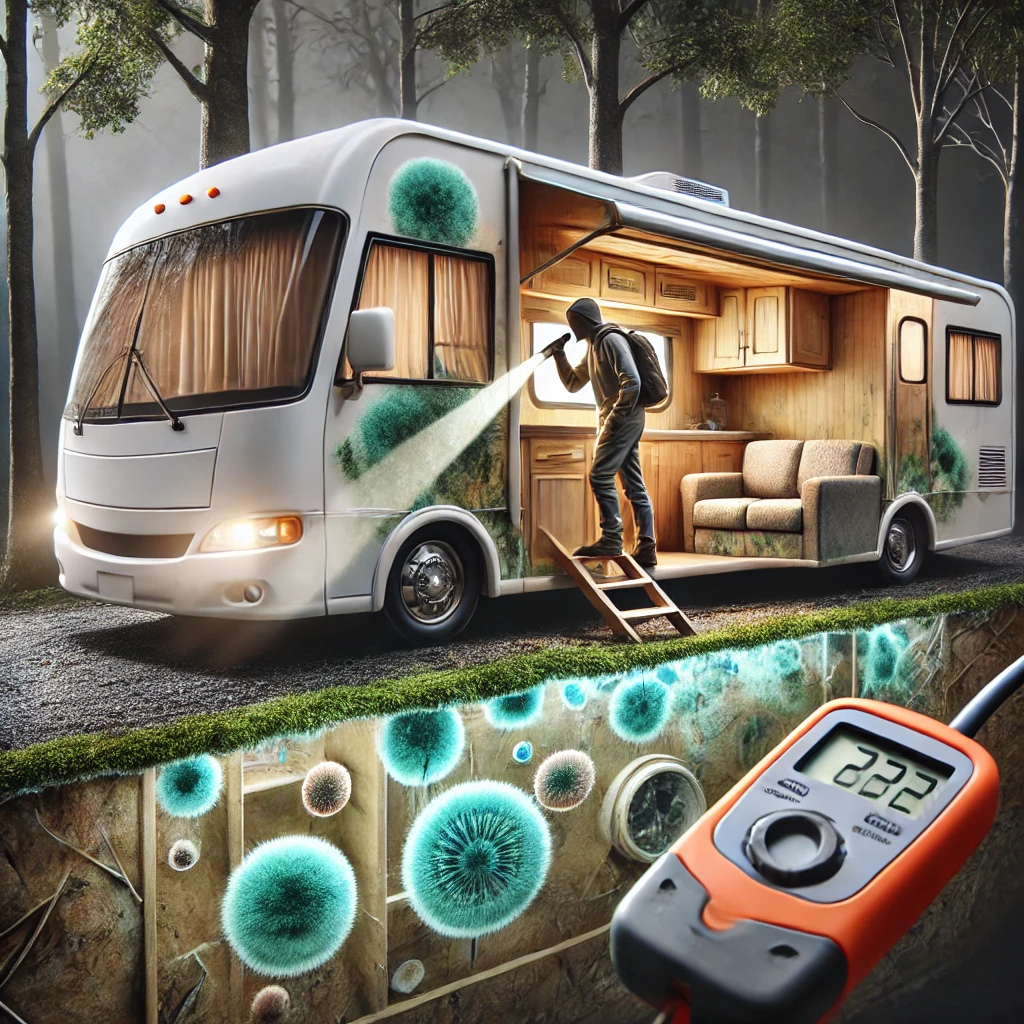
That Musty Smell Might Mean Trouble
You’ve found a used RV that looks like the perfect fit—good price, clean interior, and well-maintained. But as soon as you step inside, there’s a faint musty odor. Is it just an old RV smell, or could it be a sign of something worse?
Mold is one of the biggest hidden dangers in used RVs. It thrives in damp, poorly ventilated spaces and can hide in walls, under carpets, and inside cabinets. Left unchecked, mold can damage the RV’s structure and even cause health issues. So before you sign on the dotted line, here’s how to detect and deal with hidden mold in a used RV.
Signs of Hidden Mold in an RV
Mold doesn’t always show itself in obvious ways, like black spots on walls. Instead, it often hides in unseen places. Here’s how to spot the warning signs:
1. The Smell Test
- If the RV has a musty, damp odor—even after airing it out—there’s a good chance mold is present.
- Some sellers might try to cover up the smell with air fresheners or cleaning sprays, so be cautious if you smell strong artificial scents.
2. Check for Water Stains
- Look at the walls, ceiling, and around windows for yellow or brown stains.
- Water stains often indicate past or present leaks, which are prime spots for mold growth.
3. Inspect the Flooring
- Soft spots in the floor near sinks, showers, or entryways could mean water damage underneath.
- Pull back carpet edges if possible—mold often hides underneath.
4. Feel the Walls
- Press gently on the walls, especially near windows and slide-outs. If they feel soft or spongy, moisture damage could be present.
- Peeling wallpaper or bubbling paint are other signs of trapped moisture.
5. Check Hidden Spaces
- Open cabinets, closets, and storage compartments, especially near plumbing areas.
- Use a flashlight to inspect corners and behind appliances for any black or greenish mold spots.
6. Look at the Roof and Seals
- Roof leaks are a common culprit for hidden mold. Check for cracked or deteriorated sealant around vents, air conditioners, and seams.
- Inspect inside the RV where the ceiling meets the walls for discoloration or sagging.
7. Pay Attention to AC and Vents
- Turn on the RV’s air conditioning. If a moldy or damp smell comes through the vents, mold could be growing in the ducts.
How to Confirm Mold Issues
If you suspect mold but aren’t sure, here’s what you can do:
- Use a Moisture Meter – These tools can detect excess moisture in walls and floors.
- Check Underneath the RV – Sometimes, mold forms in the underbelly if water has leaked through.
- Get a Professional Inspection – If you’re serious about buying, an RV technician can help identify hidden mold issues.
What to Do If an RV Has Mold
If mold is confirmed, you have three options:
- Walk Away – If the mold is widespread, it’s not worth the risk.
- Negotiate a Lower Price – If it’s minor and you’re willing to clean it, use the mold issue to lower the asking price.
- Plan for Mold Remediation – If you already own the RV, remove any affected materials, use mold-killing cleaners, and improve ventilation.
Final Thoughts
Mold can turn an exciting RV purchase into a costly mistake. But by knowing the signs and taking the time to inspect a used RV properly, you can avoid hidden headaches down the road. If something smells off, trust your instincts—your nose might just save you thousands of dollars!