
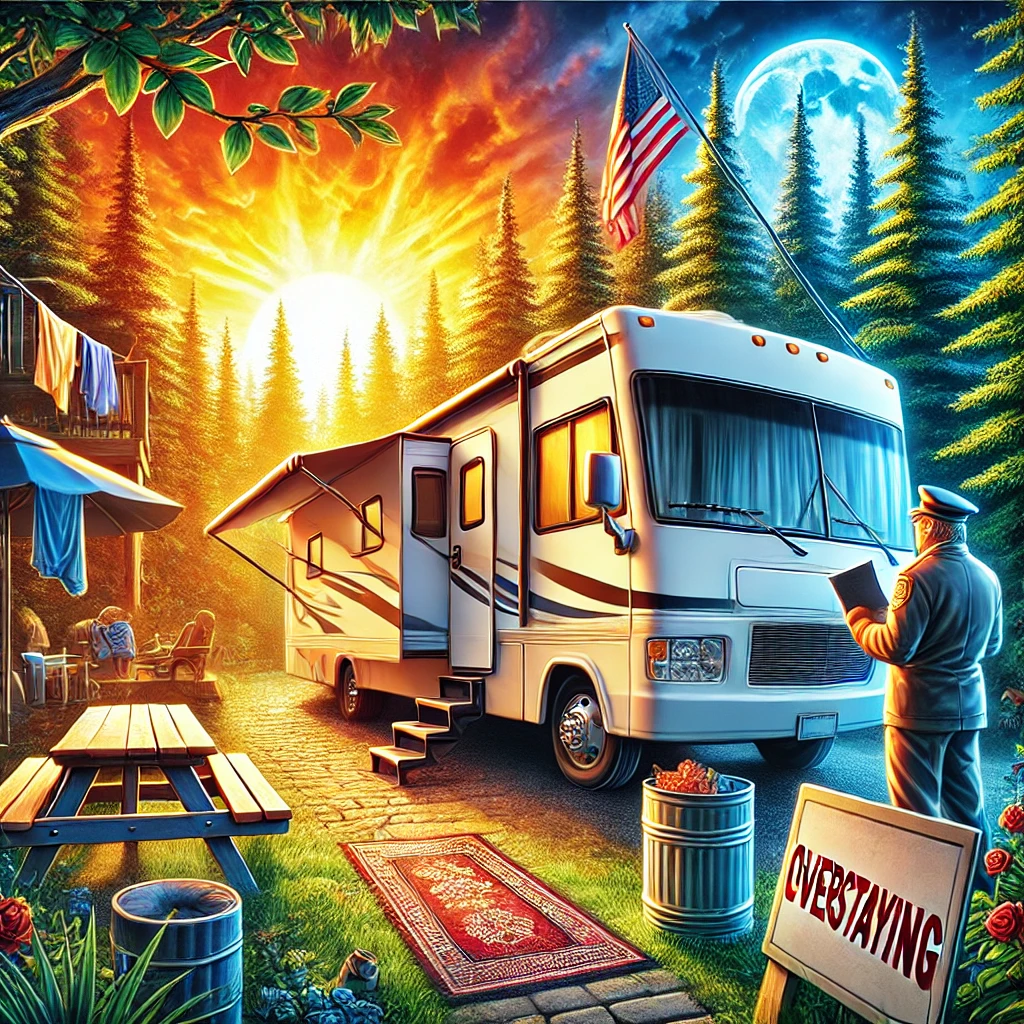
Campgrounds are a fantastic way to experience the great outdoors while enjoying the convenience of designated spots for RVs and tents. But what happens if you extend your stay beyond your reservation? Whether intentional or accidental, overstaying at a campground can come with consequences—some minor, others more serious.
From extra fees to possible legal action, here’s what you need to know about overstaying your welcome and how to handle it the right way.
What to Expect If You Overstay
-
Extra Fees & Penalties
Most campgrounds operate on a strict reservation system, especially in peak seasons. If you stay past your checkout time, you’ll likely be charged additional fees—sometimes a flat late departure fee, other times a full extra night. Some private campgrounds may even charge penalty rates, especially if you disrupt incoming reservations. -
Loss of Future Booking Privileges
Campgrounds, especially state and national parks, often track guests who violate stay limits. Repeated violations could result in being blacklisted from making future reservations at that location—or even across a broader network of parks. -
Conflicts with Incoming Campers
Your site may be reserved for another guest, and if you haven’t moved, it creates an awkward (or hostile) situation. Some campers might report you to park management, leading to staff intervention. -
Eviction by Park Rangers or Law Enforcement
For public lands and federally managed campgrounds, overstaying can lead to an official eviction. Rangers or local law enforcement may be called to escort you off the property, particularly if you ignore warnings or refuse to leave. -
Trespassing Charges
On public land, exceeding stay limits can be treated as a minor infraction, but private campgrounds have the right to press trespassing charges if someone refuses to vacate. While this is rare, ignoring repeated requests to leave could result in legal trouble. -
Additional Utility Costs
Some campgrounds with hookups monitor usage. If you stay longer than expected, you may get a bill for extra electricity, water, or dumping fees.
How to Avoid Overstaying Issues
- Set Reminders for Checkout Times – Mark your departure day on your phone or write it somewhere visible in your RV.
- Communicate with Campground Staff – If you need more time, ask about extending your stay. They might accommodate you if the site isn’t reserved.
- Know Local Campground Rules – Some locations have strict policies on length of stay, especially during peak seasons.
- Have a Backup Plan – If your stay is up and you can’t extend, have another campground or boondocking spot lined up.
Final Thoughts
Overstaying at a campground might seem harmless at first, but it can lead to fines, conflicts, and even legal issues. Whether you’re RVing or tent camping, planning ahead ensures a stress-free experience while keeping a good reputation with campground operators.
If you’re in doubt about how long you can stay, just ask. A little communication can go a long way in avoiding any unpleasant surprises.