

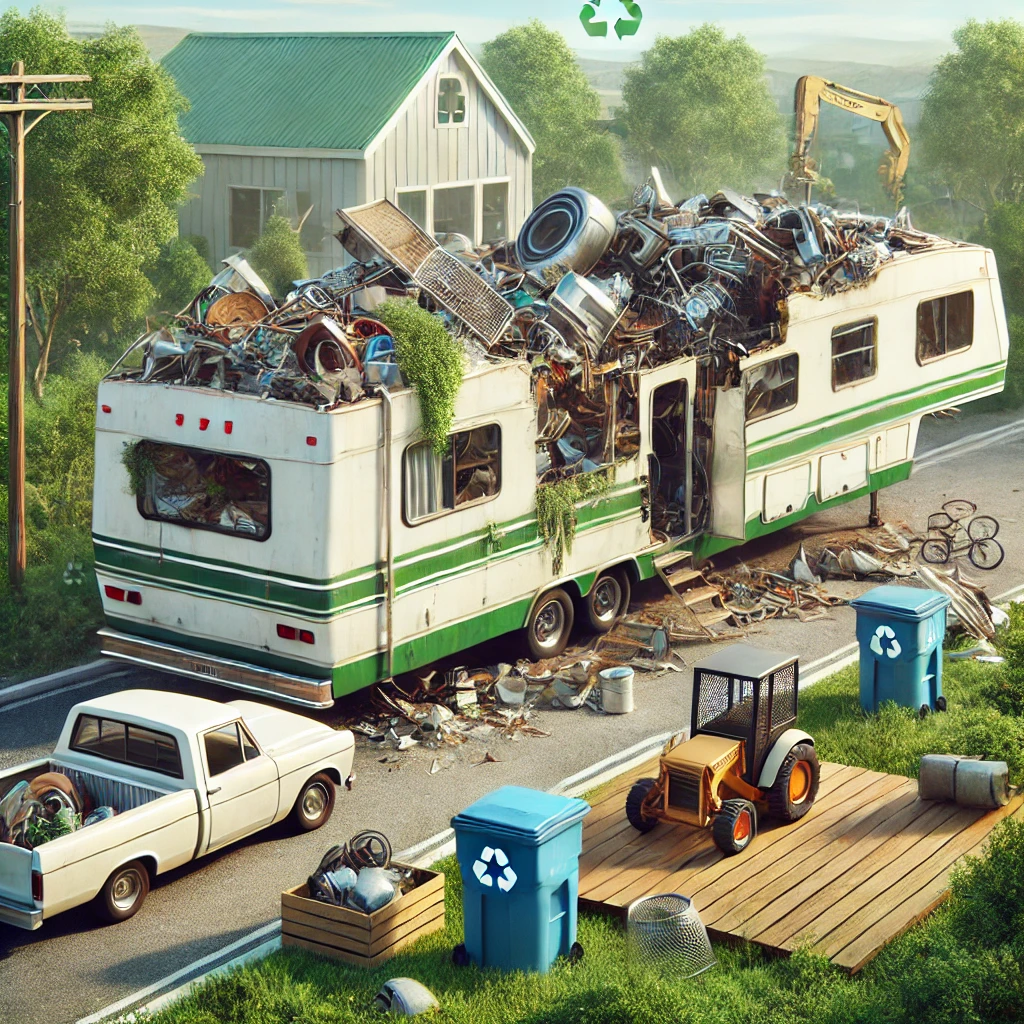
The Hidden Challenge of Retired RVs
RVs are built for adventure, but what happens when the miles catch up and it’s time to retire your rig? Unlike cars, RVs have a complex mix of materials—fiberglass, wood, metal, and plastics—that make disposal a challenge. Simply driving it to a junkyard isn’t always an option, and leaving it to rot on an abandoned lot does no favors for the environment.
With thousands of RVs reaching the end of their lifespan every year, responsible disposal and recycling are becoming increasingly important. So, what can you do when your beloved home-on-wheels is ready for its final journey?
The Lifecycle of an RV: Why Disposal Is So Difficult
Most RVs are designed to last 20-30 years with proper maintenance, but even well-kept models eventually become too costly or impractical to repair. When that happens, RV owners face a tough decision:
- Resell or donate – If the RV is still functional, it might have a second life with a new owner or as a donation to an organization.
- Strip it for parts – Some parts of an RV can be salvaged, such as appliances, generators, and metal components.
- Recycling challenges – The mix of materials in an RV makes it difficult to recycle compared to traditional vehicles.
The problem is that many RVs end up in landfills, taking up space and leaving behind a large environmental footprint. The goal is to find better solutions that minimize waste and maximize reuse.
Responsible Ways to Retire an RV
If your RV has reached the end of the road, consider these options before hauling it to the scrapyard:
1. Sell It for Parts
Even if your RV isn’t roadworthy, many of its components still have value. Salvage yards, DIY builders, and RV enthusiasts often seek:
- Engines and transmissions
- Solar panels and electrical systems
- Plumbing fixtures
- Windows, doors, and cabinetry
Listing your RV for parts on classified sites can be an easy way to let someone else give it a second life.
2. Donate It to a Good Cause
Some organizations accept old RVs for repurposing, education, or even as temporary housing for disaster relief efforts. Look for:
- Nonprofits that refurbish RVs
- Schools or training programs teaching vehicle repair
- Animal rescues or farm sanctuaries needing shelter space
3. Repurpose It for a New Use
If you have land, a retired RV can be transformed into:
- A guesthouse or Airbnb rental
- A stationary office or art studio
- A greenhouse or storage unit
By thinking creatively, your old rig can still serve a purpose long after it’s done traveling.
4. Work with an RV Recycler
Some companies specialize in breaking down RVs in an environmentally responsible way, ensuring that as much material as possible is reused or repurposed. Search for RV recycling services near you to see if this is an option.
The Future of RV Recycling
As the RV industry continues to grow, so does the need for better end-of-life solutions. Some manufacturers are beginning to explore more sustainable materials and designs that make future recycling easier. Until then, RV owners must take the initiative to retire their rigs responsibly.
When the road ends for your RV, don’t let it become an eyesore or a landfill burden. With a little planning, you can ensure that it continues to provide value—even in retirement.