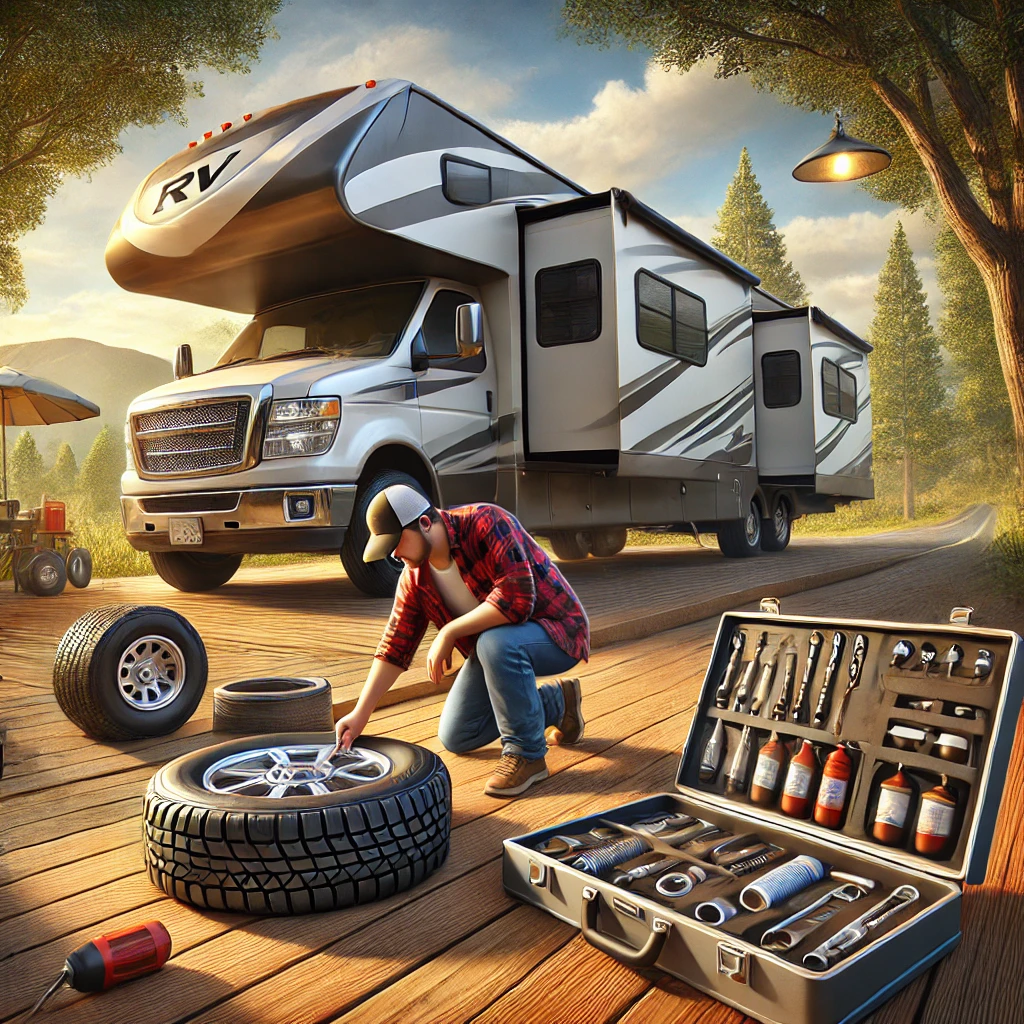
Regular maintenance is the key to keeping your RV running smoothly and avoiding costly repairs down the road. Unlike a car, an RV has a home and a vehicle combined, meaning it requires both mechanical and living space upkeep.
This guide breaks down how often you should service your RV, with a detailed maintenance schedule to help you stay on track.
Why RV Maintenance is Crucial
✔ Prevents major breakdowns – Catching small issues early saves thousands in repairs.
✔ Ensures safety – Tire failures, brake issues, or leaks can be dangerous on the road.
✔ Extends your RV’s lifespan – A well-maintained RV lasts longer and retains value.
✔ Avoids trip interruptions – The last thing you want is a breakdown in the middle of nowhere.
RV Maintenance Schedule: How Often to Service Your RV
Before Every Trip (Pre-Trip Inspection)
🚐 Mechanical Checks:
✅ Check tire pressure – Low tire pressure can lead to blowouts.
✅ Inspect tires for cracks or uneven wear – Replace if needed.
✅ Check all fluid levels – Engine oil, transmission, coolant, brake fluid, power steering.
✅ Test brakes & emergency brake – Ensure safe stopping power.
✅ Inspect the hitch & towing components – Tighten and lubricate as needed.
✅ Check all lights & signals – Headlights, taillights, and blinkers.
🏕 Living Space Checks:
✅ Inspect propane system – Check for leaks or loose connections.
✅ Test smoke & CO detectors – Replace batteries if needed.
✅ Check for water leaks – Inspect under sinks, roof seams, and windows.
✅ Test the generator – Run it for 15-30 minutes under load.
✅ Secure loose items – Prevent movement during travel.
✔ Pro Tip: Always carry a pre-trip checklist and go through it before hitting the road.
Monthly RV Maintenance
🚐 Mechanical Maintenance:
✅ Start the engine & generator – Run both to keep them in good shape.
✅ Inspect the battery terminals – Clean and tighten if needed.
✅ Check for leaks under the RV – Look for fluid drips or fuel leaks.
✅ Lubricate slide-outs & hinges – Prevents sticking and wear.
🏕 Living Space Upkeep:
✅ Run the A/C & heater – Ensures they’re working properly.
✅ Flush and sanitize the water system – Especially if you’ve been parked.
✅ Inspect roof seals & seams – Look for cracks or peeling.
✅ Deep clean the interior – Prevents mold, pests, and odors.
✔ Pro Tip: Even if you’re not using your RV often, run the engine and generator monthly to prevent battery drain.
Every 3 to 6 Months
🚐 Mechanical Maintenance:
✅ Change the engine oil & filter – Every 3,000-5,000 miles (gas) or 5,000-7,500 miles (diesel).
✅ Check the brake pads & rotors – Replace if they’re thin or worn.
✅ Inspect the suspension system – Look for shocks, struts, or bushing wear.
✅ Test the battery voltage – Replace if weak.
✅ Rotate the tires – Promotes even wear and extends lifespan.
🏕 Living Space Maintenance:
✅ Clean the water heater & remove sediment buildup.
✅ Check & reseal the roof if necessary – Prevents water damage.
✅ Inspect and clean the refrigerator coils – Improves efficiency.
✅ Lubricate door hinges, locks, and storage compartments.
✔ Pro Tip: If your RV sits for long periods, drive it every few months to keep fluids circulating and prevent seals from drying out.
Every Year (Annual Maintenance Checklist)
🚐 Mechanical Maintenance:
✅ Flush & replace coolant – Prevents overheating and corrosion.
✅ Replace the fuel filter – Ensures clean fuel delivery.
✅ Inspect the exhaust system – Check for rust or leaks.
✅ Replace air filters (engine & cabin) – Keeps air clean and prevents buildup.
✅ Check belts & hoses – Replace if cracked or worn.
✅ Have a professional RV inspection – Catch hidden problems early.
🏕 Living Space Upkeep:
✅ Reseal all windows, doors, & roof seams – Prevents leaks.
✅ Deep clean the black & gray water tanks – Avoids buildup and odors.
✅ Inspect and replace old caulking – Around showers, sinks, and toilets.
✅ Check LP (propane) system for leaks – Ensure safe operation.
✅ Test all appliances – Fridge, stove, microwave, and furnace.
✔ Pro Tip: Schedule your annual RV service before peak travel season to avoid long waits at repair shops.
Every 3-5 Years
🔧 Major Service Items:
✅ Replace all RV tires – Even if they look good, rubber weakens over time.
✅ Flush and replace transmission fluid – Extends transmission life.
✅ Check and replace roof coating if needed – Prevents leaks.
✅ Replace deep-cycle batteries (house batteries) – Usually last 3-5 years.
✅ Service the suspension system – Replace worn shocks, bushings, or springs.
✅ Replace the anode rod in the water heater – Prevents tank corrosion.
✔ Pro Tip: Even if your tires look fine, replace them every 5-7 years to prevent blowouts.
Final Thoughts: Staying on Top of RV Maintenance
Following a regular maintenance schedule is the best way to prevent costly repairs, ensure safety, and extend the life of your RV.
🔹 Before every trip: Basic checks (tires, fluids, leaks).
🔹 Monthly: Run engine, test generator, inspect roof & seals.
🔹 Every 3-6 months: Change oil, check brakes, rotate tires.
🔹 Annually: Full inspection, deep cleaning, and major servicing.
🔹 Every 3-5 years: Replace tires, roof coating, batteries, and major fluids.
🚐 What’s one RV maintenance task you never skip? Share your tips in the comments!