
Are You Moving Too Much—or Not Enough?
One of the biggest questions full-time and long-term RVers face is: How often should we move?
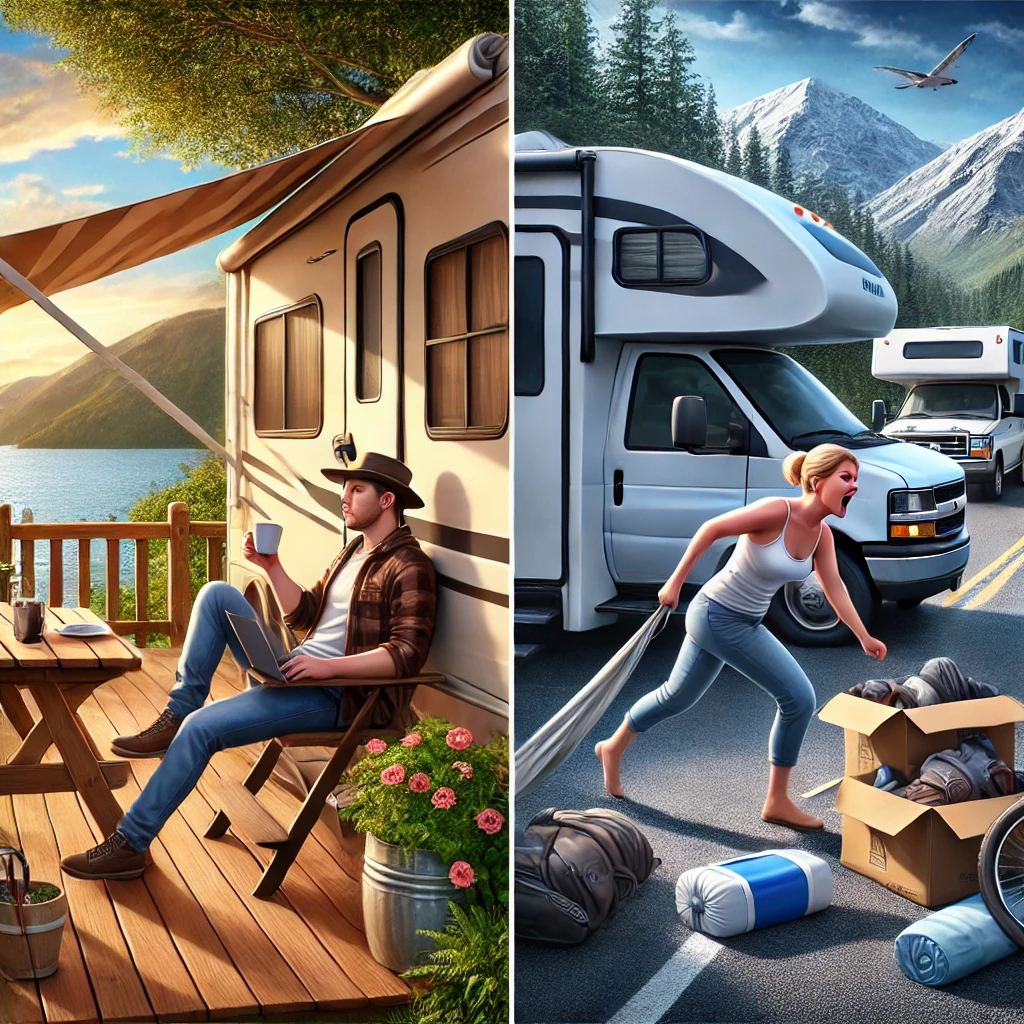
Some RVers love the thrill of a new destination every few days, while others prefer to stay put for weeks or even months. But if you move too fast, you might burn out. If you stay too long, you might start itching for the road again.
So, how do you find the right travel rhythm? It’s different for everyone, but by understanding the pros and cons of different paces, you can discover what works best for you, your lifestyle, and your adventures. 🚐✨
⏳ 1. The Most Common Travel Paces for RVers
There’s no single “right” way to RV, but most people fall into one of these categories:
🚀 The Fast Traveler (Moves Every 1-3 Days)
✔ Loves constant new scenery & adventure
✔ Sees many places in a short time
✔ Perfect for road trips & sightseeing vacations
❌ Downsides: Exhausting, expensive (fuel & campground fees), little time to relax
🚗 The Moderate Explorer (Moves Weekly or Biweekly)
✔ Balances sightseeing & downtime
✔ Perfect for seasonal travelers & digital nomads
✔ Enough time to explore without feeling rushed
❌ Downsides: Frequent set-up & tear-down, still higher fuel costs
🏡 The Slow Traveler (Moves Monthly or Seasonally)
✔ Saves money on fuel & campground discounts
✔ Forms deeper connections with places & people
✔ Less stress—feels more like “home”
❌ Downsides: Might feel “stuck,” harder to visit multiple places in a short time
🌟 Pro Tip: Some RVers switch between styles—moving fast for a few months, then slowing down when they need a break!
🚦 2. Signs You’re Moving Too Fast
If you’re always on the move, you might start noticing these red flags:
❌ You wake up tired, not excited. Constant travel = exhaustion.
❌ You forget where you were last week. If places blur together, you’re rushing.
❌ Your fuel & campground costs are adding up fast. Frequent moves cost more.
❌ You’re spending more time driving than enjoying. Travel should be fun, not a marathon.
❌ You’re skipping rest days. No downtime = travel burnout.
🌟 Pro Tip: If you feel more stressed than excited, it’s time to slow down!
🏁 3. How to Find the Right RV Travel Rhythm for You
The perfect pace depends on your personality, lifestyle, and travel goals. Here’s how to figure it out:
1️⃣ Ask Yourself These Questions:
- Do I enjoy moving often, or do I crave stability?
- Do I have work obligations that require strong Wi-Fi or long stays?
- How much driving do I actually enjoy?
- Do I want to explore cities, nature, or both?
- Am I feeling rushed—or am I getting bored?
2️⃣ Test Different Paces
- Try a fast-travel month (3-4 days per location).
- Then try a slow-travel month (2-4 weeks per location).
- Compare how you feel, how much you spend, and what you enjoy most.
3️⃣ Be Flexible
Your ideal pace might change over time. Some RVers love fast-moving summers and slow winters. Others prefer longer stays when working and shorter ones when vacationing.
🌟 Pro Tip: Let weather, fuel costs, and campground availability guide your travel rhythm!
📍 4. The 3-3-3 Rule: A Great Starting Point
A common rule among full-time RVers is the 3-3-3 Rule:
✅ Drive no more than 300 miles per day
✅ Arrive by 3 PM to avoid fatigue & stress
✅ Stay at least 3 nights in each location
Why It Works:
✔ Prevents travel burnout
✔ Allows for exploration & relaxation
✔ Reduces fuel costs & campground stress
🌟 Pro Tip: Adjust it to your needs—some RVers prefer a 2-2-2 rule or a 4-4-4 rule for even slower travel.
💰 5. The Cost Factor: How Travel Pace Affects Your Budget
🚐 More Moving = More Expenses
- Fuel Costs – Frequent long drives add up quickly.
- Campground Fees – Nightly rates are often higher than weekly or monthly rates.
🏡 Slower Travel = More Savings
- Monthly stays at RV parks offer big discounts.
- Less fuel used = more money for fun activities.
🌟 Pro Tip: If you’re on a budget, staying longer at each stop can cut costs dramatically!
🏕️ 6. Why Slowing Down Can Make Travel More Enjoyable
✔ More time to explore deeply. You get to know a place instead of just passing through.
✔ Less stress. No need to rush to the next destination.
✔ Better connections. You meet locals & fellow travelers, not just tourists.
✔ More spontaneity. Staying longer means you can discover hidden gems.
🌟 Pro Tip: Some of the best travel memories come from staying in one spot long enough to truly experience it!
🚀 Final Thoughts: Travel at Your Own Speed!
There’s no right or wrong way to RV—just the way that feels best for you. Whether you love fast-paced adventures or slow, scenic stays, the key is to find a rhythm that keeps you excited, not exhausted.
🏁 Quick Recap: Finding Your Travel Rhythm
✔ Test different paces—fast, slow, and in between.
✔ Use the 3-3-3 Rule as a starting point.
✔ Listen to your energy levels—if you’re always tired, slow down.
✔ Consider costs—moving less = saving more.
✔ Stay flexible—your pace might change with seasons, work, or lifestyle.
🚐 How often do you move when RVing? What’s your ideal travel pace? Share in the comments!