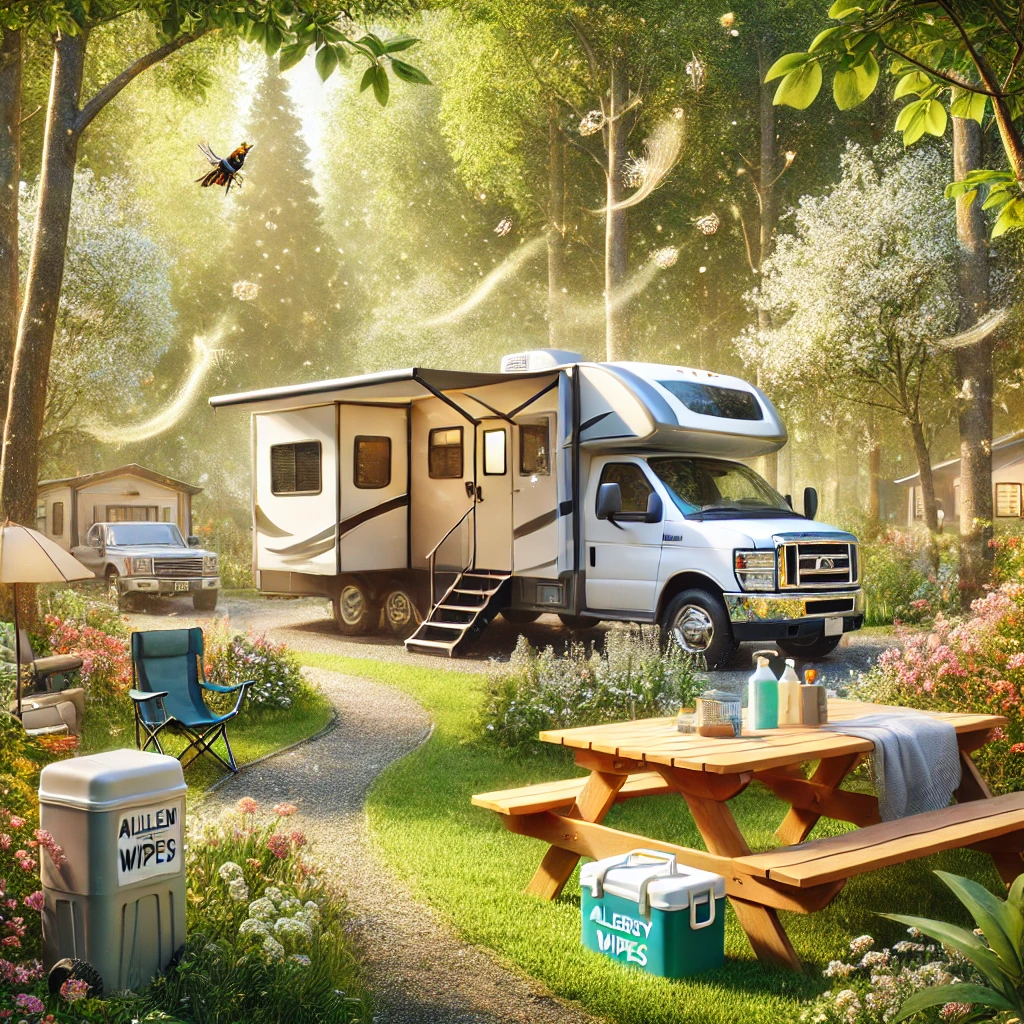
Spring Adventures Without the Sneezes
As the weather warms up, many campers are eager to hit the road and embrace the beauty of spring. However, for those with seasonal allergies, pollen season can turn an outdoor escape into a sneezing, itchy-eyed struggle. But don’t let allergens keep you from enjoying your RV adventures! With a little preparation, you can minimize your exposure and make your trip as comfortable as possible.
How to Allergy-Proof Your RV and Campsite
While you can’t completely escape pollen, you can take proactive steps to reduce its impact on your camping experience. Here’s how:
1. Choose Your Destination Wisely
- Some areas have higher pollen counts than others. Before setting off, check allergy forecasts and avoid regions where pollen levels are at their peak.
- Coastal locations, deserts, and high-altitude spots generally have lower pollen levels than forested or grassy areas.
- Time your trip for before or after peak pollen season in your chosen location.
2. Close Off Your RV Interior
- Keep windows and vents closed when driving or camping in high-pollen areas.
- Use an RV air filtration system or a portable HEPA filter to keep indoor air clean.
- Wipe down surfaces regularly with a damp cloth to trap pollen and dust instead of stirring it up.
3. Pack Allergy Essentials
- Stock up on over-the-counter antihistamines, nasal sprays, and eye drops before your trip.
- Carry a saline spray to rinse out nasal passages and reduce irritation.
- Bring hypoallergenic bedding and pillowcases to prevent allergens from accumulating inside your RV.
4. Keep Outdoor Gear Outside
- Pollen clings to clothes, shoes, and gear. Keep camping chairs, backpacks, and shoes in an exterior storage compartment or designated outdoor area.
- Change clothes after spending time outside and store used clothing in a sealed laundry bag.
5. Time Outdoor Activities Smartly
- Pollen levels are highest in the morning and on dry, windy days. Plan hikes or outdoor activities for later in the day when pollen levels tend to drop.
- If it rains, take advantage of the fresh air right after—the moisture helps clear pollen from the air.
6. Keep Pets Clean
- If you’re RVing with pets, wipe them down with a damp cloth or pet wipes after walks to prevent pollen from spreading inside your RV.
- Consider keeping a small air purifier in your pet’s sleeping area to help filter out allergens.
7. Monitor Pollen Counts Daily
- Use apps or websites to check local pollen forecasts and adjust your plans accordingly.
- If pollen counts are particularly high, opt for indoor activities like visiting museums, checking out local eateries, or simply relaxing inside your RV with good airflow.
Enjoy the Outdoors Without the Allergy Woes
With a few adjustments, you can enjoy spring camping without constantly battling allergies. A little preparation goes a long way in ensuring your RV remains a comfortable, pollen-free retreat. So pack smart, plan ahead, and get ready to experience the beauty of nature—without all the sneezing.