
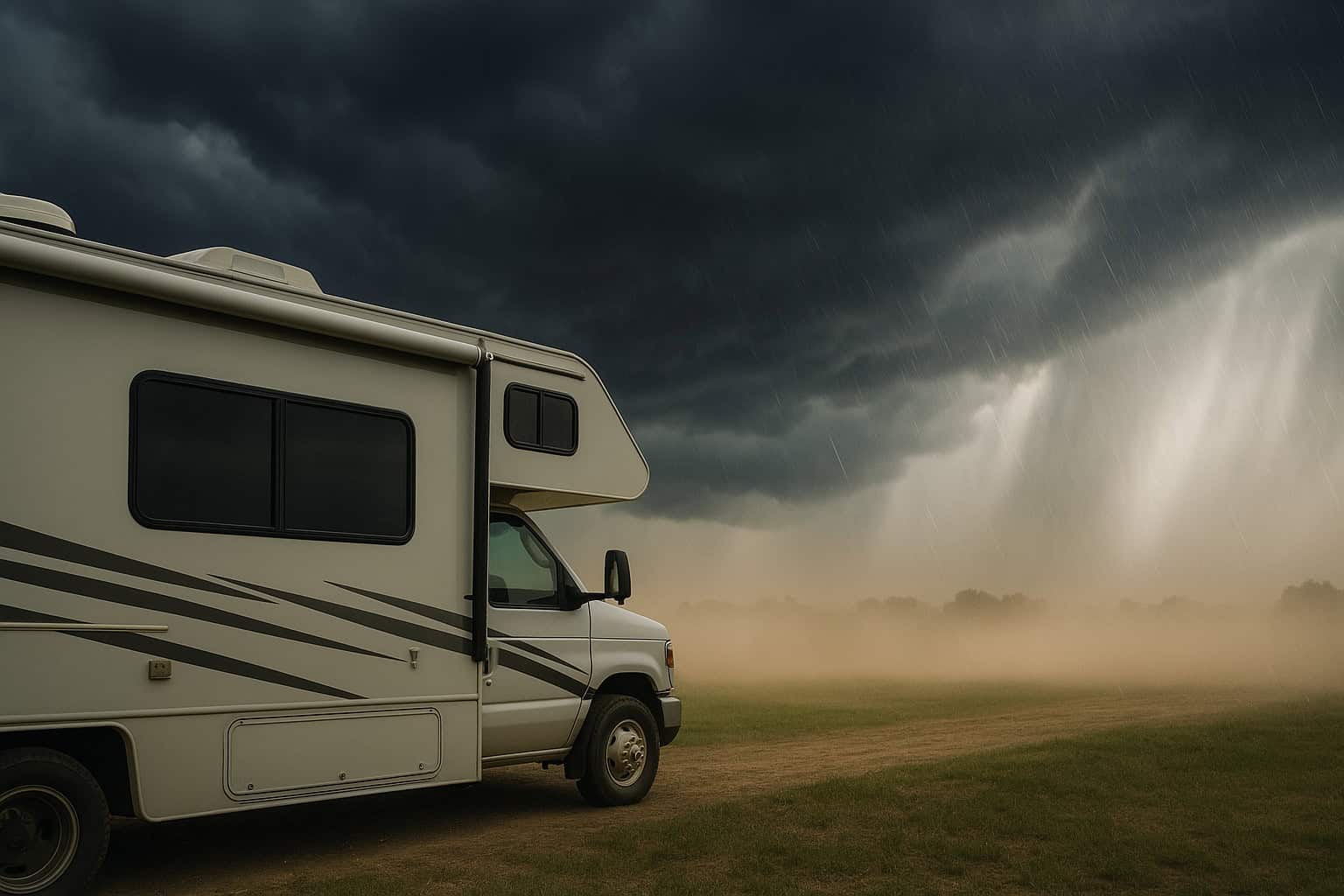
One minute it’s sunny… the next minute, you’re in a wind tunnel, a rainstorm, or a surprise snow flurry. 😳
RV life is full of beauty—but also full of wild weather surprises. If you live or travel in your RV, you need to be ready for just about anything Mother Nature throws your way.
Here’s what to do when the weather gets weird—and how to stay safe, dry, and calm inside your rolling home.
🌬️ DUST STORMS (Yes, They’re Real)
Dust storms can pop up fast, especially in deserts like Arizona or New Mexico. The air turns brown, the wind howls, and visibility drops.
What to Do:
-
Close all windows and roof vents immediately
-
Turn off fans or AC units pulling in outside air
-
Park your RV facing into the wind if possible
-
Stay inside and avoid driving—visibility can go to zero fast
-
Use a towel or cloth to block drafts around doors or windows
✅ Tip: Keep air filters clean and cover electronics if dust gets in.
🌧️ HEAVY RAIN & FLOODING
Rain is fine—until it’s not. Flash floods can be dangerous, especially in low areas or dry washes that suddenly fill with water.
What to Do:
-
Never camp in a dry riverbed or arroyo
-
Watch the weather forecast daily
-
If it rains hard, check your roof and seals for leaks
-
Stay off flooded roads—turn around, don’t drown!
-
Know how to manually override your slides if they stop working due to water
✅ Tip: Keep towels and a tarp handy to cover leaky spots.
🌪️ STRONG WINDS
Wind can shake your RV, rattle your nerves, and even break awnings or topple poorly parked rigs.
What to Do:
-
Always retract your awning if wind is in the forecast
-
Park your RV so the nose faces into the wind
-
Secure anything outside (chairs, mats, bikes, grills)
-
Avoid driving in high winds—especially with tall rigs or trailers
-
Use stabilizers and levelers to reduce rocking
✅ Tip: Listen for weird noises—wind can tug on your rig in surprising ways.
❄️ SNOW AND ICE
Even spring and fall can bring surprise snow in the mountains. Ice is no joke for RVs, especially on roads or when water lines freeze.
What to Do:
-
Keep your tanks warm using heaters or heat tape
-
Use RV antifreeze in drains if freezing temps hit
-
Unhook water hoses to avoid freezing and cracking
-
Insulate your doors, windows, and vents
-
Stay put during snowstorms—don’t drive unless absolutely necessary
✅ Tip: Carry snow chains, a small shovel, and emergency blankets just in case.
🌩️ THUNDERSTORMS
Lightning, wind, and hail can all happen at once in a bad storm.
What to Do:
-
Unplug from shore power during lightning storms
-
Avoid using metal-framed electronics
-
Pull in slides if hail is coming (protects seals and slide roofs)
-
Park under cover if available—or away from big trees
✅ Tip: A weather radio can warn you earlier than your phone sometimes!
🔥 BONUS: EXTREME HEAT
Not “crazy,” but still a challenge for RVers!
What to Do:
-
Use reflective window shades
-
Park in shady spots or face windows away from the sun
-
Run your AC early in the day—it works better when the rig is cool
-
Avoid cooking inside (it heats the whole RV)
-
Stay hydrated and limit outdoor time
✅ Tip: Portable fans help keep air moving in stuffy corners.
🧠 Final Thoughts
Weather can change fast—but if you stay aware and prepare ahead, you can handle almost anything.
Just remember:
-
Check the forecast often
-
Know your rig’s weak spots
-
Have an emergency kit ready
-
Trust your gut—if it looks bad, get to safety
Because being smart about weather doesn’t just protect your RV…
It keeps you and your travel crew safe, too. 🌦️🚐🧭