

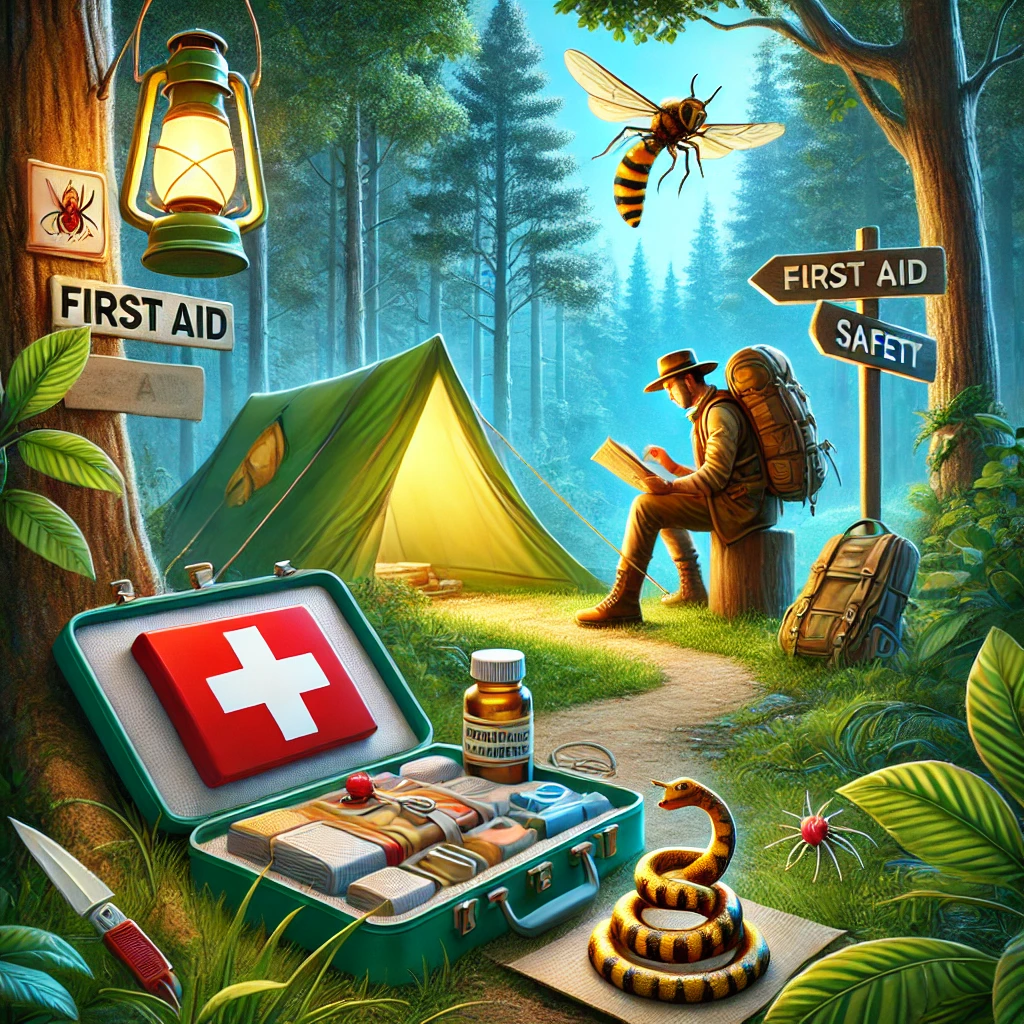
Camping is an incredible way to connect with nature, but spending time in the wild means sharing space with creatures that bite or sting. While most encounters are harmless, some bites and stings can lead to serious reactions or infections. Knowing how to respond quickly and effectively can make all the difference in preventing a minor incident from turning into a major emergency.
Snake Bites: Stay Calm & Identify the Snake
While most snakes in North America are non-venomous, species like rattlesnakes, copperheads, cottonmouths, and coral snakes pose a real danger. If you or someone in your group is bitten by a snake:
- Remain calm. Panicking increases heart rate and spreads venom faster.
- Keep the bitten limb immobilized and at or below heart level.
- Do not attempt to suck out venom, cut the wound, or use a tourniquet. These outdated methods do more harm than good.
- Identify the snake if possible. Take a picture from a safe distance or note its color and markings.
- Seek medical attention immediately. Even non-venomous bites can cause infection. Call 911 or head to the nearest hospital.
- Wash the bite with soap and water and cover it with a clean bandage.
🚫 What NOT to Do:
- Do not apply ice to the wound.
- Do not take painkillers unless advised by a medical professional.
Insect Bites & Stings: Reduce Swelling & Watch for Allergic Reactions
Mosquitoes, ticks, bees, wasps, and spiders are common nuisances while camping. While most insect bites are harmless, some can cause allergic reactions or transmit diseases.
🕷️ Spider Bites (Black Widow & Brown Recluse Concerns):
- Wash the bite site with soap and water.
- Apply a cold compress to reduce swelling.
- Monitor for serious symptoms like fever, muscle pain, or an expanding wound.
- Seek medical care immediately if you suspect a venomous spider bite.
🐝 Bee & Wasp Stings:
- Remove the stinger by scraping it off with a credit card—avoid squeezing it.
- Wash the area and apply an ice pack.
- Take an antihistamine if swelling occurs.
- If allergic, use an EpiPen and seek emergency help right away.
🦟 Tick Bites (Lyme Disease Concern):
- Remove the tick carefully with tweezers, pulling straight out.
- Clean the area and apply antiseptic.
- Monitor for symptoms like fever or a bullseye rash, which could indicate Lyme disease.
Wild Animal Bites: Act Fast to Prevent Infection or Disease
Encounters with raccoons, foxes, skunks, or even stray dogs can lead to bites that risk infection or rabies exposure. If bitten:
- Clean the wound immediately with soap and warm water for at least five minutes.
- Apply antiseptic and cover the wound with a sterile bandage.
- Control bleeding by applying gentle pressure with a clean cloth.
- Seek medical attention right away. Rabies and bacterial infections are serious risks.
🚑 If a bite is deep or from a rabies-risk animal (like bats, raccoons, or foxes), get a rabies shot ASAP.
General First Aid Kit Must-Haves for Camping:
- Antiseptic wipes
- Antihistamines (for allergic reactions)
- Snake bite suction kit (only for emergency use)
- Tweezers (for tick removal)
- EpiPen (if you have severe allergies)
- Bandages & sterile gauze
- Pain relievers
Conclusion
Bites and stings are an inevitable part of exploring the outdoors, but being prepared can make all the difference. Stay alert, follow best practices, and always seek medical help when in doubt. With the right knowledge and supplies, you can safely enjoy the great outdoors—bite-free and worry-free!