
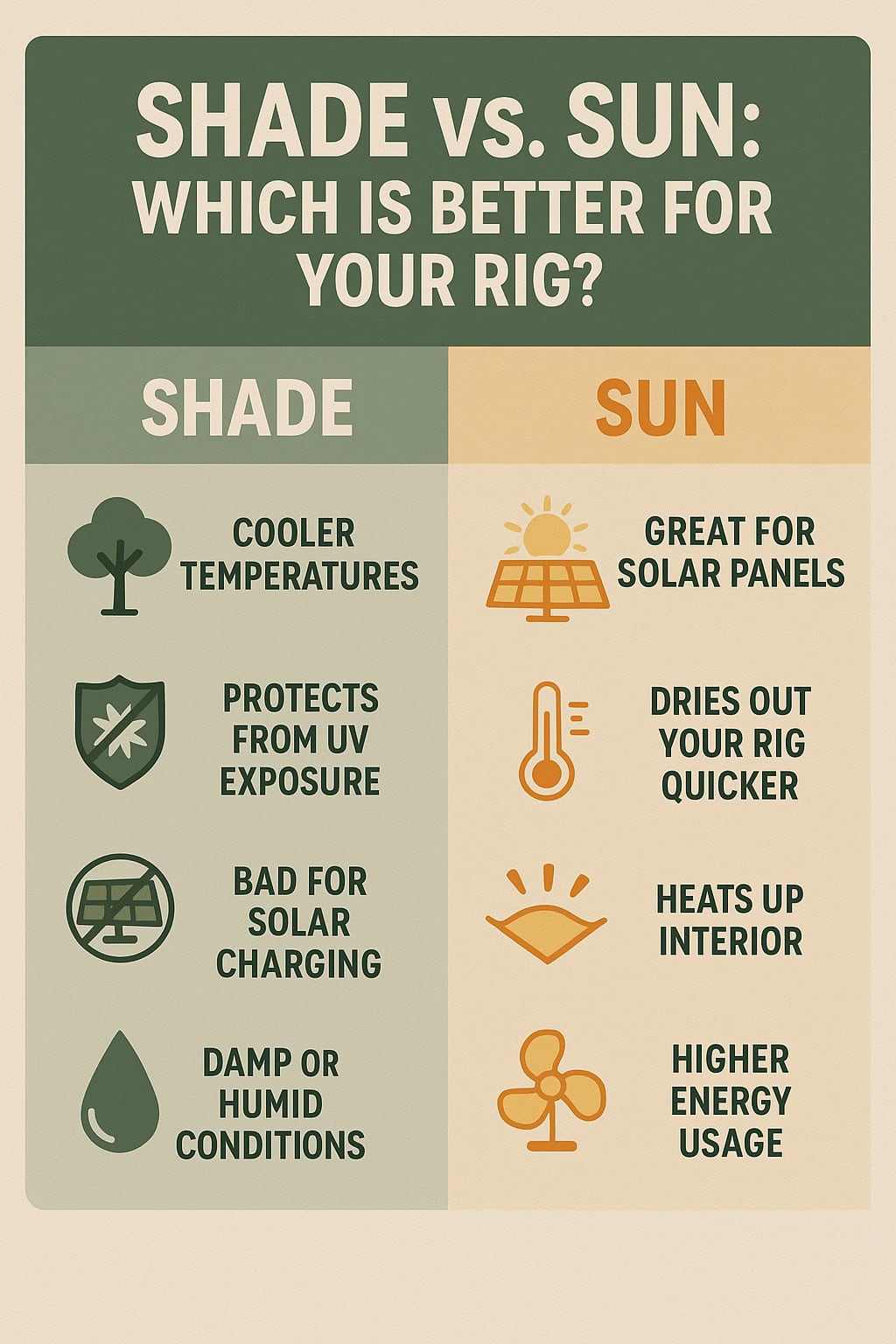
It’s one of the first things you notice at a campsite: is this spot sunny or shaded?
For RVers, it’s not just a preference—it’s a trade-off. Your choice affects temperature, solar power, energy use, and even your rig’s longevity.
Let’s break it down: when is shade your best friend, and when does full sun win the day?
🌳 Camping in the Shade
Pros:
-
Cooler temps inside your rig (especially helpful in summer)
-
Protects your roof, paint, and tires from UV exposure
-
Better sleep and chill vibes under the trees
Cons:
-
Bad for solar charging
-
Can create damp conditions or invite mold in humid areas
-
You may lose Starlink signal or have weak cell/data
Best For:
Summer trips, older rigs, pets onboard, energy conservation
☀️ Camping in Full Sun
Pros:
-
Great for solar panels—maximum charging potential
-
Dries out your rig quicker after rain or humidity
-
Warmer inside on cold mornings
Cons:
-
Interior heats up fast—even with the A/C on
-
Sun can fade decals and age rubber seals
-
Higher battery draw from A/C and fans
Best For:
Winter trips, solar-heavy setups, short stays, desert climates
⚖️ What’s the Smart Compromise?
-
Park with your awning side shaded, but roof mostly sunny
-
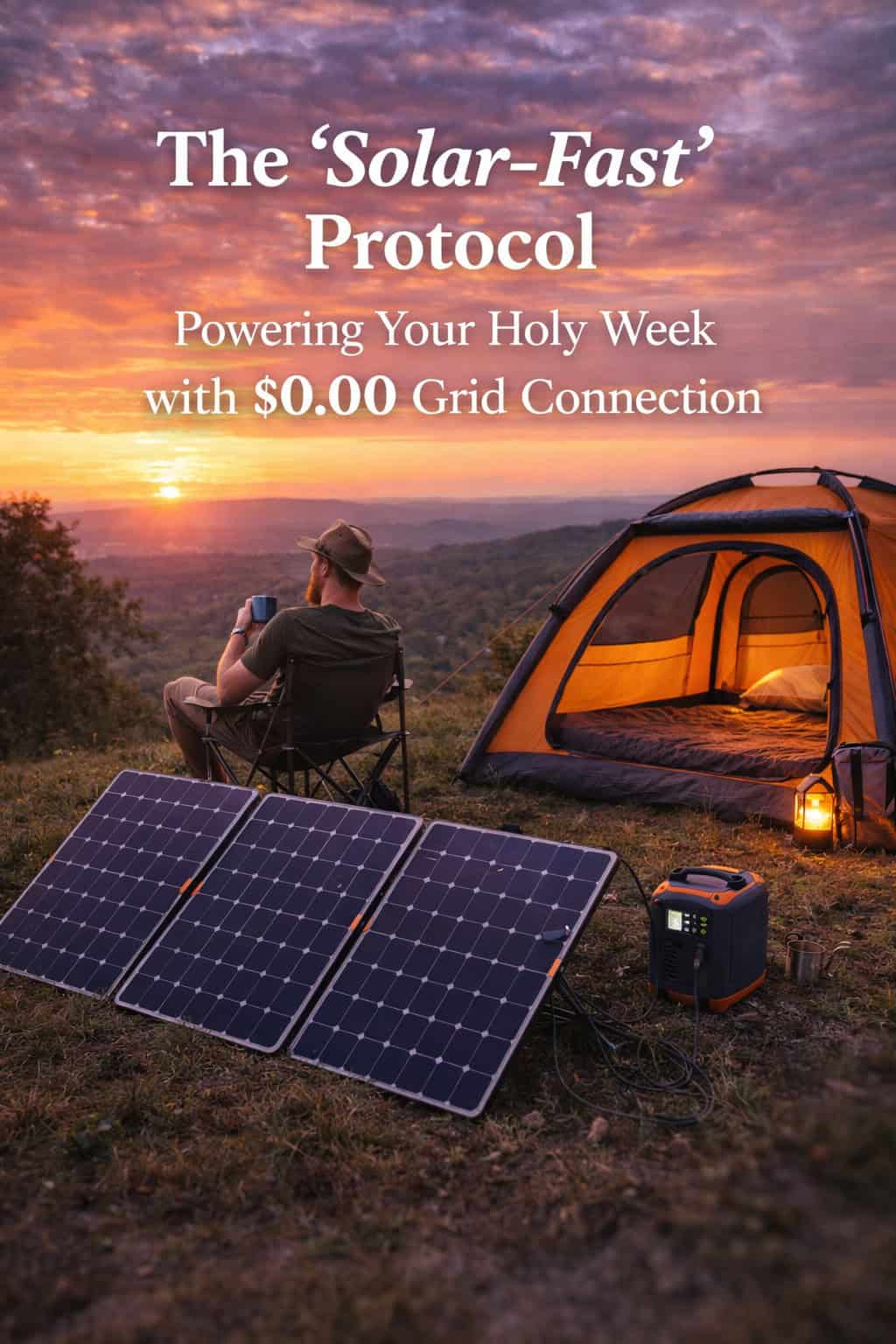
Use portable solar panels so you can stay in the shade and still charge
-
Cover windows and use vent fans in the sun to keep temps down
-
In mixed weather, morning sun + afternoon shade is ideal
Final Thoughts
There’s no universal winner—just what’s right for your rig, your setup, and your travel style.
But one thing’s for sure: where you park makes a big difference in how comfortable, efficient, and low-maintenance your stay will be.
🐟 Want to see sun/shade at real campsites before you book? Use Campground Views for virtual previews and park like a pro.
🔗 Follow us for RV site tips, smart energy usage, and practical camping hacks that actually work.