
Stay Safe on the Road and at the Campsite
RV travel is all about adventure and freedom, but safety should always come first. Fires in RVs can spread quickly, and because space is limited, there’s little time to react. The good news? A few simple safety checks can make all the difference.
By following these easy steps, you can help prevent fires and protect yourself, your family, and your RV. Let’s go over what you need to check before you hit the road.
Why Fire Safety in an RV Is Different
RVs are different from houses and cars when it comes to fire risks. They have small living spaces filled with flammable materials, propane tanks, electrical systems, and cooking appliances. This means fires can start in multiple ways—cooking accidents, faulty wiring, propane leaks, or even overheating mechanical parts.
Unlike a house, an RV fire can spread within minutes, making quick action critical. That’s why having a plan and checking your safety equipment regularly is so important.
1. Test Your Smoke and Carbon Monoxide Detectors
Your smoke and carbon monoxide (CO) detectors are your first line of defense. Make sure they are in working order before every trip.
- Test the alarms – Press the test button to ensure they beep properly.
- Replace the batteries – Change them at least once a year or sooner if the alarm chirps.
- Clean the sensors – Dust and dirt can block sensors, so wipe them down with a soft cloth.
- Check the expiration date – Smoke detectors typically last 10 years, and CO detectors about 5-7 years.
If you don’t already have a CO detector, install one immediately. Carbon monoxide is odorless and deadly, and RVs with propane systems need extra protection.
2. Inspect Your Fire Extinguisher
Most RVs come with a fire extinguisher, but when was the last time you checked it? An expired or damaged extinguisher won’t help in an emergency.
- Make sure it’s fully charged – The pressure gauge should be in the green zone.
- Shake it monthly – This prevents the powder inside from settling.
- Check for rust or damage – If the nozzle is cracked or the pin is missing, replace it.
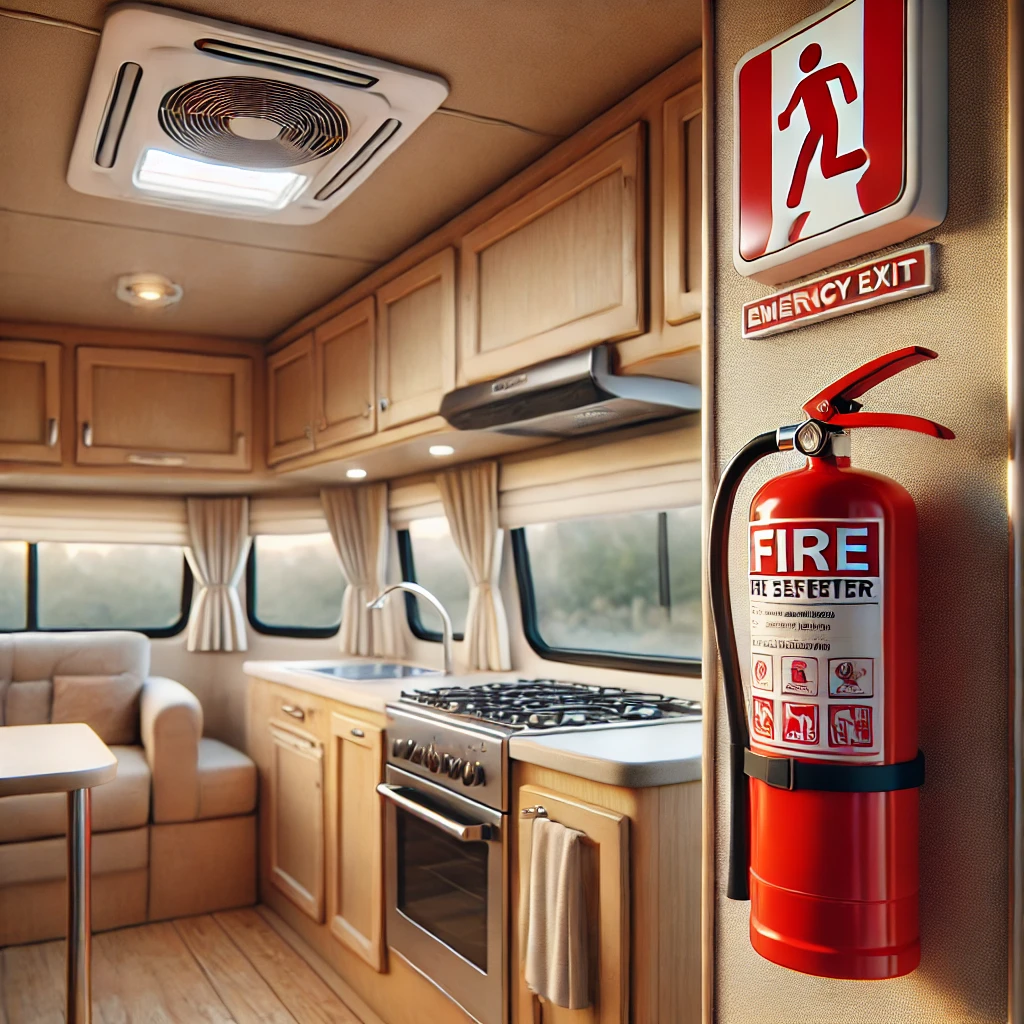
- Know where it’s located – Keep it near the kitchen and make sure everyone in the RV knows how to use it.
A fire extinguisher should be rated ABC, meaning it can handle different types of fires (wood/paper, flammable liquids, and electrical fires). Consider carrying a second extinguisher in an easily accessible place.
3. Be Smart with Propane
Propane is a great fuel source for cooking and heating in an RV, but it can also be a fire hazard if not handled properly.
- Check for leaks – Smell for gas, listen for hissing sounds, and use a soapy water solution to check for bubbles at connections.
- Turn off propane when driving – Many states require propane to be off while driving, especially when going through tunnels or gas stations.
- Inspect hoses and tanks – Look for cracks, wear, or damage before every trip.
- Store propane safely – Never leave extra tanks inside the RV. Store them upright and in a ventilated area.
A propane detector can alert you to leaks before they become dangerous—make sure yours is working properly.
4. Inspect Electrical Systems
RV fires often start because of faulty wiring or overloaded circuits. Since RVs move and bounce down the road, wires can loosen over time.
- Check for frayed or damaged wires – Look under cabinets, near outlets, and around appliances.
- Never overload outlets – Avoid plugging too many devices into one outlet or using cheap extension cords.
- Inspect the shore power cord – Make sure it’s in good condition with no melted or burned areas.
- Use surge protectors – These can prevent electrical fires caused by power surges at campgrounds.
If you notice flickering lights, warm outlets, or burning smells, turn off power immediately and inspect the issue before continuing use.
5. Keep the Stove and Cooking Area Safe
Cooking is a leading cause of RV fires. With small kitchens and limited ventilation, it’s easy for flames to spread.
- Never leave the stove unattended – Even a few minutes away could be enough for a fire to start.
- Use a stovetop cover when not in use – This prevents accidental bumps that could turn the stove on.
- Keep flammable items away – Dish towels, paper towels, and curtains should be far from burners.
- Have a fire blanket nearby – This is a great tool for quickly smothering small cooking fires.
If a grease fire starts, NEVER throw water on it. Instead, turn off the burner and use a fire extinguisher or cover the flames with a metal lid to smother them.
6. Know Your Emergency Exit Plan
Fires can spread fast in an RV, so every second counts. Make sure everyone knows how to get out quickly.
- Locate all exits – RVs have emergency windows and doors—know where they are.
- Practice opening the emergency windows – Some latches can be stiff or confusing in a panic.
- Keep pathways clear – Avoid blocking the exits with furniture, bags, or gear.
- Have a meeting spot – If a fire happens, decide where to meet outside for a headcount.
If there’s a fire, get out and stay out. Don’t try to grab belongings—your safety comes first.
Final Thoughts: A Few Minutes Could Save Your Life
Fire safety isn’t complicated, but it does require attention. A few quick checks before each trip can prevent a disaster and keep you safe on the road.
- Test your smoke and CO detectors
- Check your fire extinguisher
- Inspect propane and electrical systems
- Be cautious while cooking
- Have an emergency exit plan
By making these checks part of your RV routine, you can travel with peace of mind, knowing that you’re prepared for anything. Safe travels, and stay fire-safe!
Need a visual reminder? Here’s your fire safety checklist:
1️⃣ Test smoke and CO detectors
2️⃣ Inspect fire extinguisher
3️⃣ Check propane for leaks
4️⃣ Look for frayed electrical wires
5️⃣ Keep the stove clear and never leave it unattended
6️⃣ Know your exits and practice emergency escapes
Stay safe and enjoy your adventures!