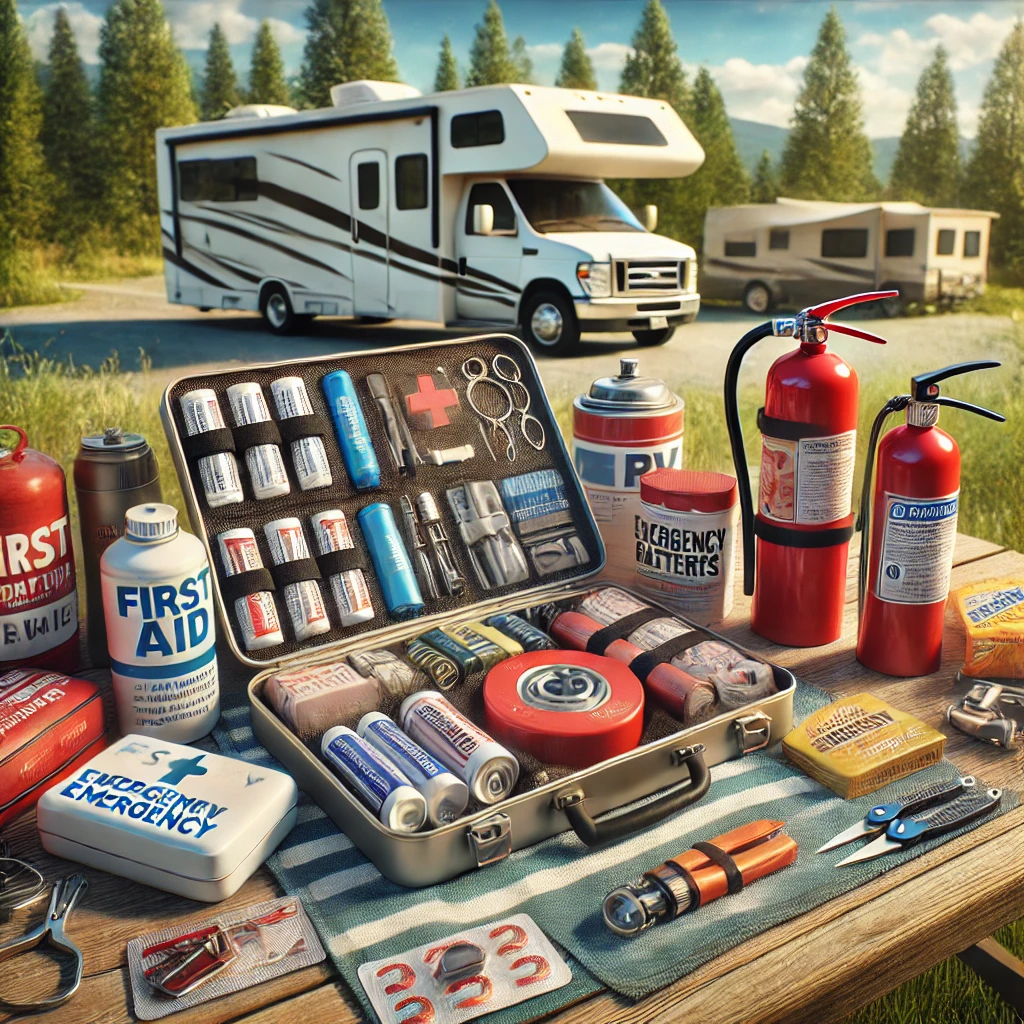
When the Unexpected Happens, Are You Ready?
RV life is all about adventure, but every seasoned traveler knows that the road can throw unexpected challenges your way. Whether it’s a flat tire in the middle of nowhere, a sudden power outage at your campsite, or even a medical emergency, being prepared can make all the difference.
While most RVers remember the basics—flashlights, a first-aid kit, and jumper cables—there are a few often-overlooked items that can turn a potential disaster into just another bump in the road.
Let’s break down the must-have emergency items that should be in every RV, but that most travelers forget to pack.
The Essentials That Could Save the Day
Sure, you’ve got a roadside assistance plan, but what if help takes hours to arrive? A well-stocked emergency kit will ensure you can handle minor emergencies on your own.
1. Extra Set of RV Keys
Getting locked out of your RV is more common than you think. A spare key hidden in a lockbox or with a trusted travel companion can save you from breaking a window or calling a locksmith.
2. Tire Repair & Inflation Kit
Blowouts and slow leaks happen, and not every roadside stop has an air pump. A portable air compressor, tire sealant, and a quality tire repair kit can get you back on the road faster.
3. Heavy-Duty Tow Strap
Even if you have roadside assistance, having a tow strap can help if you or a fellow RVer get stuck in mud, sand, or snow.
4. Backup Power Bank & Solar Charger
Your RV battery might run low at the worst time. A power bank or small solar charger ensures you can keep essential electronics charged, especially in off-grid situations.
5. Emergency Radio
A hand-crank or battery-powered emergency radio is essential when cell service is unreliable. It keeps you informed about severe weather and road conditions.
6. Multi-Tool & Duct Tape
A high-quality multi-tool and a roll of duct tape can temporarily fix anything from a broken latch to a leaky hose.
7. High-Visibility Safety Gear
Reflective vests and road flares (or LED road beacons) make sure other drivers see you if you need to pull over at night.
8. Extra Water & Non-Perishable Food
Delays can happen, and a few extra days’ worth of drinking water and food can be a lifesaver in case of breakdowns or unexpected weather.
9. First-Aid Kit (With Extra Medications)
Most RVers have a first-aid kit, but many forget to stock extra prescription medications, allergy treatments, and over-the-counter essentials like pain relievers and anti-nausea meds.
10. Emergency Contact & Medical Info Sheet
In case of an accident, having a printed list of emergency contacts, medical conditions, and allergies can be crucial—especially if you’re unconscious or unable to communicate.
Final Thoughts: Pack It Before You Need It
An emergency kit might seem like just another thing taking up space in your RV—until you actually need it. The reality is, emergencies don’t wait for the perfect time, and being prepared can mean the difference between a minor inconvenience and a major disaster.
Before your next trip, take a few minutes to go through your emergency supplies. Make sure everything is in working order, replace expired items, and consider adding a few of the often-overlooked essentials mentioned above.
Because in the world of RVing, it’s always better to have it and not need it, than to need it and not have it.