

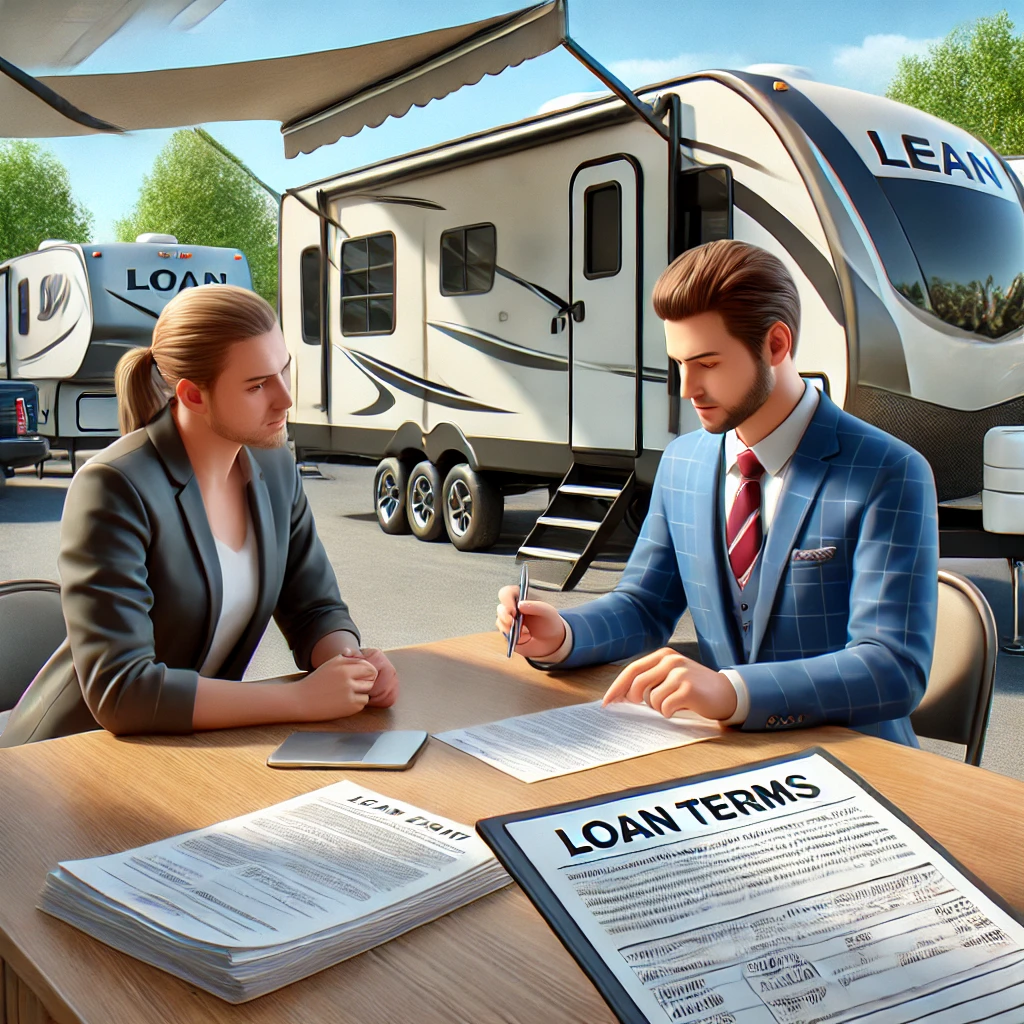
Buying a used RV can be a great way to save money compared to purchasing a brand-new model. However, even used RVs can come with a hefty price tag, leading many buyers to consider RV financing. But is taking out a loan on a used RV really a smart financial decision?
Before signing on the dotted line, let’s break down the pros and cons of financing a used RV, so you can decide if it’s the right move for you.
Pros of Financing a Used RV
1. You Can Afford a Better RV Now
If you’re eager to start RVing but don’t have enough savings to pay in cash, financing lets you get on the road sooner. Instead of waiting years to save up, you can spread out payments over time and start enjoying adventures right away.
✔ Access higher-quality models that may be out of reach with cash.
✔ Avoid buying a cheaper, older RV that could require costly repairs.
✔ Keep your cash reserves intact for emergencies or upgrades.
🌟 Pro Tip: While it’s tempting to stretch your budget, make sure the monthly payment fits comfortably within your financial plan.
2. Lower Monthly Payments with Longer Loan Terms
RV loans often come with extended repayment terms—sometimes as long as 10 to 15 years, depending on the lender and the RV’s age.
✔ Lower monthly payments compared to a short-term personal loan.
✔ Makes budgeting easier by spreading out costs over time.
✔ Some lenders offer flexible payment options based on your income.
🌟 Pro Tip: While long-term loans reduce monthly payments, they increase total interest costs—so consider paying extra when possible.
3. Interest Rates Can Be Competitive (If You Qualify)
For buyers with good credit, RV loans may offer competitive interest rates—especially compared to using a credit card or personal loan.
✔ Lower rates than credit cards or unsecured loans.
✔ Some lenders allow prepayment without penalties, letting you pay off the loan early.
✔ Rates for used RVs tend to be slightly higher than for new models, but still manageable.
🌟 Pro Tip: Shop around and get pre-approved from multiple lenders before committing to a loan.
4. Helps Build or Strengthen Credit
If you’re working to improve or build credit, financing a used RV can help boost your credit score—as long as you make on-time payments.
✔ Can improve credit mix (installment loans vs. revolving credit).
✔ Helps build a positive payment history.
✔ Makes it easier to qualify for future loans or refinancing.
🌟 Pro Tip: RV loans do impact your debt-to-income ratio, which could affect future lending decisions for home or auto loans.
Cons of Financing a Used RV
1. You’ll Pay More in Interest Over Time
The biggest downside of financing is that you’ll pay more than the RV’s sticker price due to interest charges.
❌ The longer the loan term, the more you’ll pay in total interest.
❌ Used RV loan rates are often higher than new RV rates.
❌ If you buy a high-mileage RV, lenders may charge even more interest.
🌟 Pro Tip: If you can afford a larger down payment, it will reduce the loan amount and total interest paid.
2. Depreciation Can Leave You Upside-Down
RVs depreciate quickly, meaning that within a few years, your RV may be worth less than what you owe on the loan (also called being upside-down or underwater).
❌ If you need to sell the RV, you might owe more than its market value.
❌ Insurance settlements may not cover the full loan balance if the RV is totaled.
❌ Older RVs may lose value faster than newer models.
🌟 Pro Tip: Look for a used RV that holds value well, and consider GAP insurance to cover any shortfall in case of a total loss.
3. Monthly Payments Add Financial Stress
An RV loan is a long-term financial commitment, and if your situation changes (job loss, medical bills, etc.), making monthly payments could become difficult.
❌ Adds to your monthly debt obligations.
❌ Unexpected RV repair costs could strain your budget further.
❌ If you miss payments, it can damage your credit score.
🌟 Pro Tip: Set up an emergency fund for RV repairs and unexpected expenses.
4. Used RV Loans May Have Stricter Terms
Unlike new RV loans, lenders often have stricter requirements for used RV financing, such as:
❌ Higher interest rates than new RVs.
❌ Age limits—some lenders won’t finance RVs over 10-15 years old.
❌ More paperwork—lenders may require detailed inspections or history reports.
🌟 Pro Tip: If your RV is too old to finance, consider a personal loan or cash purchase instead.
Alternatives to Financing a Used RV
If you’re on the fence about taking out an RV loan, here are a few other ways to afford a used RV:
1. Save Up & Pay in Cash
✔ No monthly payments or interest.
✔ More negotiating power with private sellers.
✔ No risk of being upside-down on the loan.
2. Take Out a Personal Loan
✔ Faster approval process.
✔ No restrictions on RV age.
✔ May have higher interest rates than RV loans.
3. Buy a Cheaper RV & Upgrade Over Time
✔ Start with an older, budget-friendly model.
✔ Invest in affordable DIY upgrades instead of a high loan payment.
🌟 Pro Tip: If you’re comfortable with minor repairs, buying a lower-priced RV and fixing it up can be a great alternative to financing.
Final Verdict: Should You Finance a Used RV?
It depends on your financial situation, travel goals, and comfort with monthly payments.
Financing Might Be a Good Idea If:
✔ You need an RV now and don’t have enough cash saved.
✔ You can afford the monthly payments without financial stress.
✔ You qualify for a good interest rate.
✔ The RV is newer and holds value well.
You Might Want to Avoid Financing If:
❌ You’ll struggle to make monthly payments long-term.
❌ The RV is too old to qualify for a good loan.
❌ You’d rather avoid paying interest and debt.
❌ You plan to resell quickly (you could end up upside-down).
🚐 What’s your take on financing a used RV? Would you rather pay in cash or take out a loan? Let us know in the comments!