

Blown fuse? Or something deeper? If you’ve ever had an outlet go cold, lights flicker out, or your water pump go silent, your first instinct is probably: “Better check the fuses.”
But if your fuse box is tucked away behind a dozen screws or if you just hate yanking them out one by one—there’s a faster way.
Here’s how to test an RV fuse without pulling it, using one simple tool and a couple of quick tips.
🔧 What You’ll Need: A Multimeter or Test Light
Both tools will get the job done, but a digital multimeter is the most accurate and versatile.
Multimeter setting: Set to DC volts
Test light: Clamp the ground, touch the probe to the fuse terminals
🚐 Step-by-Step: How to Test Without Removing Fuses
-
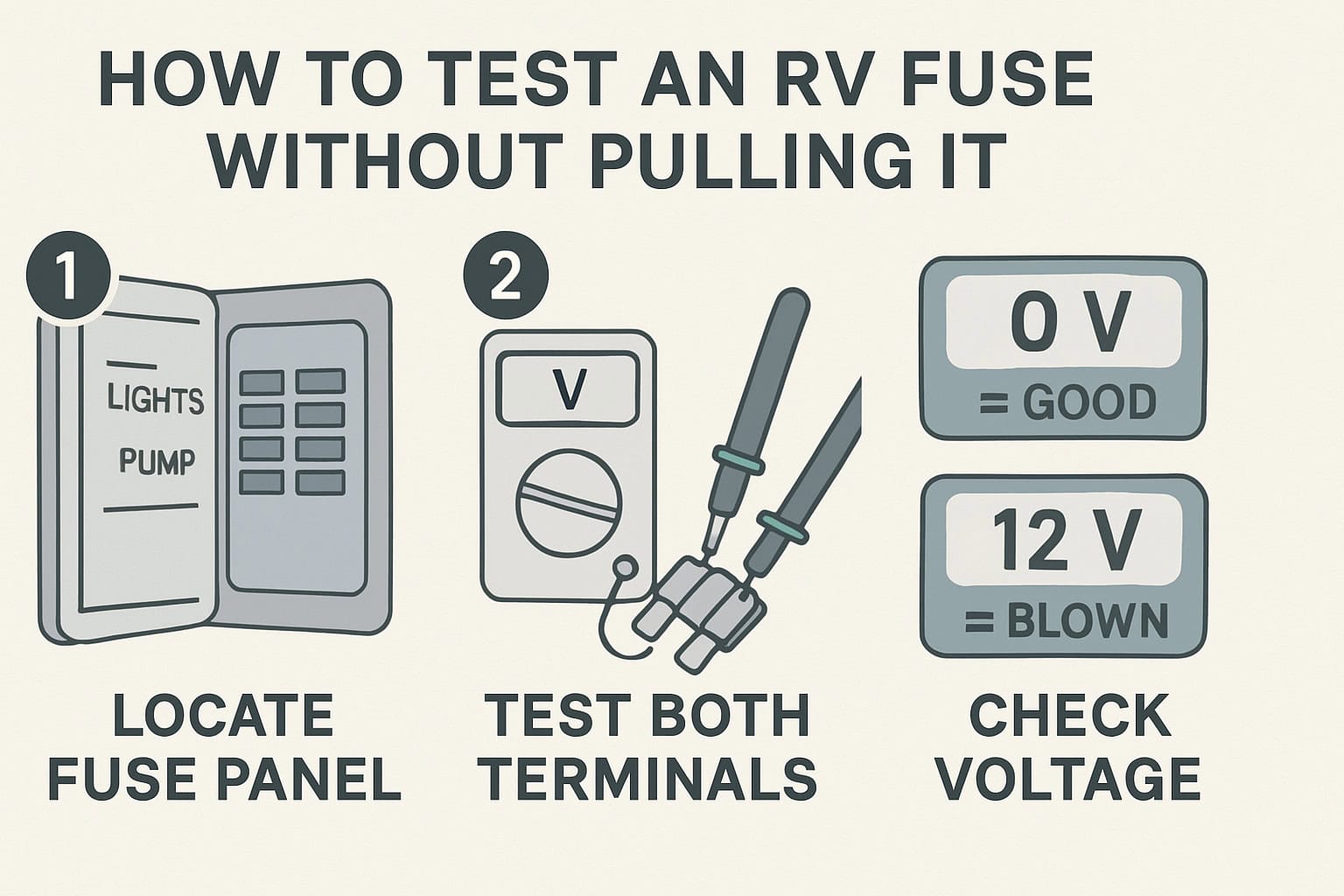
Locate your RV fuse panel
Usually inside a cabinet, under the bed, or near your control center. -
Turn on the circuit you want to test
For example, flip on your water pump or cabin lights. The circuit needs to be active to check it. -
Find the test points
Most blade fuses (ATO/ATC style) have two small metal contacts on top. These are built-in test ports. -
Use your tester
-
With a multimeter: touch one probe to each test point. You should read 0 volts if the fuse is good. If you see full voltage (12V), the fuse is blown.
-
With a test light: touch each side. Both sides should light up. If only one does, the fuse is blown.
-
🧠 Pro Tip: Label your fuses while you’re in there. Future you will appreciate it.
💡 What If There Are No Test Points?
Some fuses don’t have exposed test contacts. In that case:
-
You’ll need to gently pull them just far enough to access the metal blades
-
Or use a fuse tap adapter for easier future testing
Final Thoughts
Fuse problems are common in RVs—but fixing them doesn’t have to be a hassle. With a test light or multimeter, you can find the issue in seconds—without pulling a thing.
🐟 Want to make sure you’re never stuck in the dark at your next site? Use Campground Views to preview parks with full hookups, tech-friendly setups, and maintenance-friendly locations.
🔗 Follow us for more troubleshooting tips and RV tech know-how—because small problems don’t need to ruin big adventures.