

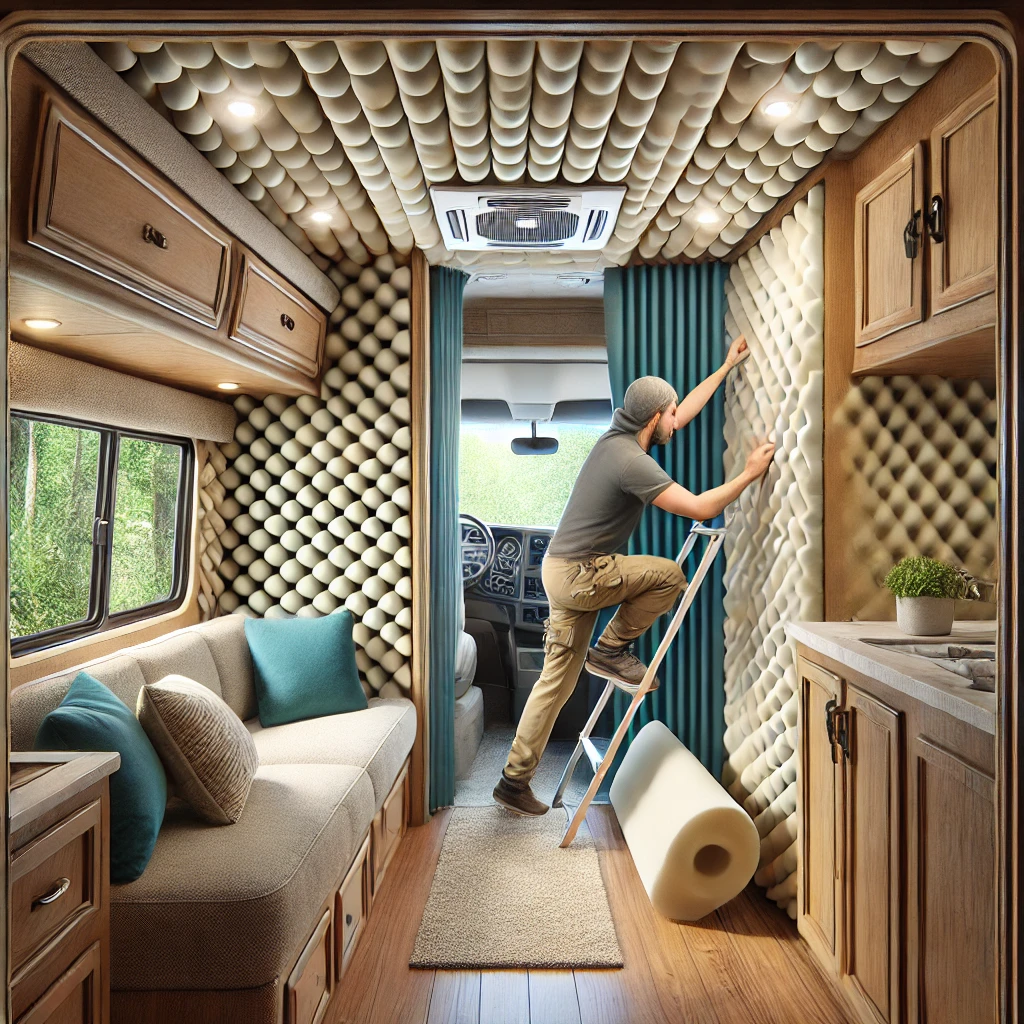
RVs are built for adventure, but let’s be honest—they’re not always the quietest places to relax. Whether it’s road noise, campground chatter, loud generators, or even wind whistling through windows, RV living can come with more noise than you’d like.
If you’re looking to create a peaceful, quiet space inside your RV, soundproofing can make a big difference. Here’s how to reduce outside noise, dampen vibrations, and enjoy a more serene travel experience.
1. Identify the Main Sources of Noise
Before you start soundproofing, figure out where the noise is coming from. The most common problem areas in an RV include:
🔹 Windows & Doors – Thin glass and gaps let in a lot of outside noise.
🔹 Walls & Floors – RV walls are lightweight and not designed for sound insulation.
🔹 Ceiling & Roof – Rain, wind, and road vibrations can be loud.
🔹 Generator & A/C Units – Interior appliances can create constant background noise.
Once you know the main sources, you can focus on the best soundproofing methods for each area.
2. Soundproof the Windows
RVs typically have thin single-pane windows that let in noise easily. Here’s how to reduce the sound:
✔ Use Soundproof Curtains – Heavy blackout curtains can help absorb noise.
✔ Install Window Inserts – Acoustic window inserts can add a layer of insulation.
✔ Apply Weatherstripping – Sealing small gaps around windows prevents sound leaks.
✔ Use Reflectix or Insulated Panels – These also help with temperature control.
🌟 Pro Tip: Use Velcro or magnetic strips to attach extra soundproofing layers to your windows for easy removal when needed.
3. Upgrade Door Seals for Better Insulation
Your RV doors often have thin seals or gaps, which allow wind and noise to get inside.
✔ Replace Weatherstripping – Install thick rubber weatherstrips around door edges.
✔ Add a Draft Stopper – Place a foam or fabric door draft blocker at the bottom of the door.
✔ Use a Soundproof Blanket – Hanging a heavy-duty moving blanket on the inside of the door can absorb sound.
🌟 Pro Tip: Some RVers install a second interior curtain over the door for even better insulation.
4. Improve Wall Insulation
RVs aren’t built with thick, noise-blocking walls like houses, so soundproofing them can make a huge difference.
✔ Use Acoustic Foam Panels – These absorb sound and reduce echo inside the RV.
✔ Add Mass Loaded Vinyl (MLV) – A dense, flexible soundproofing material that helps block outside noise.
✔ Install Extra Insulation – If renovating, adding fiberglass or foam insulation inside walls can reduce noise.
🌟 Pro Tip: Acoustic wallpaper can also help reduce vibrations and improve sound absorption.
5. Reduce Floor & Underbelly Noise
Road noise, rattling, and vibrations come through the floor of an RV, especially when driving.
✔ Use Rugs or Carpet Tiles – Soft materials absorb sound better than hard flooring.
✔ Install Soundproof Underlayment – If renovating, adding rubber or cork underlayment can block road noise.
✔ Check for Loose Panels – Make sure the RV underbelly is secure to reduce road vibrations.
🌟 Pro Tip: If you tow a travel trailer, placing foam padding between cargo can help reduce rattling.
6. Quiet Down the RV Roof & Ceiling
Rain, hail, and wind noise can be extra loud on an RV roof, but soundproofing can help.
✔ Use Roof Insulation Mats – These can absorb sound from heavy rain or wind.
✔ Install a Vent Cover – This helps reduce wind noise when driving.
✔ Seal Gaps Around Roof Fans – Weatherstripping can help block small sound leaks.
🌟 Pro Tip: Installing a soft ceiling panel or fabric liner can help dampen sound from above.
7. Minimize Generator & Appliance Noise
Appliances like generators, air conditioners, and refrigerators create constant background noise.
✔ Place Your Generator on a Soundproof Mat – Anti-vibration pads reduce noise.
✔ Add an Insulated Generator Box – A soundproofing enclosure can lower generator noise levels.
✔ Upgrade to a Quieter A/C Unit – Some RV air conditioners are much quieter than older models.
🌟 Pro Tip: If your RV fridge is noisy, check for loose screws or vibrations—sometimes small fixes can make a big difference.
8. Use White Noise or Sound Machines
If total silence isn’t possible, using background noise can help mask unwanted sounds.
✔ Use a White Noise Machine – Creates a consistent, soothing sound to cover outside noise.
✔ Play Soft Music or Nature Sounds – Helps mask campground or road noise.
✔ Use a Fan or Air Purifier – These naturally create white noise while improving air circulation.
🌟 Pro Tip: Earplugs or noise-canceling headphones are great for light sleepers!
Final Thoughts: A Quieter RV Means a Better Experience
Soundproofing your RV can make a huge difference in comfort, whether you’re parked at a busy campground, driving on the highway, or just trying to sleep through a windy night. By sealing windows, insulating walls, and reducing vibrations, you can create a peaceful, quiet retreat no matter where you travel.
🚐 Have you tried soundproofing your RV? Share your best noise-reducing tips in the comments!