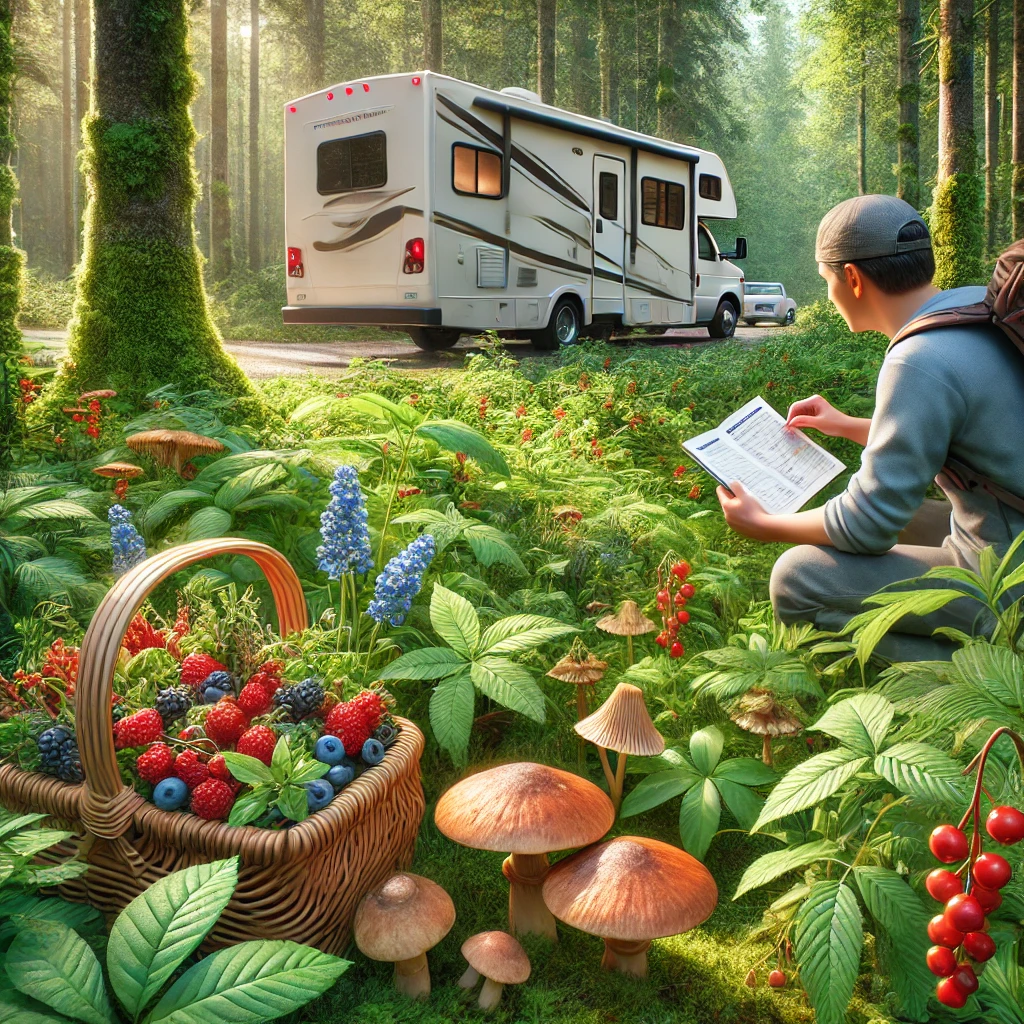
Foraging for wild edibles is a great way to connect with nature, enhance your outdoor experience, and even add fresh ingredients to your meals. But while the idea of picking wild berries and mushrooms sounds appealing, knowing what’s safe and what’s dangerous is crucial.
If you’re an RVer who loves exploring nature, here’s your beginner’s guide to safe and responsible foraging while camping.
1. Know the Basics of Safe Foraging
Before you pick anything, follow these golden rules:
✔ Be 100% Sure – If you can’t positively identify a plant, don’t eat it.
✔ Use a Field Guide – Carry a foraging book or app for plant ID.
✔ Harvest Responsibly – Only take what you need and leave some for wildlife.
✔ Wash Everything – Rinse all wild foods to remove dirt and insects.
✔ Avoid Polluted Areas – Don’t forage near roads, industrial sites, or places sprayed with pesticides.
🌟 Pro Tip: Start with easily identifiable plants like berries, dandelions, and wild herbs before trying mushrooms or lesser-known species.
2. Best Wild Edibles to Forage While RV Camping
Here are some common safe wild foods you can find in forests, fields, and near campsites:
Wild Berries
🍓 Blackberries & Raspberries – Sweet and safe when fully ripe.
🫐 Blueberries & Huckleberries – Found in forests and mountain areas.
🍒 Wild Strawberries – Tiny but packed with flavor.
🌟 Warning: Avoid white, green, or unripe berries, as many are toxic.
Edible Greens & Herbs
🌿 Dandelion Greens – Slightly bitter, great for salads.
🌱 Wood Sorrel – Tart and lemony, often mistaken for clover.
🌾 Wild Mint – Smells fresh and makes great tea.
🌟 Warning: Avoid plants that smell like almonds or have white sap, as they may be poisonous.
Edible Mushrooms (For Experienced Foragers Only!)
🍄 Morels – Highly prized and easy to recognize.
🍂 Chanterelles – Bright golden and trumpet-shaped.
🛑 Avoid: Any mushroom with white gills, a ring, or a red cap—many are poisonous.
🌟 Pro Tip: If in doubt, don’t eat it! Even experts make mistakes.
3. Where to Find Wild Edibles Near Your RV Campsite
Different regions have different wild edibles. Here’s where to look:
🌲 Forests – Berries, mushrooms, wild garlic, and herbs.
🏔 Mountains – Blueberries, huckleberries, and wild greens.
🌾 Fields & Meadows – Dandelions, clover, and edible flowers.
🏞 Near Lakes & Streams – Watercress, wild mint, and cattails.
🌟 Pro Tip: Foraging is illegal in some national parks—check local regulations before collecting wild foods.
4. How to Identify & Avoid Poisonous Plants
Some wild plants look edible but are actually toxic. Here’s how to spot the most dangerous ones:
🚫 Poison Hemlock – Looks like wild carrots but is highly toxic.
🚫 Nightshade Berries – Small, black, or purple berries (avoid them!).
🚫 Death Cap Mushrooms – One bite can be fatal—stay away from white-gilled mushrooms.
🌟 Golden Rule: If it looks like something you know but isn’t exactly the same—don’t risk it.
5. Cooking & Storing Foraged Food
Once you’ve safely collected wild edibles, here’s how to enjoy them:
✔ Boil or Sauté Mushrooms – Cooking neutralizes harmful compounds.
✔ Make Herbal Teas – Brew wild mint or dandelion for a refreshing drink.
✔ Add to Salads or Soups – Wild greens enhance your camp meals.
✔ Store Properly – Keep berries in a cool, dry place or refrigerate them if possible.
🌟 Pro Tip: If trying a new wild food, eat a small amount first and wait a few hours to check for reactions.
6. Best RV Camping Destinations for Foraging
Some locations are foraging goldmines! Try these:
🏔 Great Smoky Mountains (TN/NC) – Morels, ramps, blackberries.
🌲 Pacific Northwest (OR/WA) – Wild mushrooms, huckleberries, salmonberries.
🌾 Midwest Prairies – Wild onions, dandelion greens, wild asparagus.
🌿 Appalachian Mountains (WV/VA) – Ginseng, wild herbs, nuts.
🌟 Pro Tip: Some states require foraging permits—check before collecting.
Final Thoughts: Foraging Can Be Fun & Safe
Foraging while RV camping is an exciting way to connect with nature, eat fresh, and enjoy a sustainable adventure. Just remember:
✔ Identify before you eat.
✔ Harvest responsibly.
✔ When in doubt, throw it out.
🚐 Have you ever foraged while camping? Share your experiences in the comments!