

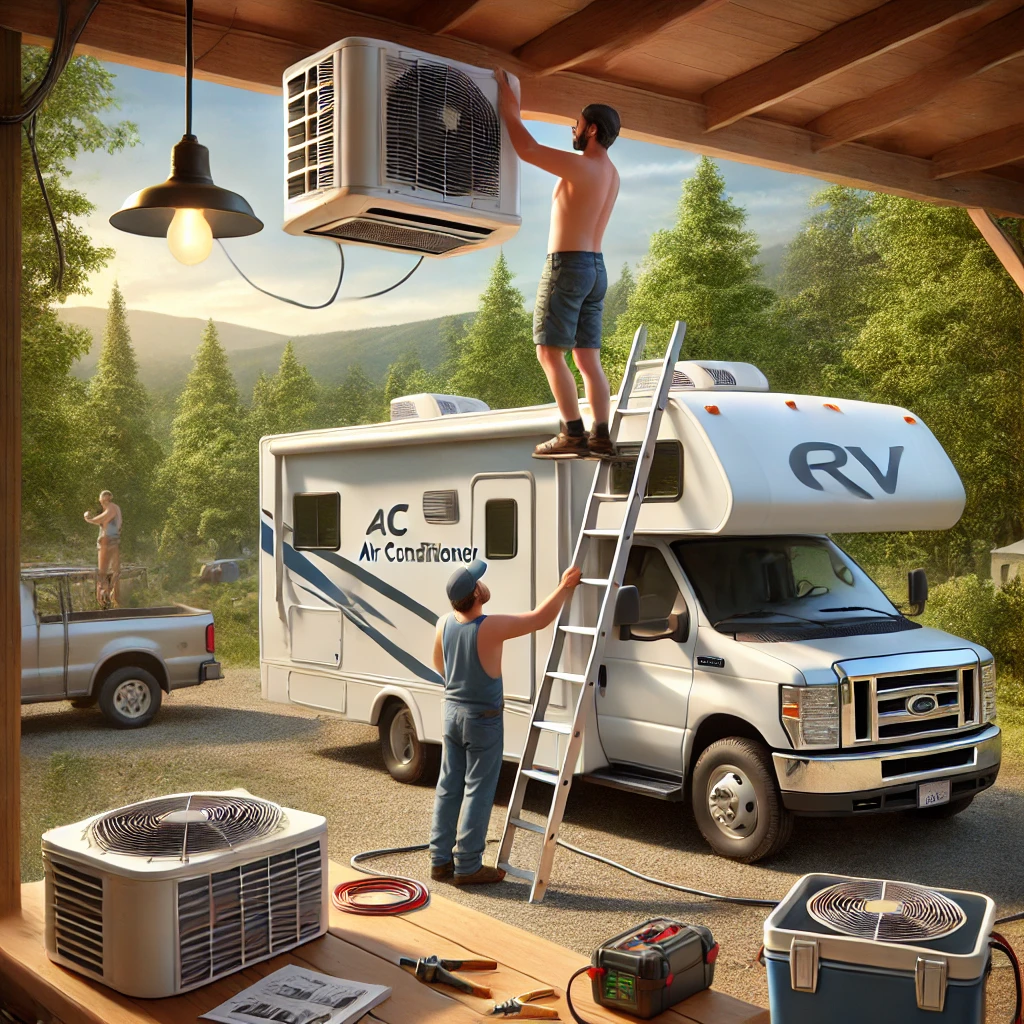
If you’ve ever camped in blazing summer heat, you know that a single RV air conditioner might not be enough—especially in larger rigs or when camping in high-humidity areas. Adding a second AC unit can dramatically improve comfort, but it also comes with a big challenge: not overloading your RV’s electrical system.
The good news? There are ways to add a second air conditioner without constantly tripping breakers or needing a complete electrical overhaul. Here’s how to do it safely and effectively.
1. Check Your RV’s Electrical Capacity
Before adding a second AC, you need to know what your RV’s electrical system can handle.
What’s Your RV’s Power Setup?
- 50-Amp RVs: Most larger RVs have a 50-amp system, which can usually handle two air conditioners without issue.
- 30-Amp RVs: If your RV only has a 30-amp system, running two ACs at the same time is tricky but possible with some creative power management.
🌟 Pro Tip: If you’re unsure, check your RV’s power panel or owner’s manual to confirm whether it’s a 30-amp or 50-amp rig.
2. Decide How You’ll Power the Second AC
Once you know your RV’s electrical limits, you have three main options for adding a second air conditioner:
Option 1: Install a Low-Power (Soft-Start) AC Unit
Some newer low-wattage AC models are designed to run on less power, making them ideal for RVers who want a second unit without overloading their system.
✔ Uses less energy than traditional ACs
✔ Can often run on a 30-amp system with careful power management
✔ Pairs well with a soft start system for smoother operation
Best for: RVers with 30-amp service who want an AC option without major electrical upgrades.
Option 2: Use a Soft Start on One or Both ACs
A soft start device helps reduce the huge power surge that happens when an AC first kicks on. This allows you to run a second unit without spiking power usage and tripping breakers.
✔ Lowers the initial startup surge by up to 70%
✔ Lets two AC units run more smoothly on 30-amp power
✔ Helps your generator or inverter handle the extra load
🌟 Pro Tip: Installing soft starts on BOTH ACs can make a big difference in preventing overload.
Option 3: Power the Second AC Separately
If your RV is 30-amp and you can’t run two ACs off your main power, consider powering the second unit separately.
How to Do It:
✔ Install a second power inlet so the AC can be plugged into a separate 20-amp power source at campgrounds.
✔ Use a dedicated generator for the second AC while boondocking.
✔ Some DIYers run a dedicated circuit from an inverter to power the extra AC.
Best for: RVers who camp in hot climates and need two full-power ACs, even on 30-amp service.
3. Choose the Right Spot for the Second AC
If your RV didn’t come pre-wired for a second air conditioner, you’ll need to pick the right location for installation.
Common Installation Locations:
✔ Pre-Wired AC Prep Areas – Some RVs have a vent space designed for AC installation (check your owner’s manual).
✔ Bedroom or Rear Living Area – If your main AC is in the front, installing the second AC toward the back helps evenly cool the entire rig.
✔ Replacing an Existing Vent Fan – Some RVers swap out a roof vent for an AC unit to avoid cutting new holes.
🌟 Pro Tip: Ducted AC units distribute cool air better but require more installation effort than a non-ducted roof unit.
4. Manage Your RV’s Power Wisely
Even if your RV can handle two AC units, managing power usage is key to preventing overload.
Power-Saving Tips:
✅ Run one AC at a time if necessary – If your power is limited, alternate between front and rear ACs.
✅ Turn off non-essential appliances – Avoid running the microwave, water heater, and both ACs at the same time.
✅ Use an energy management system (EMS) – Some RVs have an EMS that automatically cycles power between appliances to prevent tripping breakers.
✅ Upgrade to lithium batteries + inverter – If you’re running AC off-grid, a large battery bank + inverter system can help smooth out power demands.
🌟 Pro Tip: A power monitor can help you track energy use and avoid tripping breakers unexpectedly.
5. Consider Upgrading to 50-Amp Service (If Needed)
If your RV is 30-amp and you consistently need two ACs, it might be worth upgrading your system to 50-amp power.
What’s Involved in a 50-Amp Upgrade?
✔ Replacing your RV’s power cord & breaker panel
✔ Installing a new 50-amp shore power inlet
✔ Upgrading wiring and connectors to handle the extra load
⚠ Keep in mind: This upgrade is not cheap and may not be worth it unless you live in your RV full-time in hot climates.
🌟 Pro Tip: Instead of a full upgrade, some RVers install a hybrid 30-amp + 20-amp setup to power their second AC without overloading the main system.
Final Thoughts: Stay Cool Without Overloading Your RV
Adding a second air conditioner doesn’t have to be complicated—as long as you manage your power wisely.
Quick Recap: How to Add a Second AC Without Overloading Power
✔ Check your RV’s electrical system – 50-amp rigs can usually handle two ACs, but 30-amp rigs need extra planning.
✔ Use a low-power AC unit – Newer models require less energy to run.
✔ Install a soft start – Reduces startup power surges and prevents breaker trips.
✔ Consider powering the second AC separately – A dedicated circuit or generator can help on 30-amp setups.
✔ Manage overall energy use – Turn off unnecessary appliances and use an EMS system.
✔ Upgrade to 50-amp service (if needed) – If you’re full-timing in the heat, it might be worth it.
🚐 Have you added a second air conditioner to your RV? What setup worked best for you? Let us know in the comments!