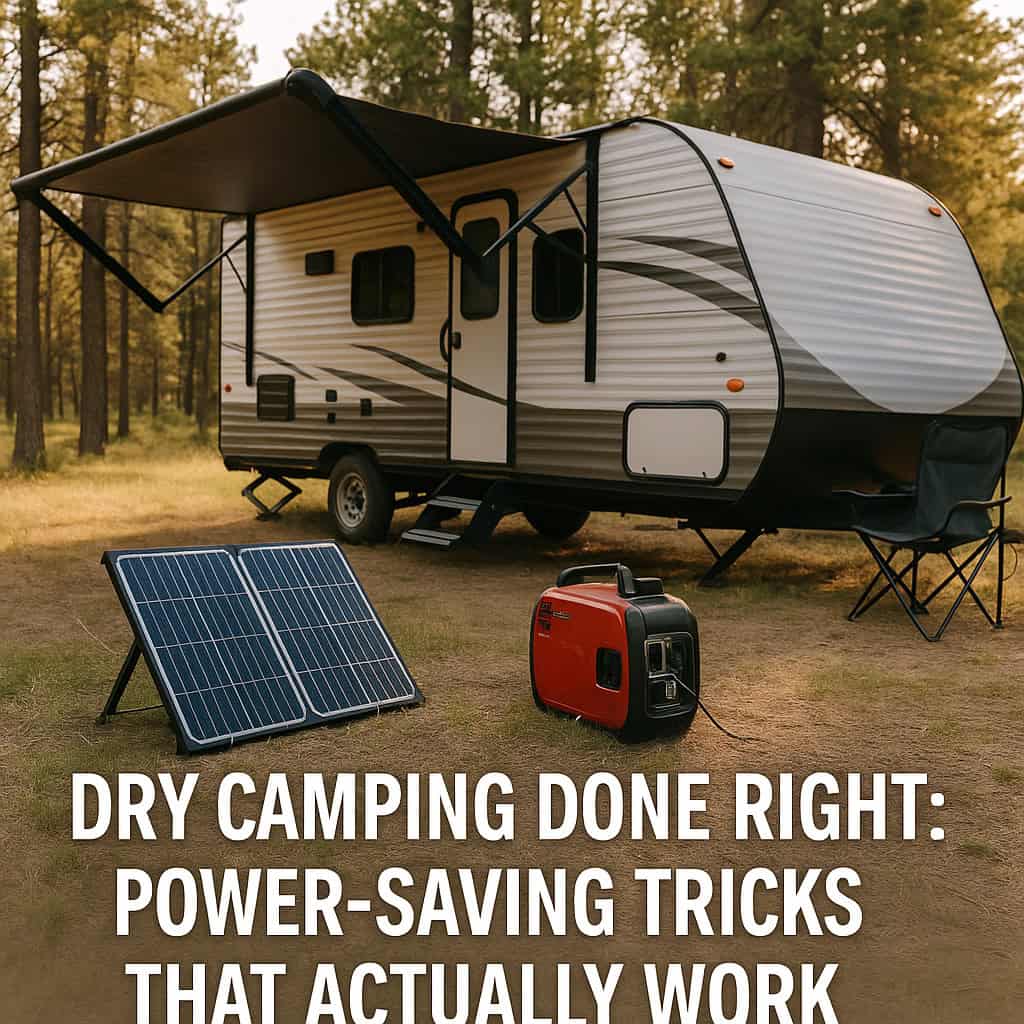
Dry camping—also called boondocking or off-grid camping—can be liberating, but it also means every amp-hour and watt counts. Whether you're tucked into BLM land or just skipping hookups for a night, these tested, real-world power-saving tips can help you stay comfortable without running out of juice.
🔋 1. Know What Eats Power (and What Doesn't)
-
Big draws: Air conditioners, microwaves, electric water heaters, coffee makers.
-
Low draw heroes: LED lights, phone chargers, 12V fans, propane systems.
Pro tip: Use a battery monitor like a Victron BMV or shunt-based system to track usage in real-time.
☀️ 2. Go Solar—But Smartly
-
Even a 100W suitcase panel can offset phone/laptop use.
-
For longer stays, aim for a 200–400W roof setup with MPPT controller.
-
Angle your panels toward the sun when parked—especially in winter.
💡 3. Upgrade to LED Everything
Still rocking old halogens or incandescent bulbs? You're wasting power.
-
LED fixtures use up to 80% less energy.
-
Available in warm or daylight tones to match the vibe.
🌀 4. Use 12V Appliances
Avoid using your inverter unless necessary. DC appliances are:
-
More efficient,
-
Easier on batteries,
-
Often smaller and camper-friendly (think fans, coolers, even blenders).
🔌 5. Inverter Etiquette: Turn It Off When Idle
Leaving your inverter running 24/7? It's quietly draining your batteries.
-
Turn it off when not in use.
-
Use power strips with switches to control phantom loads like TVs and chargers.
🔥 6. Cook With Propane, Not Power
Microwaves and electric skillets burn watts fast.
-
Stick to propane stoves, campfire cooking, or thermal cookers.
-
Bonus: Propane fridges also save battery power.
❄️ 7. Mind the Fridge Settings
-
Switch to propane mode when dry camping if possible.
-
For 12V or compressor fridges: pre-cool at home, then keep it closed.
-
Consider insulating it with a fridge blanket for efficiency.
⚠️ 8. Know Your Limits
Understand your:
-
Battery bank size (in amp-hours),
-
Solar input,
-
Inverter draw and idle load.
Keep a log of daily usage for smarter planning next time.
🧠 Final Thought: Less Is More
Dry camping is about freedom, simplicity, and self-reliance. With a few tweaks and good habits, you can stay unplugged longer—without sacrificing comfort.