

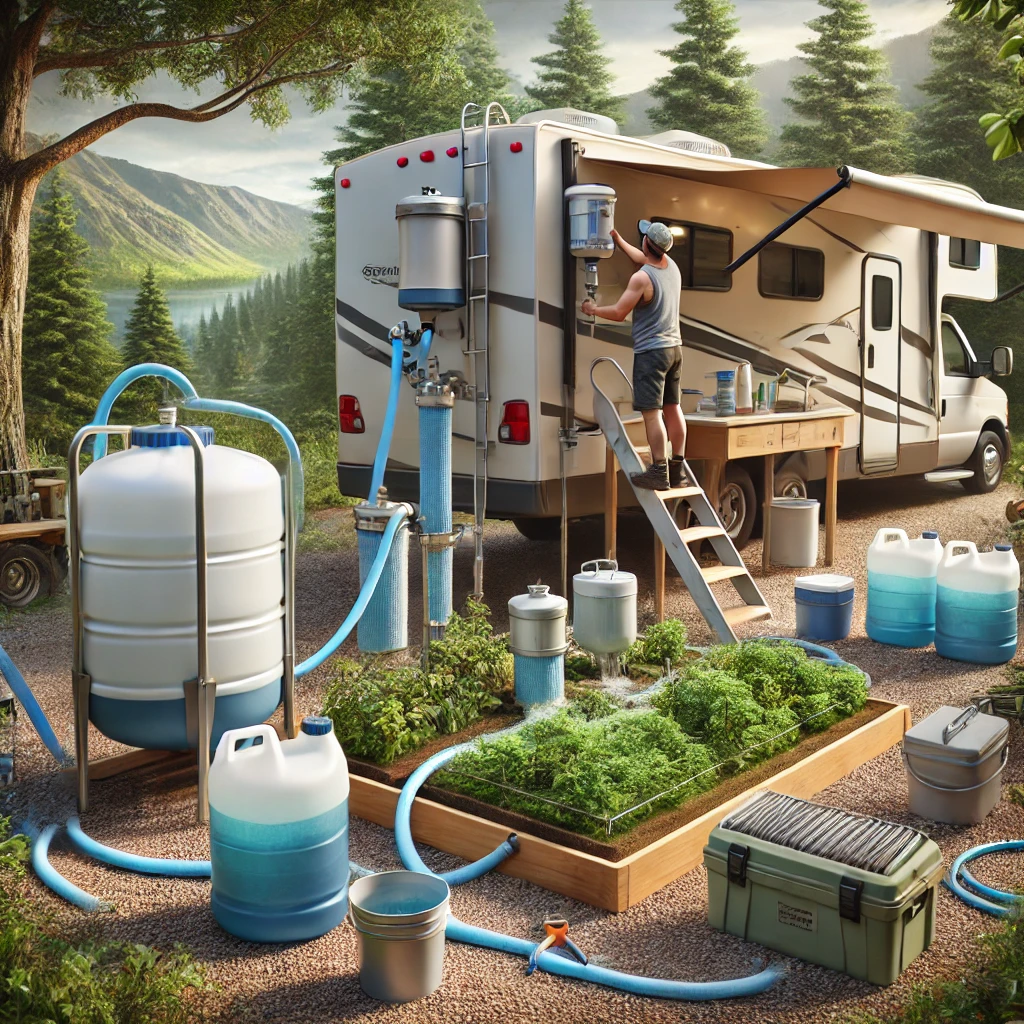
One of the biggest challenges of RV living—especially when boondocking—is managing water usage. While most of us focus on freshwater conservation, there’s another key resource that often gets wasted: grey water.
Grey water includes gently used water from your RV’s shower, sinks, and washing machine—and with the right setup, it can be filtered and reused for purposes like flushing toilets, watering plants, or outdoor cleaning.
Setting up a DIY grey water recycling system can help reduce water waste, extend boondocking trips, and promote sustainable RVing. Here’s how to build one yourself!
Is It Legal to Recycle Grey Water from an RV?
Before setting up your system, check local laws and campground rules regarding grey water disposal. While many boondocking sites and rural areas allow responsible grey water reuse, some campgrounds and states require grey water to be dumped at designated stations.
✔ Allowed: Watering plants, outdoor cleaning, flushing toilets.
❌ Not Allowed: Discharging grey water on the ground in restricted areas.
🌟 Pro Tip: Always use biodegradable soaps to prevent harming plants and wildlife!
Step 1: Understanding Your RV’s Grey Water System
Your RV’s grey water system collects water from the shower, kitchen sink, and bathroom sink. Unlike black water (toilet waste), grey water does not contain human waste—but it can contain soap, food particles, and grease, which require filtering before reuse.
What You Can Reuse Grey Water For:
✔ Flushing the toilet (reduces freshwater use)
✔ Watering non-edible plants (if using biodegradable soap)
✔ Cleaning your RV, gear, or solar panels
✔ Extinguishing campfires
Step 2: Setting Up a Basic DIY Grey Water Recycling System
There are several methods to recycle grey water from your RV. Here’s a simple and effective three-step filtration system to make grey water reusable.
🚰 Materials Needed:
🔹 Hose splitter (to divert grey water)
🔹 Bucket or portable water tank
🔹 Mesh screen (for filtering debris)
🔹 Charcoal & sand filter (for basic water purification)
🔹 Biodegradable soap (to ensure eco-friendliness)
🔹 Submersible pump (optional, for directing water)
Step 3: Filtering the Grey Water
🛠️ Option 1: Gravity-Based Filtration
1️⃣ Attach a hose splitter to your RV’s grey water outlet.
2️⃣ Connect one hose to your dump tank (for disposal when needed).
3️⃣ Direct the other hose into a bucket or portable water tank.
4️⃣ Place a mesh screen over the bucket to catch food particles and debris.
5️⃣ Layer the bucket with sand, charcoal, and gravel for natural filtration.
6️⃣ Let the filtered water drain into a secondary container for reuse.
✔ Best for watering plants & outdoor cleaning
✔ Requires no power or pump
🛠️ Option 2: Pressurized Filtration (For Toilets & Showers)
If you want to reuse grey water for flushing toilets or showers, you’ll need a pump-powered filtration system.
1️⃣ Install a small submersible pump in your grey water tank.
2️⃣ Route the water through a multi-stage filter (mesh, sand, and charcoal).
3️⃣ Send the filtered water to a separate holding tank for flushing the toilet or rinsing outdoor gear.
✔ Best for RVers looking to reduce freshwater use significantly
✔ Requires a pump and additional plumbing modifications
Step 4: Safely Using Recycled Grey Water
Now that your grey water is filtered, here’s how to use it effectively:
✔ For plants – Only water non-edible plants and use biodegradable soap.
✔ For flushing toilets – Attach the grey water storage tank to the toilet intake.
✔ For washing gear – Use grey water to rinse camping equipment or muddy boots.
✔ For fire safety – Keep extra grey water on hand to extinguish campfires safely.
🌟 Pro Tip: If you’re storing grey water for more than 24 hours, add a few drops of hydrogen peroxide to prevent bacteria growth.
The Benefits of DIY Grey Water Recycling for RVers
✅ Reduces freshwater consumption – Especially useful for boondocking and off-grid camping.
✅ Extends your time off-grid – Less need to refill fresh water and empty tanks.
✅ Eco-friendly – Saves water, supports sustainable camping, and reduces environmental impact.
✅ Saves money – Less frequent campground stays for water refills.
Final Thoughts: Is Grey Water Recycling Worth It?
For RVers who love boondocking or want to reduce waste, setting up a DIY grey water recycling system is a game-changer. Whether you’re using it to flush toilets, clean gear, or water plants, every drop saved helps conserve resources and makes off-grid living easier.
🚐 Would you try a grey water recycling system in your RV? Share your experiences in the comments!