

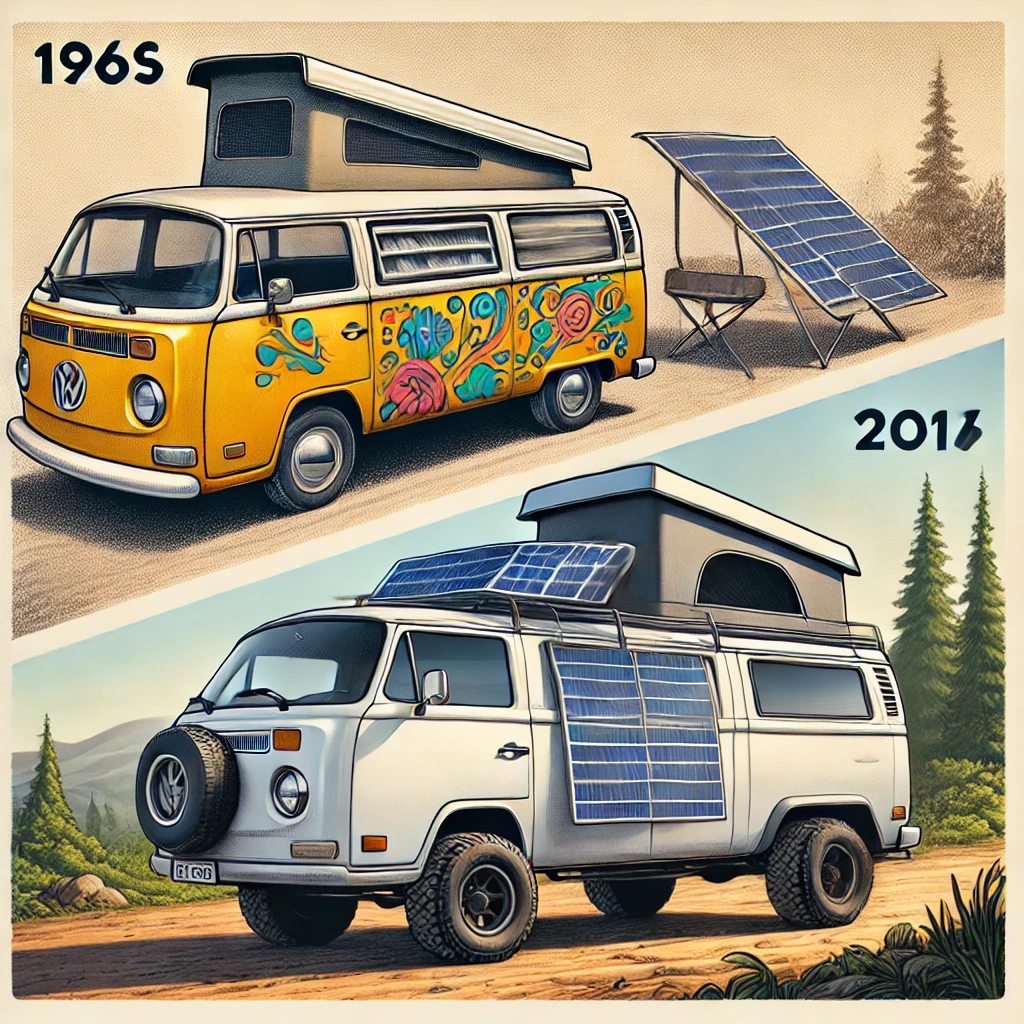
Campervans have come a long way from their humble beginnings as simple travel vehicles. What started as a symbol of hippie freedom and counterculture in the 1960s has now evolved into a modern nomadic movement, with thousands of people embracing van life as a way to explore the world full-time.
From the classic VW Bus to today’s high-tech, solar-powered campervans, let’s take a trip through time and explore how campervans have shaped travel, culture, and the way people experience adventure on the road.
The Birth of Campervans: The Early Days (1910s–1950s)
The idea of a home on wheels dates back over a century! People have always sought ways to travel while carrying the comforts of home, and the first campervans were handmade conversions built on Model T Fords and early trucks.
1910s–1930s: The First Custom Campervans
- In the early 1900s, wealthy travelers customized their vehicles with bunk beds, stoves, and water tanks to explore off the beaten path.
- One of the earliest examples was the “House Car”, built on a Ford Model T chassis and used for long-distance road trips.
- During the Great Depression (1930s), some families lived in homemade campers out of necessity while traveling for work.
1940s–1950s: Post-War Growth and Mass Production
- After World War II, automobile manufacturing boomed, and companies started producing the first factory-built campervans.
- In 1950, Volkswagen (VW) introduced the Type 2 Microbus, also known as the VW Bus, which became one of the most iconic campervans in history.
- People embraced road trips and camping as an affordable way to travel.
💡 Did You Know? The first VW Bus was inspired by a Dutch businessman who sketched the idea of a “boxy transport vehicle” for carrying goods. It later became a hippie icon!
The 1960s–1970s: The Hippie Van Movement
The 1960s and 70s were the golden age of campervan culture, largely due to the hippie movement.
🚐 Why the VW Bus Became a Hippie Symbol:
✔ It was affordable and easy to repair.
✔ It had plenty of space for travelers to live inside.
✔ It was linked to counterculture, freedom, and anti-establishment ideals.
During this time, thousands of people converted VW Buses into rolling homes, traveling to festivals like Woodstock (1969) and making their way across the country in search of adventure.
🔹 Westfalia Campervans (1960s–70s) – Volkswagen introduced factory-made camper conversions, complete with pop-up roofs, fold-out beds, and compact kitchens.
🔹 DIY Van Builds – People customized their vans with psychedelic paint, colorful curtains, and handmade furniture.
💡 Fun Fact: Many hippie vans were painted with bright colors, peace signs, and flowers—earning them the nickname “Love Buses.”
The 1980s–1990s: The Rise of the Classic American Campervan
While VW continued to be popular among travelers, larger American-style campervans gained popularity during the 1980s and 90s.
Key Changes in Campervans:
✔ The introduction of Ford Econoline, Dodge Ram, and Chevy G-Series vans as popular conversion vehicles.
✔ Larger Class B motorhomes (fully built-out campervans) became available, offering more comfort and amenities.
✔ Families used campervans for weekend getaways and summer road trips, rather than full-time living.
✔ Technology improved, bringing more efficient fridges, propane stoves, and better insulation for year-round camping.
🏕 Popular Van Models of This Era:
- VW Vanagon (T3) (1980s)
- Ford Econoline Conversions (1990s)
- Dodge Ram Van (1990s)
💡 Did You Know? The VW Vanagon (1980s–90s) introduced 4-wheel-drive models, allowing people to take their campervans off-road for the first time.
The 2000s–2010s: The Van Life Revolution
The 2000s and 2010s saw a shift toward minimalist travel and remote work, leading to the rise of #VanLife—a movement of people choosing to live in campervans full-time.
🚐 Why Van Life Took Off:
✔ Social media and Instagram influencers made campervan life look appealing.
✔ Technology allowed for remote work, making it possible to live and travel full-time.
✔ People wanted to escape high rent and traditional housing costs.
✔ DIY van conversions became more affordable and accessible.
🔹 Sprinter Vans (2010s–Today) – Mercedes-Benz Sprinters became a favorite for van lifers due to fuel efficiency, cargo space, and customizability.
🔹 Ford Transit & Ram ProMaster Vans – New van models provided affordable and reliable alternatives for full-time van lifers.
🔹 Eco-Friendly Builds – Solar panels, composting toilets, and sustainable materials became standard in DIY builds.
💡 Did You Know? The hashtag #VanLife was created by a photographer in 2011 and has since been used over 10 million times on Instagram!
The Future of Campervans: What’s Next?
Campervans continue to evolve with technology and changing lifestyles. Here’s what’s next for the future of campervans:
✔ Electric Campervans – Companies like Volkswagen, Ford, and Rivian are designing electric-powered vans with zero emissions.
✔ Autonomous Driving – Self-driving technology may make long road trips easier in the future.
✔ Ultra-Lightweight Materials – Future vans will use more energy-efficient and sustainable materials.
✔ Smart Van Technology – Apps and smart home systems will control lighting, temperature, and water usage.
🚐 Best New Campervans to Watch:
- VW ID.Buzz (Electric VW Bus, 2024 Release)
- Rivian Electric Adventure Van (Coming Soon)
- Ford Transit Trail AWD (New Off-Road Edition)
💡 Fun Fact: The classic VW Bus is coming back as the VW ID.Buzz, an all-electric version of the beloved hippie van!
Final Thoughts: The Campervan Lifestyle Lives On
From the hippie movement to modern van life, campervans have transformed the way people travel. Whether you’re a weekend road-tripper or a full-time digital nomad, van life offers a freedom and adventure that continues to inspire.
✔ The 1960s gave us the hippie van movement.
✔ The 1980s–90s made campervans more comfortable and accessible.
✔ The 2010s sparked a van life revolution with remote work and social media.
✔ The future is electric, high-tech, and more sustainable than ever.
Are you ready to hit the road and be part of campervan history?