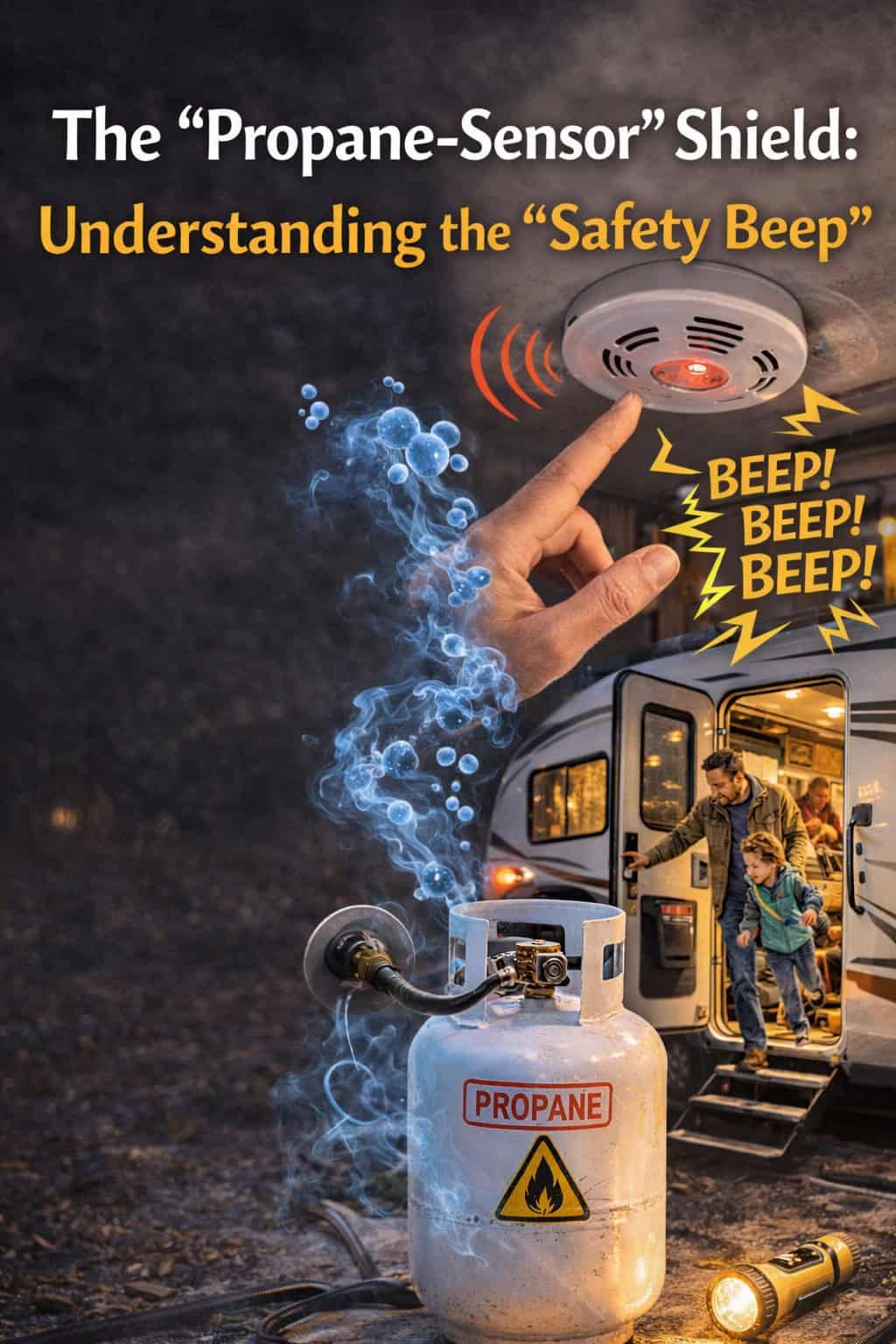
The Science of the Floor-Level Watchdog
You’re hanging out in the RV when suddenly—BEEP! BEEP! BEEP!—a loud, piercing alarm starts screaming from a small plastic box near the floor. It’s not the smoke detector on the ceiling, and it’s not the carbon monoxide alarm in the bedroom. This is your Propane (LP) Leak Detector.
In the world of the RV Co-Captain, this "Safety Beep" is the most important sound you’ll ever hear. Here is the science of why that sensor is on the floor, how it "smells" danger, and what to do when it talks to you.
1. The Physics of "Specific Gravity"
The Question: Why is the propane sensor always mounted 2 to 4 inches off the floor, while smoke detectors are on the ceiling?
-
The Science: It all comes down to Density. Air has a "Specific Gravity" of 1.0.
-
The Physics: Propane gas is heavier than air (it has a specific gravity of about 1.5).
-
The Result: If propane leaks from your stove or furnace, it doesn't float up; it sinks. It flows across your RV floor like invisible water, filling up the "low spots" first. By putting the sensor near the floor, it catches the leak before the gas reaches your bed or the stove’s pilot light.
2. The Chemistry of the "Rotten Egg" (Mercaptan)
The Science: Pure propane is actually odorless—you can’t smell it at all! That would be incredibly dangerous.
-
The Fix: Gas companies add a chemical called Ethyl Mercaptan.
-
The Chemistry: This is one of the smelliest substances on Earth. Humans can detect it even if there is only one molecule of it in a billion molecules of air.
-
The Reason: It smells like rotten eggs or "stinky socks" on purpose, so your nose can act as a backup sensor to the electronic one.
3. How the Sensor "Tastes" the Air
The Science: Inside that little plastic box is a tiny piece of ceramic coated with Tin Dioxide ($SnO_2$).
-
The Physics: When the sensor is on, it heats up that ceramic. In clean air, the ceramic has high Electrical Resistance (it’s hard for electricity to flow through it).
-
The Reaction: When propane molecules hit that hot ceramic, they trigger a chemical reaction that lowers the resistance.
-
The Result: Suddenly, electricity zooms through the sensor! The "Brain" of the alarm detects this surge and triggers the "Safety Beep" to warn you.
4. The "False Alarm" Physics (Aerosols and Dogs)
The Science: Sometimes the alarm goes off even when there isn't a gas leak.
-
The Culprits: Because the sensor is so sensitive, other chemicals can "trick" it.
-
The Common Triggers: * Hairdryer/Hairspray: The chemicals in aerosol cans.
-
Cleaning Supplies: Strong floor cleaners or bleach.
-
The Family Dog: Believe it or not, if a dog sleeps right in front of the sensor, the gases from their fur or "doggie breath" (which contains methane) can trigger the alarm!
-
-
The Strategy: If the alarm goes off, check the stove first. If everything is off and you don't smell rotten eggs, check if you just sprayed something nearby.
5. The "Departure Protocol" for Propane
As a Co-Captain, you should manage the "Propane Shield" every trip:
-
The Test: Press the "Test" button once a week. It should beep loudly to show the battery and the "Tin Dioxide" heater are working.
-
The Expiration: Most propane sensors only last 5 to 7 years. Look for the "Replace By" date on the front. After 7 years, the chemistry inside the sensor "wears out" and won't detect gas anymore.
-
The Power Check: These sensors run off your RV’s house batteries. If your batteries get too low, the sensor will "Chirp" (one beep every minute) to tell you it doesn't have enough power to keep you safe.
Pro Tip: The "Shadow" Leak. If you’re parked in a site with very tall grass, a propane leak from under the RV can get "trapped" in the grass and seep up through the floorboards. Always make sure the area directly under your RV has good Airflow so any leaking gas can blow away safely!
Final Thoughts
The Propane Sensor is your silent guardian. It understands the physics of heavy gases and the chemistry of electrical resistance so you don't have to. When it beeps, it’s not trying to annoy you—it’s using science to keep your "Home on Wheels" a safe place to dream.
Respect the beep, Captain!
🐟 Want to find a site with "Steady Breezes" to keep your RV ventilated? Good airflow is a safety must! CampgroundViews.com lets you take a 360-degree tour of the park. You can see which sites are in "Wind Tunnels" or open areas that provide natural ventilation, keeping the air around your propane tanks fresh and moving.
Scout your "Fresh-Air" site at CampgroundViews.com!