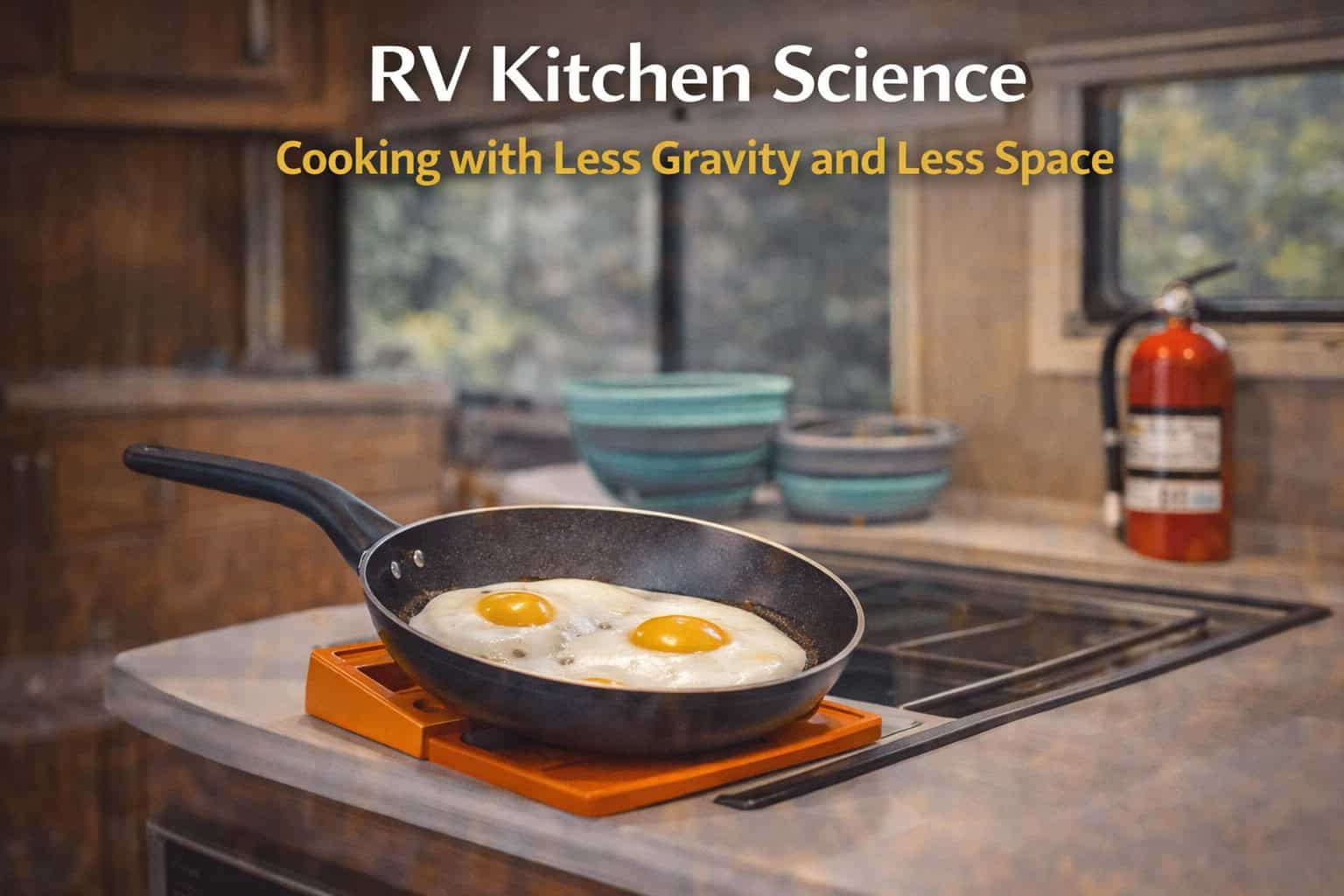
RV Kitchen Science: Cooking with Less Gravity and Less Space
How to Be a Master Chef in a Moving Lab
Cooking in an RV isn't just about making dinner; it’s an experiment in physics and chemistry! When you move your kitchen from the city to the mountains, or from a big house to a tiny camper, the "rules" of cooking actually change.
If you want to understand why your pasta takes longer to cook or why your RV oven burns the bottom of your biscuits, you need to think like an RV Kitchen Scientist.
1. The "High-Altitude" Gravity Trick
The Science: As you drive up into the mountains, the air gets "thinner" (there is less air pressure pushing down on you). This changes the Boiling Point of water.
-
The Lab Result: In a house at sea level, water boils at 212°F (100°C). But high in the mountains, water might boil at only 200°F.
-
The Problem: Even though the water is bubbling like crazy, it isn't as hot as it is at home!
-
The Fix: Your pasta and potatoes will take longer to cook. You have to be patient and use your "Testing Fork" more often.
2. The "Thermal Mass" Mystery (The Tiny Oven)
The Science: Most RV ovens are small and made of thin metal. They don't have a lot of Thermal Mass, which means they lose heat quickly and have "hot spots" right above the flame.
-
The Lab Result: This is why the bottom of your pizza might burn while the cheese on top isn't even melted!
-
The Fix: Place a pizza stone or a couple of unglazed ceramic tiles on the bottom shelf of the oven. These act as a "heat battery," soaking up the fire's energy and spreading it out evenly so your food cooks from all sides at once.
3. The "Surface Tension" Dishwashing Challenge
The Science: In an RV, you have a limited amount of water in your tank, and your sink is tiny. You have to use Chemistry to get dishes clean with very little water.
-
The Lab Result: If you just turn the water on full blast, you’ll run out in five minutes!
-
The Fix: Use the "Spray and Wipe" method. Use a spray bottle with a tiny bit of soap and water to loosen the food "molecules" first. Then, do a quick rinse.
-
Pro Tip: Use a plastic tub inside the sink to catch the water. You can use that "grey water" to help flush the toilet later—that's called Water Recycling!
4. The "Vacuum" Food Storage System
The Science: RVs can get bumpy, and air is the enemy of fresh food.
-
The Lab Result: Bags of chips can pop open if you drive to a higher altitude (because the air inside the bag expands!), and bread can get squished.
-
The Fix: Use square, stackable containers. Square shapes use 100% of the space in your cabinets (circles leave "dead space" in the corners).
-
The Physics: Keeping containers tightly packed stops them from sliding around like air hockey pucks when the RV turns a corner.
5. The "Propane Power" Safety Check
The Science: Most RV stoves use Propane, which is a gas that needs oxygen to burn.
-
The Lab Result: When you cook, the flame uses up the oxygen in the small RV kitchen and replaces it with water vapor and carbon dioxide.
-
The Fix: Always crack a window or turn on the ceiling fan while the stove is on. This creates Cross-Ventilation, bringing in fresh oxygen and keeping your "Kitchen Lab" safe and dry.
Pro Tip: The "One-Pot" Variable. To save on cleanup and propane, try "One-Pot Science." Can you cook the protein, the veggies, and the starch all in the same pan? It’s a fun engineering challenge that leaves you with only one dish to wash!
Final Thoughts
Being a Chef in an RV means you are a scientist on the go. You have to adapt to the altitude, manage your "thermal mass," and conserve your resources. Once you master the physics of the tiny kitchen, you can make a five-star meal anywhere—from the beach to the highest mountain peak!
Bon Appétit, Scientist!
🐟 Want to see if your "Kitchen Lab" has a view of the mountains? You can check the scenery before you park! CampgroundViews.com lets you take a 360-degree tour of the park so you can pick a site with the perfect window view for your morning breakfast.
Pick your kitchen window view at CampgroundViews.com!