Becoming a Neighborhood Scout for the Wild
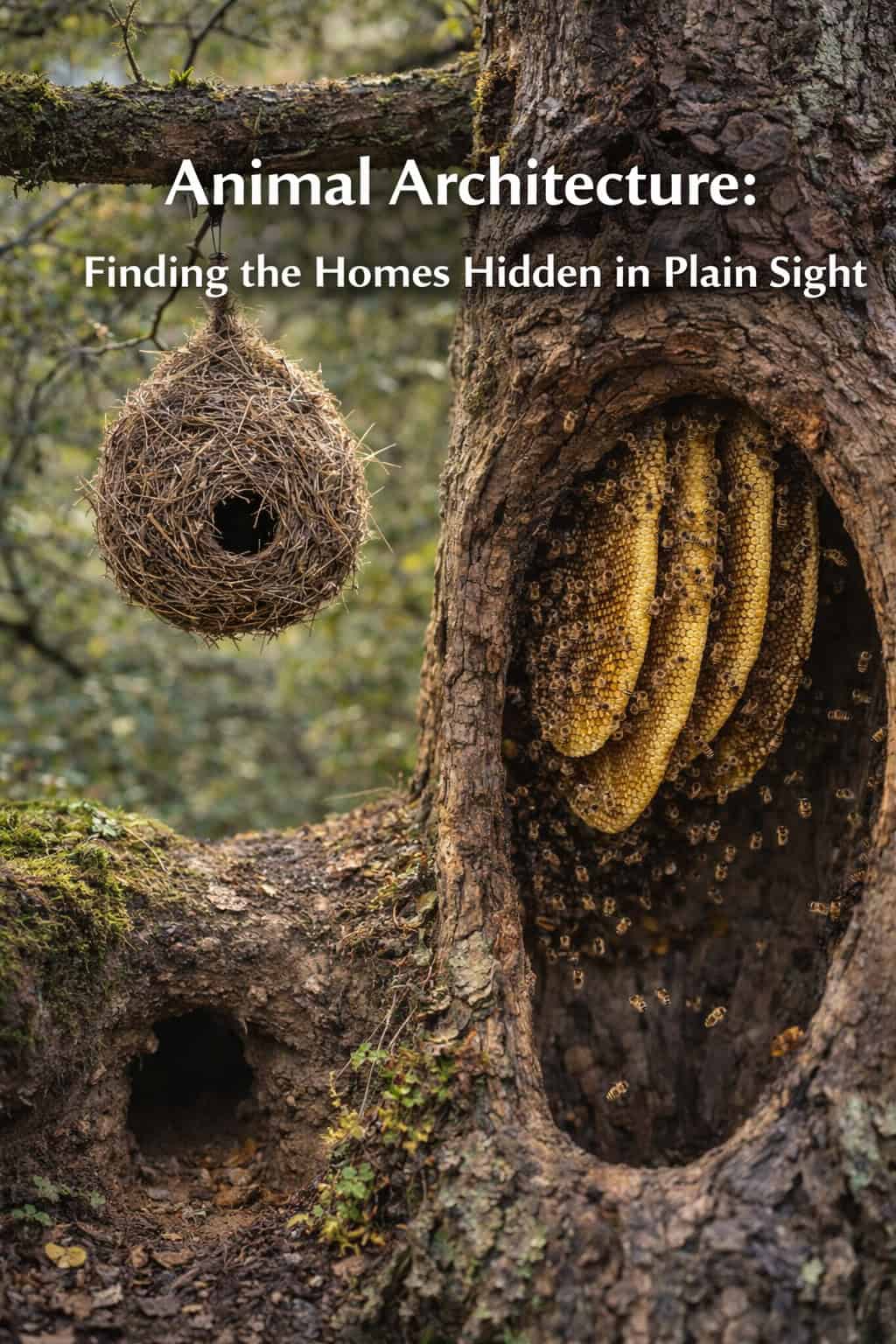
When you look at a campground, you see RVs, tents, and picnic tables. But if you look a little closer—under a log, inside a riverbank, or way up in the "Y" of a tree—you’ll realize you are actually standing in the middle of a massive, hidden city.
Animals are some of the world’s best architects. They don't have blueprints or power tools, but they build homes that are perfectly insulated, waterproof, and hidden from "Muggles" (us!). Here is how to find the Animal Architecture hidden in plain sight.
1. The "Beaver Lodge": The Island Fortress
The Look: A giant, messy pile of sticks and mud in the middle of a pond or river.
-
The Engineering: This isn't just a pile of wood. Beavers use a "Layering Technique." They stack sticks and then "plaster" them with mud to make the walls as strong as concrete.
-
The Secret Entrance: The "front door" is actually underwater. Beavers dive down and swim up into a dry room in the middle of the pile. This keeps land animals like wolves from ever getting inside.
-
The Observation: Look for "pointed" sticks near the water that look like they were sharpened by a giant pencil sharpener. That’s a sign the "Construction Crew" is nearby!
2. The "Gopher Hole": The Underground Mansion
The Look: A small mound of fresh dirt on the ground with a hole right in the center.
-
The Engineering: Underneath that hole is a complex system of tunnels. There are "Kitchens" (for storing seeds), "Nursery Rooms" (for babies), and even "Bathrooms" located far away from the sleeping areas.
-
The Physics: Gopher holes often have two openings. Why? It creates a Pressure Difference. Wind blowing over one hole "pulls" stale air out of the other, giving the gophers a natural air-conditioning system!
3. The "Mud Swallow" Nest: The Ceramic Condo
The Look: Little brown "jugs" made of mud, stuck to the side of a cliff or under the roof of the campground bathhouse.
-
The Engineering: Swallows are the "3D Printers" of the bird world. They fly to a puddle, scoop up a beak-full of mud, and fly back to "print" a single brick. It takes over 1,000 trips to build one nest!
-
The Science: The mud is mixed with the bird's saliva (spit), which acts like a super-glue, making the nest strong enough to hold a whole family of birds.
4. The "Squirrel Drey": The High-Rise Penthouse
The Look: A big, messy ball of leaves and twigs stuck high up in a tree. (People often mistake these for bird nests!)
-
The Engineering: This is called a Drey. Squirrels build a framework of sticks and then "stuff" the inside with soft moss, fur, and dry grass.
-
The Physics: The round shape and thick leaf walls act like a "Puffy Jacket." Even in a snowstorm, the squirrel’s body heat stays trapped inside the ball, keeping them nice and toasted.
5. The "Leaf-Miner" Gallery: The Invisible Art
The Look: Strange, squiggly white lines on a green leaf that look like someone drew on it with a silver pen.
-
The Engineering: This is the home of a tiny caterpillar (a leaf miner). Instead of living on the leaf, it lives inside it, eating a tunnel between the top and bottom layers of the leaf "skin."
-
The Magic: The squiggly line is actually the "floor plan" of its house. It’s the ultimate "Stealth Home" because it protects the caterpillar from the sun and hungry birds!
The "Neighbor's Code": Remember, these are real homes! If you find a nest or a hole, Look but Don't Touch. If you get too close or poke it with a stick, the animal might get scared and leave their home forever. Use your binoculars or your phone's zoom to be a "Respectful Scout."
Final Thoughts
The campground is more than just a place for us to park; it’s a living, breathing neighborhood. When you learn to spot Beaver Lodges and Gopher Mansions, a simple walk in the woods turns into a "Home Tour" of the most talented builders on the planet.
Happy House-Hunting!
🐟 Want to find a site near a "Beaver Pond" or a "Bird Haven"? You can scout the water features before you book! CampgroundViews.com lets you take a 360-degree tour of the park. You can look at the edges of the lakes and the types of trees in each site to pick a spot right in the heart of the "Wild Neighborhood."
Scout the neighborhood at CampgroundViews.com!