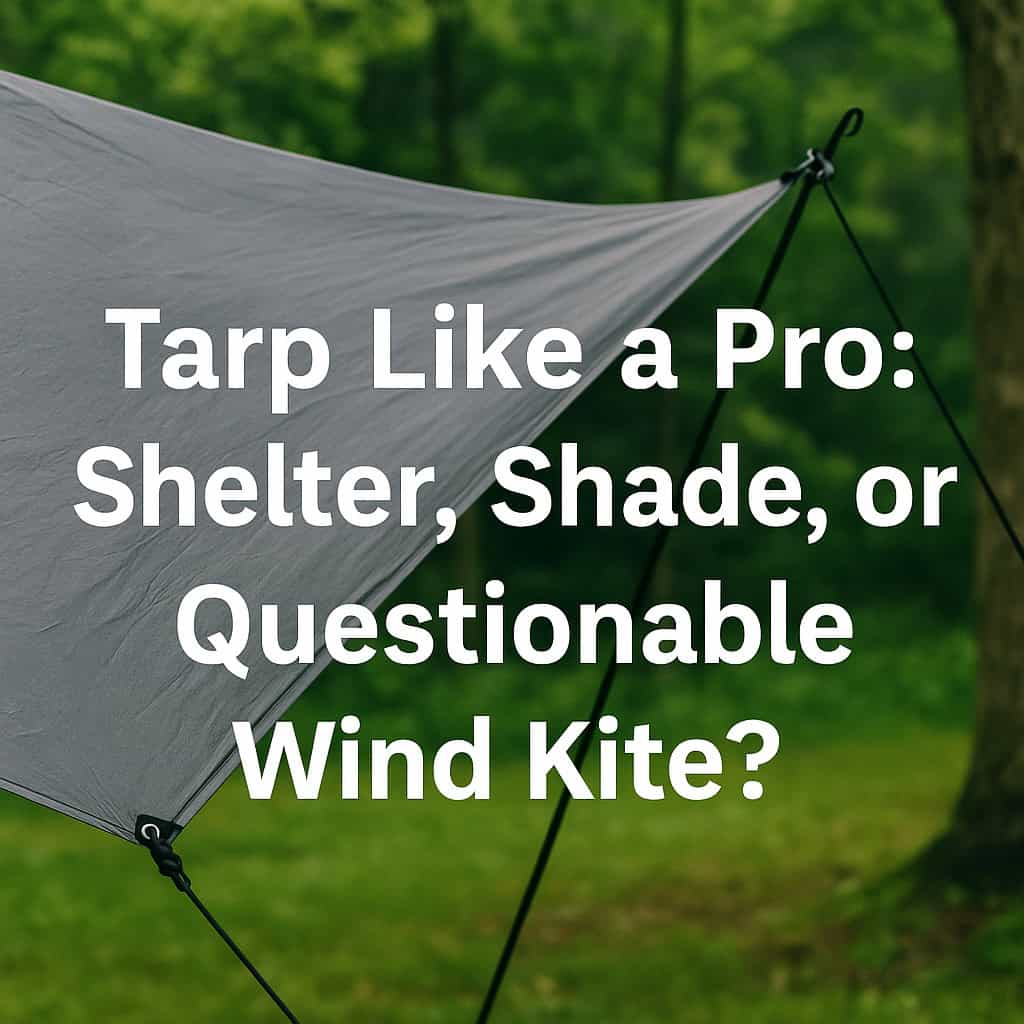
(Because every tarp setup is either genius… or about to become airborne.)
The tarp.
Beloved. Feared. Poorly folded since the dawn of camping.
Whether you use it to shield from rain, create shade, or just make yourself feel prepared — the tarp is the Swiss Army knife of campsite chaos.
Used well? It’s a portable oasis.
Used poorly? It’s a flapping nightmare that wakes the whole campground at 3 a.m.
So let’s talk about how to tarp like a pro—without becoming the campground’s unintentional wind chime.
🪵 What’s a Tarp Actually Good For?
-
Rain cover for gear or picnic table
-
Shade when trees aren’t doing their job
-
Ground cover under your tent (but only under, not peeking out like a sponge)
-
Windbreak when your awning is feeling shy
-
Emergency poncho, sled, or flag of surrender to Mother Nature
A tarp can do so much… if you don’t let it do too much.
🧰 The Must-Have Tools for Tarp Success
A tarp without accessories is just a big plastic complaint.
You need:
-
Paracord (aka: the duct tape of string)
-
Bungee cords (for lazy or windy-day setups)
-
Tent stakes or solid tie-down points
-
Something sturdier than optimism to anchor it to
Optional: a step stool, good spatial reasoning, and at least one friend to yell “PULL!” at.
💨 Wind Is Not Your Friend
The tarp doesn’t care about your confidence.
If it’s not tied down at all four corners (and maybe the middle too), you’ve built a very loud, very ineffective wind sail.
Pro tip: Always pitch your tarp with drainage and aerodynamics in mind. Otherwise, it becomes a very splashy kite.
And remember:
Flapping tarps are the campground’s alarm clock. Nobody wants to hear your struggle at 2 a.m.
☀️ Shade vs. Shelter: Know the Mission
If you need shade:
-
Go high and angled. Think “party tent,” not “bat cave.”
-
Tilt slightly to block sun without trapping heat.
If you need shelter from rain:
-
Pitch lower. Steeper angle = better runoff.
-
Add guy lines for strength.
-
Avoid the “pooling in the middle until it dumps a gallon on your chair” move.
If you need both:
You need two tarps. Or very clever angles. Or fewer expectations.
🧠 Tarp Setup Mistakes We’ve All Made
-
Forgetting to check where water will run off to (spoiler: your bed)
-
Using one tree and one lawn chair as anchor points
-
Believing “it’ll be fine” in 20+ mph winds
-
Folding it into something that’s “totally reusable” (you’ll never find those corners again)
💬 Final Thoughts
A tarp can be the best part of your campsite… or a sitcom you star in accidentally.
So next time you unfold that crinkly square of potential, ask yourself:
Is this a shade solution… or a wind-powered regret machine?
Tarp with intention. Tarp with preparation. And above all—tarp with enough rope.
🐟 Want to Know if Your Site Has Natural Shade, Wind Protection, or Enough Room to Tarp Like a Legend?
Use CampgroundViews to:
-
Preview your campsite layout and surroundings
-
Spot tree coverage, space between rigs, and ideal tie-down points
-
Plan your tarp strategy before the skies turn dramatic
🔗 Don’t wing the tarp. Preview your site, plan your pitch, and camp smarter with CampgroundViews.