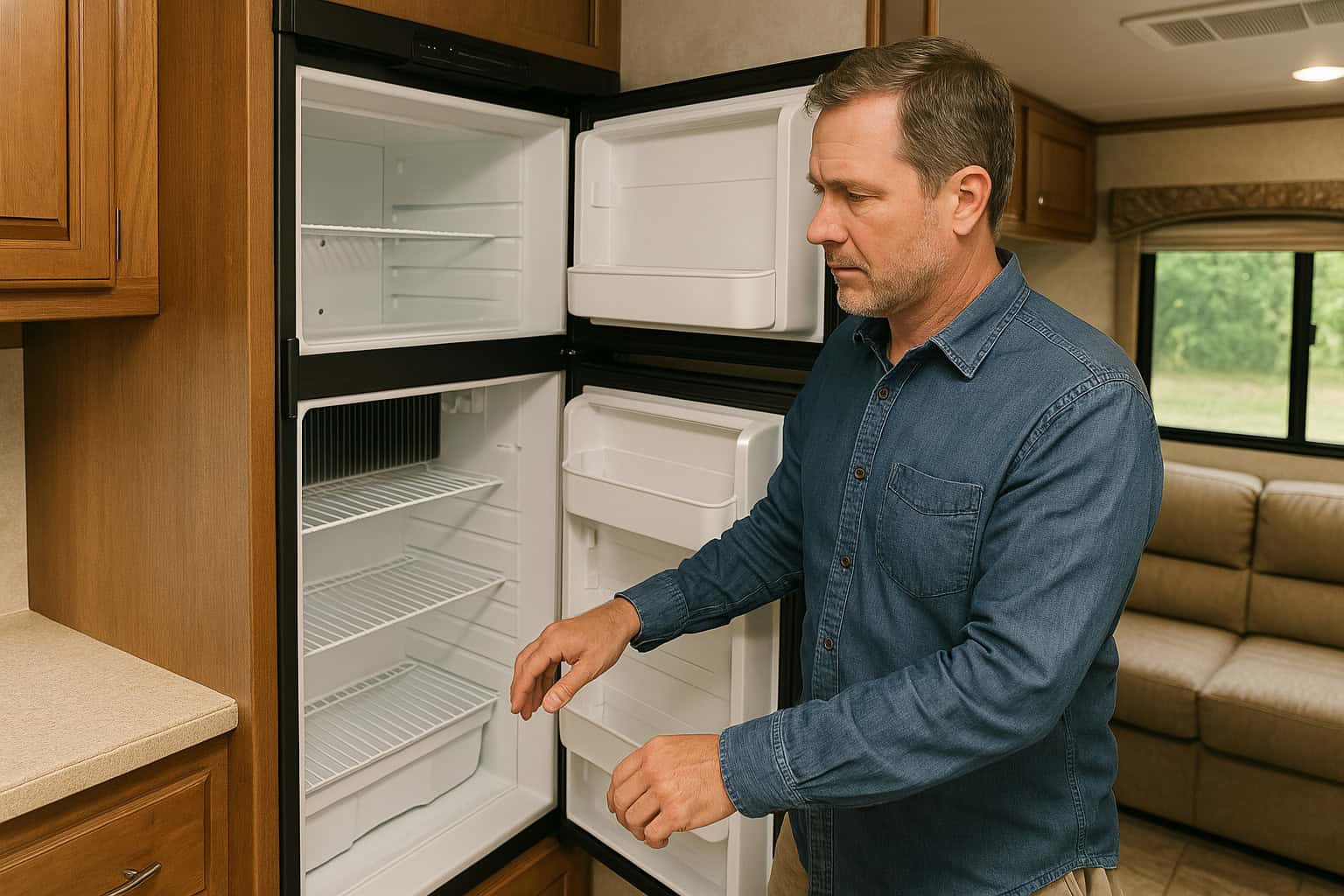
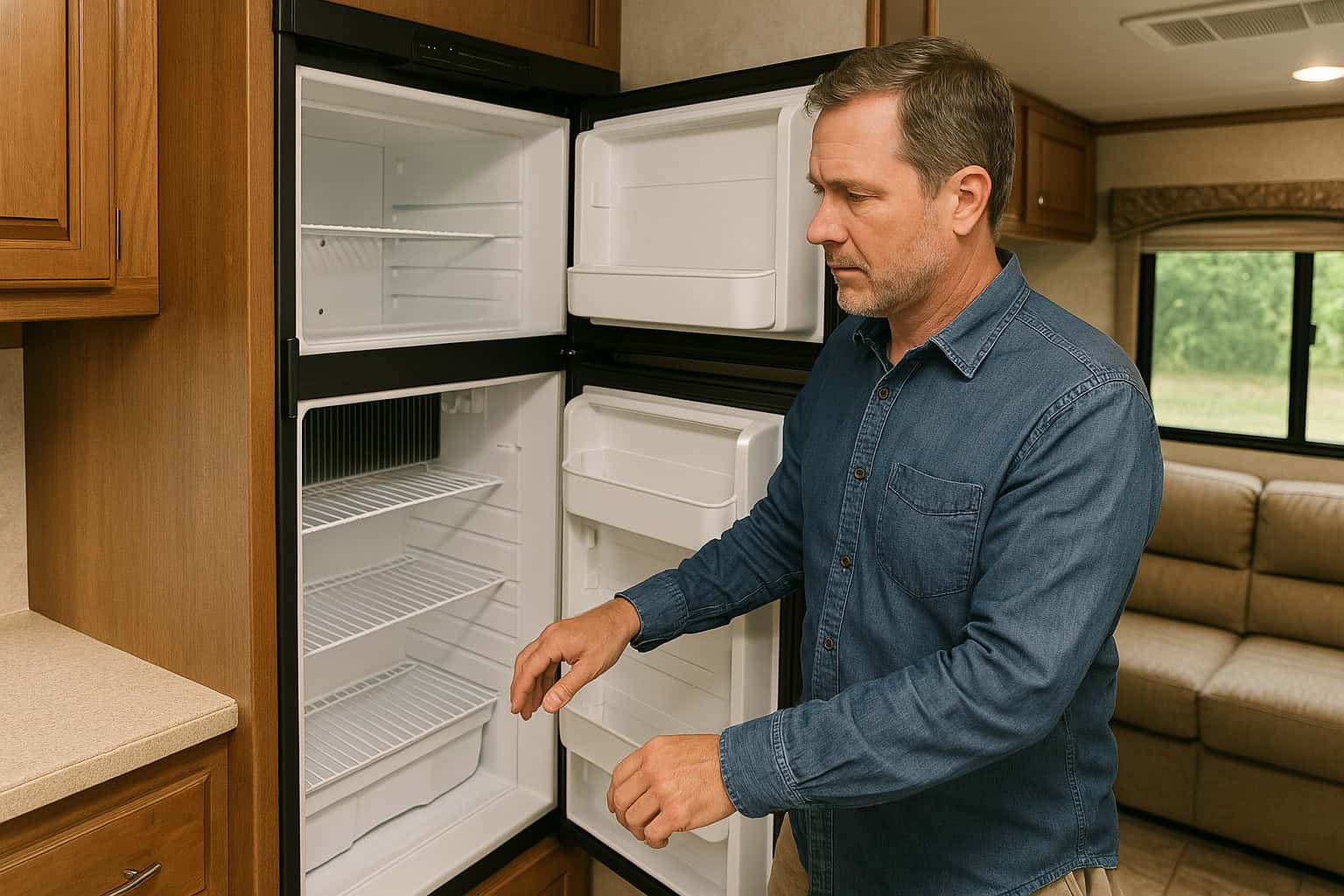
RV fridges look like regular fridges—but they don’t work the same. In fact, if you treat your RV fridge like the one at home, you might end up with spoiled food, weird smells, or even a broken fridge.
Don’t worry! RV fridges aren’t hard to use once you understand a few simple things. Let’s walk through how they work—and how to use them the right way.
🧊 How RV Fridges Are Different
Most RV fridges are absorption fridges. That means:
-
They don’t use a loud compressor
-
They cool slowly, not fast
-
They often run on propane, electricity, or both
-
They can be picky about being level
Some newer RVs have residential-style fridges, which run on electricity like the ones at home. But most campers still use the classic RV-style fridge—and that’s what we’ll focus on.
🧭 Tip 1: Level Your RV First
RV fridges need to be level to work properly. If your RV is leaning too far forward or sideways:
-
The fridge may not cool
-
The cooling system could get damaged
-
It can even be a fire risk over time
✅ Use a bubble level and leveling blocks to get your rig flat—especially if you’ll be parked for a while.
⏱️ Tip 2: Pre-Cool Before Your Trip
RV fridges take time to get cold—sometimes 8–24 hours!
✅ Turn it on the night before your trip
✅ Keep the door closed as much as possible
✅ Load it with cold food, not warm or hot items
Some people even use ice packs to help it cool faster.
🍽️ Tip 3: Don’t Overpack It
Unlike your home fridge, RV fridges need airflow to stay cold. If you cram it full of food, cold air can’t move around.
✅ Leave space between items
✅ Use small bins or baskets to organize
✅ Don’t block the vents inside
A small battery fan made for RV fridges can also help move air inside.
🔌 Tip 4: Know What Power You’re Using
Most RV fridges have a mode selector:
-
AC Power (electric hookup)
-
DC Power (battery)
-
LP Gas (propane)
-
Auto mode (switches between them for you)
✅ If boondocking or traveling, make sure you’re set to propane
✅ If plugged in at a campground, use electric to save propane
🍳 Tip 5: Store Smart (and Safe)
Because RV fridges get jostled while driving, you don’t want spills or messes.
✅ Use sealed containers
✅ Store glass bottles low or in bins
✅ Tape or latch the fridge door if needed while driving
A sticky fridge mess on day one of your trip is no fun.
❄️ Bonus: What to Do If It’s Not Cooling
If your fridge isn’t staying cold:
-
Check if the RV is level
-
Make sure the vent outside the RV isn’t blocked
-
Clean the vent screen and check for bugs or dust buildup
-
Switch power modes to see if one works better
-
Turn the fridge off and back on to reset
Still not working? You may need to call a mobile RV tech—especially if it smells weird or shows error codes.
Final Thoughts
Your RV fridge might take a little more care than your home fridge, but once you learn the basics, it works great! With the right prep, power, and airflow, you can keep your food safe and your adventures running smoothly.
So next time you pack the fridge, remember:
-
Stay level
-
Chill ahead of time
-
Don’t stuff it full
-
Know your power
A cold fridge = happy camper. 🧊🚐