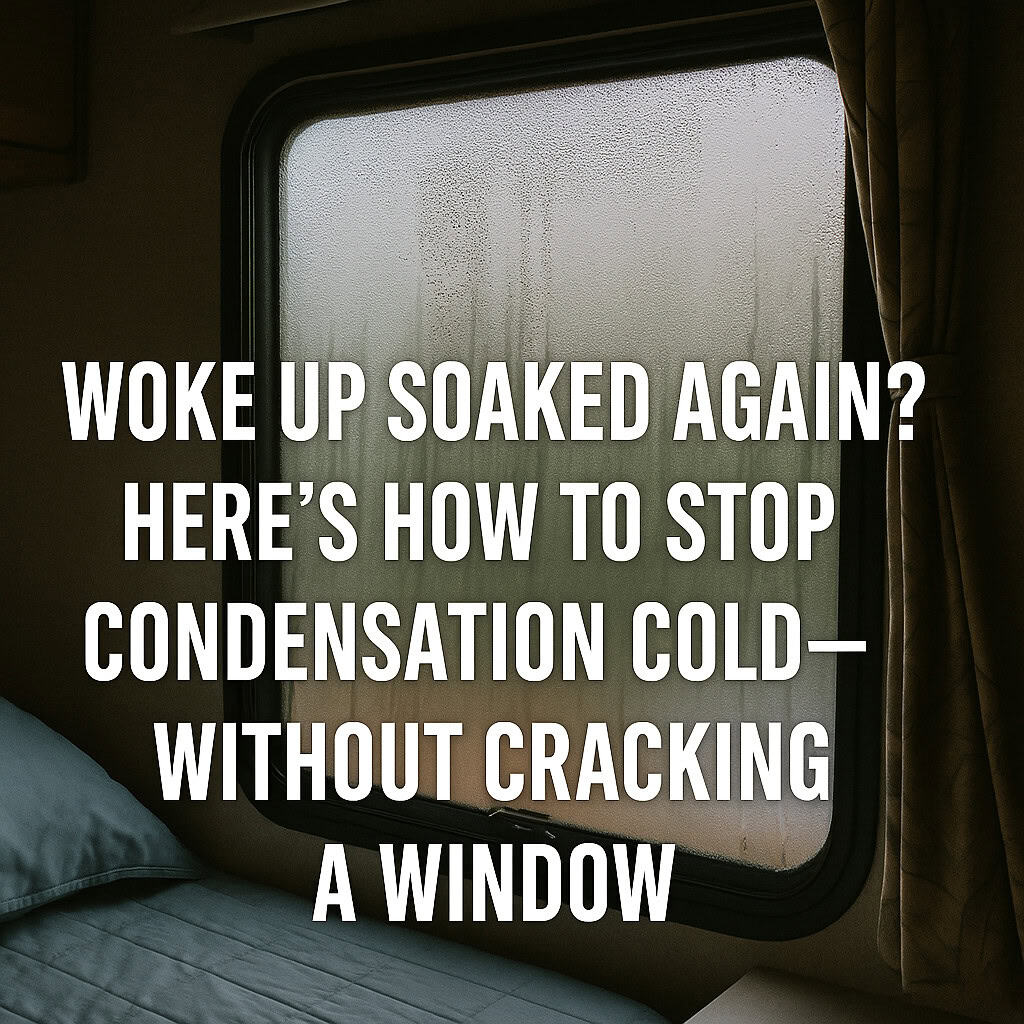
(Because soggy sleeping bags and damp gear are the worst way to start your day.)
You unzip your tent or slide open your RV window in the morning, only to find everything wet. Your sleeping bag, clothes, and even your pillow are damp with condensation.
It’s cold. It’s uncomfortable. And it feels like no matter what you do, the moisture just won’t stop.
If this sounds familiar, you’re not alone. Condensation inside tents and RVs is one of the most common complaints from campers everywhere.
But here’s the good news:
You don’t have to crack a window and freeze all night to stop it.
With a few smart, easy tricks, you can keep your gear dry and cozy—no icy drafts needed.
Why Condensation Happens (And Why It’s So Sneaky)
Condensation is just water vapor in the air cooling and turning back into liquid on cold surfaces. When warm, moist air inside your tent or RV hits a cold wall, window, or ceiling, moisture forms droplets.
Campers breathe, sweat, and cook inside their tents or RVs, creating humidity. But tents and RVs don’t always have enough airflow to move that moisture outside.
That trapped moisture settles on cold surfaces, leaving your gear damp and your morning miserable.
The Quick Science Behind It:
-
Warm air holds more moisture than cold air.
-
When warm, moist air meets a cold surface, it cools down.
-
Cool air can’t hold as much moisture, so the extra water vapor turns into liquid (condensation).
5 Smart Ways to Stop Condensation—Without Opening a Window
1. Ventilate Without the Chill
You need airflow—but not a draft.
If your tent or RV has small vents near the top, open those slightly. Warm moist air rises, so vents up high can let moisture escape without making you shiver.
If you’re in a tent without vents, prop the rainfly slightly off the tent body with a stick or pole. This creates a tiny gap for air to move through while keeping rain out.
2. Use a Moisture-Absorbing Bag or Container
Pack some moisture absorbers like silica gel packets or even a small container of baking soda.
Place these near sleeping areas or where condensation pools most.
They work by pulling moisture out of the air and help keep the inside dry.
3. Keep Wet Gear Outside (Or at Least Away from Sleeping Areas)
That damp jacket or sweaty shoes inside your tent or RV are adding to humidity.
Set up a small tarp or vestibule outside your tent for wet gear.
In an RV, designate a spot near the door or in a storage compartment for drying wet items.
4. Choose Your Tent or RV Spot Wisely
Cold surfaces cause condensation.
If possible, park your RV or pitch your tent in a spot that gets morning sun.
Sunlight warms the outside of your shelter, reducing the temperature difference between inside and outside, and cutting down condensation.
5. Use Breathable Sleeping Bags and Liners
Synthetic and down sleeping bags can trap moisture, but liners made of breathable fabrics help wick sweat away and allow moisture to evaporate.
Some campers swear by using a thin wool or fleece liner inside their bag to keep dry and warm.
Bonus Tip: How to Dry Out Your Tent or RV Faster in the Morning
-
After waking, unzip doors or vents to let fresh air in for 10-15 minutes.
-
Wipe down wet surfaces with a dry towel.
-
Hang wet clothes or towels on a line or rack outside.
-
In an RV, run the heater or fan to circulate air and dry moisture faster.
Why Cracking a Window Isn’t Always the Answer
Sure, cracking a window adds airflow.
But in cold weather, this means cold drafts all night long, which can make you uncomfortable and even cause your pipes to freeze.
It also lets bugs and rain in if you’re not careful.
With the tips above, you can keep moisture at bay and stay warm and cozy.
What About Using a Dehumidifier?
If you camp often in your RV or cabin, a small portable dehumidifier can work wonders.
They’re quiet, energy efficient, and keep the air dry all night.
If you don’t want to carry one, moisture absorbers and venting tricks work great.
💬 Final Thoughts
Condensation is a fact of camping life—but it doesn’t have to ruin your trip.
A few simple habits and smart setups can keep your sleeping bag dry, your gear fresh, and your mornings comfortable.
Keep your shelter ventilated (without full drafts), keep wet gear outside, use moisture absorbers, and pick your spot carefully.
✅ Quick Checklist to Stop Condensation Cold
-
Use high vents or rainfly gaps for airflow
-
Store wet gear outside or in designated dry spots
-
Use moisture absorbers like silica packets or baking soda
-
Choose sunny spots when possible
-
Use breathable sleeping bag liners or covers
-
Dry out the tent or RV in the morning with fresh air and towels
🔗 Follow us for more real-world camping hacks, tips for happy campers, and no-fluff advice that keeps you cozy on the road.