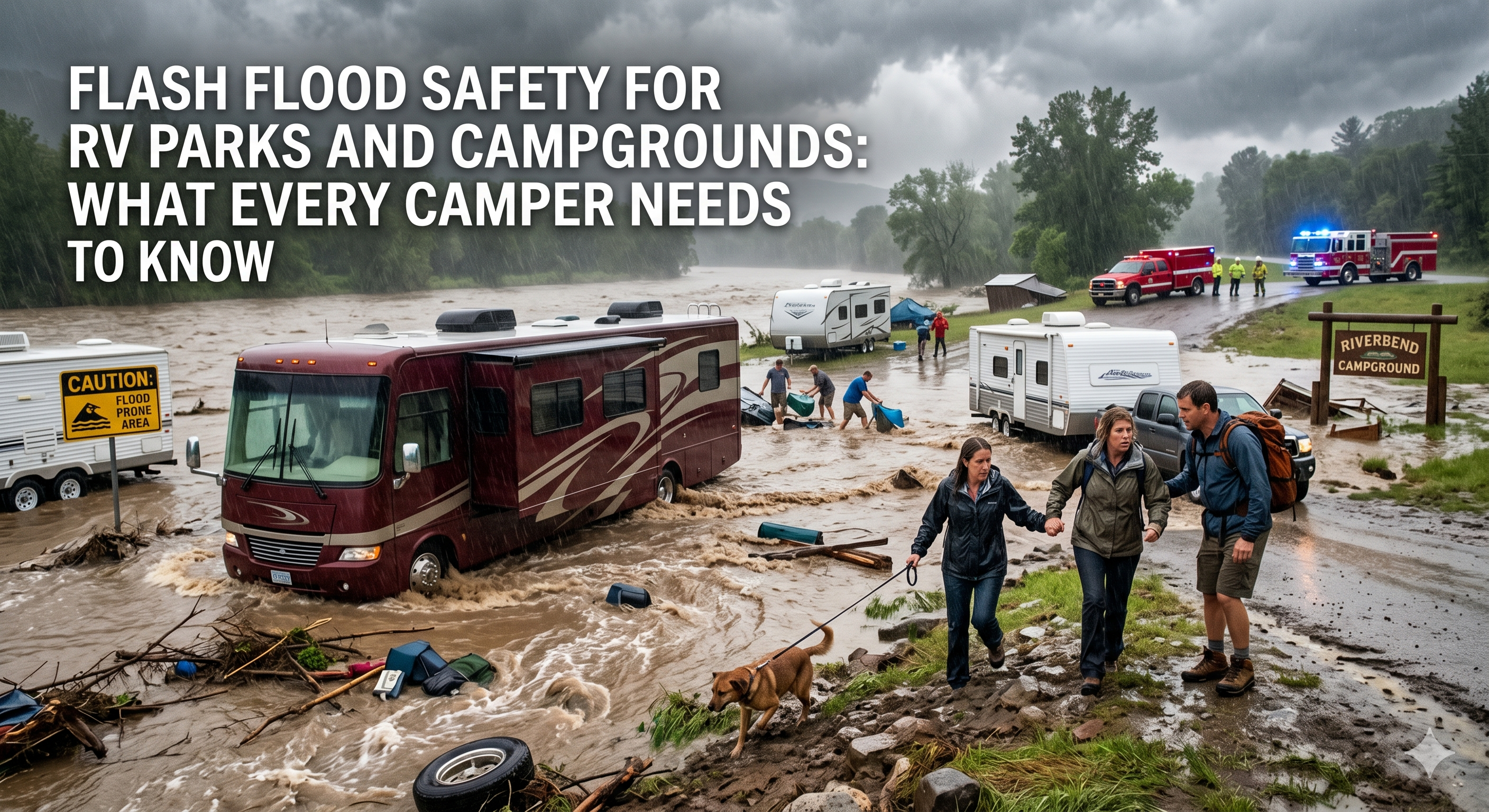
When the Skies Turn Dangerous: Staying Safe at RV Parks During Flash Floods
Nothing puts a damper on a camping adventure quite like severe weather — and flash floods are among the most dangerous and unpredictable threats outdoor enthusiasts can face. Recent evacuations near Williamson County RV parks serve as a powerful reminder that no matter how beautiful your campsite looks when you arrive, conditions can change in a matter of minutes. Being prepared isn't just smart camping — it's potentially life-saving.
At CampgroundViews.com, we want every camping trip to end with happy memories, not emergencies. That's why we've put together this essential guide to understanding flash flood risks and keeping your family safe no matter where you're parked.
Why RV Parks and Campgrounds Are Especially Vulnerable
RV parks and campgrounds are often situated in naturally beautiful locations — near rivers, creeks, valleys, and low-lying meadows. That's exactly what makes them so scenic and desirable. Unfortunately, those same geographic features that create stunning views can also funnel enormous amounts of water directly toward your campsite during heavy rainfall events.
Flash floods can occur with little to no warning, even when the sky above you looks perfectly clear. Rainfall miles upstream can send a wall of water rushing through a dry creek bed in minutes. Low-elevation campsites are particularly at risk, and RV parks near drainage channels or waterways require extra vigilance.
Before You Book: Do Your Flood Zone Homework
One of the best things you can do before any camping trip is research the terrain and weather history of your destination. Here's how to be a proactive camper:
- Check FEMA flood maps: The FEMA Flood Map Service Center allows you to look up any address or location to see if it sits in a designated flood zone.
- Read campground reviews: On CampgroundViews.com, camper reviews often mention drainage issues, flooding history, and how well a park handles severe weather — invaluable intel from people who've been there.
- Use virtual tours: CampgroundViews.com features over 3,600 virtual tours so you can actually scout the terrain around a campground before you arrive. Look for proximity to waterways and low-lying areas.
- Call ahead: Don't hesitate to call the campground directly and ask about their emergency protocols for flooding events.
On-Site Preparation: Setting Up Smart
Even if you've done your research and chosen a reputable campground, smart on-site setup habits can give you extra protection and precious time if conditions deteriorate quickly.
- Choose higher ground: When selecting your specific campsite, always opt for slightly elevated spots over low-lying or creekside sites — even if the view isn't quite as picturesque.
- Note your exits: The moment you arrive, identify at least two exit routes from the campground. Floods can block roads fast, so knowing alternate paths is critical.
- Keep essentials accessible: Store important documents, medications, phones, and car keys somewhere you can grab them in under 60 seconds.
- Monitor water sounds: A sudden increase in the roaring sound of a nearby creek or river is a serious warning sign — don't ignore it.
Emergency Alerts: Your First Line of Defense
Technology is your best friend in a weather emergency. Before your trip and during your stay, make sure you have these tools working for you:
- Enable Wireless Emergency Alerts (WEA) on your smartphone so flash flood warnings go directly to your phone.
- Download the NOAA Weather app or a reliable weather app with severe weather push notifications.
- Invest in a battery-powered NOAA weather radio — essential when cell service is spotty at remote campgrounds.
If a Flash Flood Warning Is Issued: Act Immediately
When authorities issue an evacuation order or a flash flood warning for your area, there is only one correct response: leave immediately. Do not wait to see how bad it gets. Do not try to drive through flooded roads — just six inches of moving water can knock a person down, and two feet can sweep away most vehicles.
Follow the instructions of campground hosts and emergency personnel without hesitation. Your RV, gear, and campsite can be replaced. You cannot.
Find Safer Campgrounds with CampgroundViews.com
Planning your next adventure with safety in mind starts with choosing the right campground. Browse thousands of verified listings, read real camper reviews, and take virtual tours at CampgroundViews.com to find the perfect spot — one where the only thing rushing is your excitement to get there.