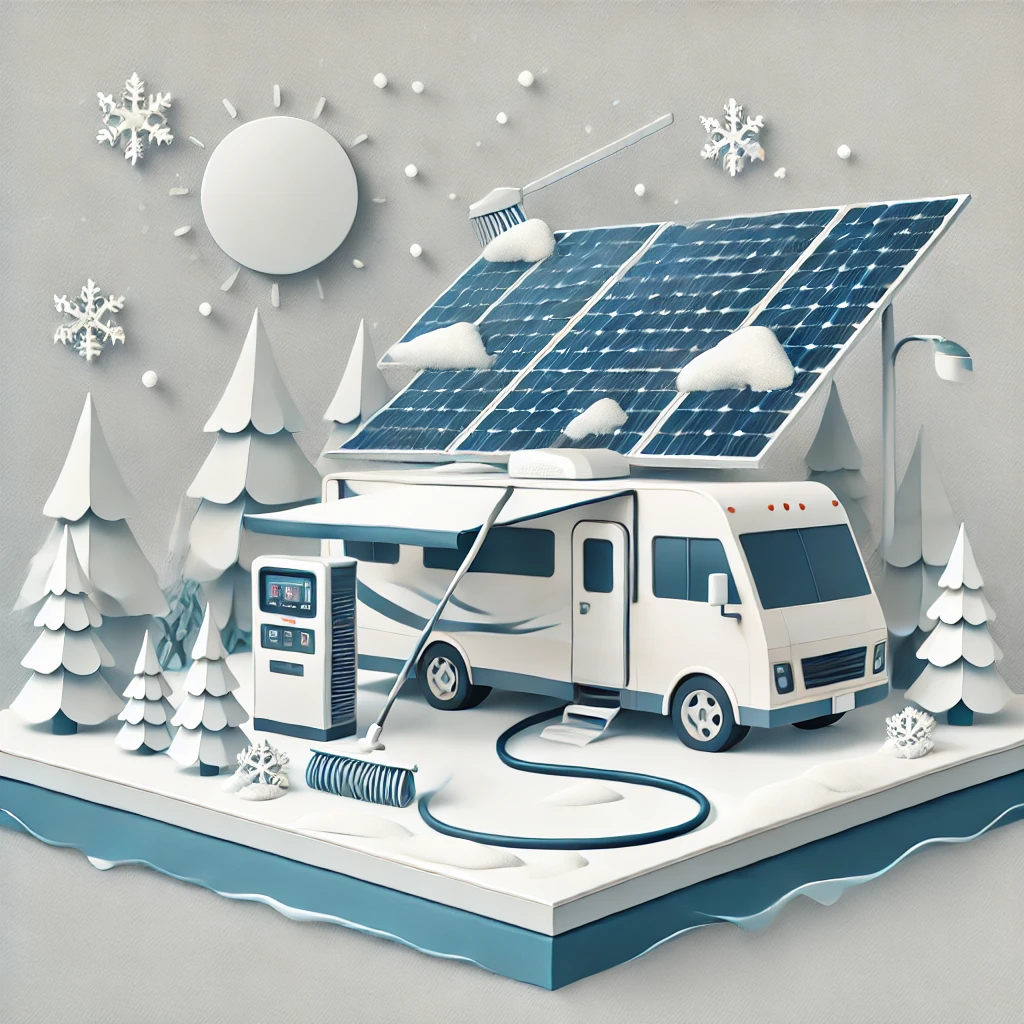
Solar power is a
game-changer for RVers and off-grid campers—but what happens when winter rolls in? Shorter days, weaker sunlight, and snow-covered panels can
drastically reduce your solar efficiency if you're not prepared.
But don’t worry—winter camping
doesn’t have to mean draining your batteries or relying on noisy generators. With the right adjustments, you can
maximize your solar power and stay off-grid all season long. Let’s break down
how to keep your solar system running strong, even when the temperature drops.
1. Angle Your Solar Panels for Maximum Sun Exposure 📐☀️
In summer, the sun sits high in the sky, but in winter, it’s much lower. If your panels are mounted flat, they’ll get
way less direct sunlight in colder months.
How to Fix It:
✅
Adjustable Tilting Brackets: Set your panels at a
steeper angle (45–60°) to catch more sun.
✅
Portable Panels? Even Better: Move them throughout the day to face the sun directly.
✅
Use an App: Apps like
Solar Tilt or
PV Output help find the best panel angle for your location.
🚨
Pro Tip: If your panels are roof-mounted and can’t tilt,
park your RV facing south to maximize sun exposure throughout the day.
2. Keep Solar Panels Snow-Free ❄️🧹
A
thin layer of snow can
block sunlight completely, cutting your power output
to zero. Even frost buildup reduces efficiency, so
keeping your panels clear is critical.
How to Keep Snow Off Your Panels:
✅
Use a Soft Snow Brush: Avoid scratching the panels.
✅
Tilt Your Panels: A steeper angle helps snow slide off naturally.
✅
Apply a Water-Repellent Coating: Similar to Rain-X, this helps prevent frost from sticking.
✅
Keep a Squeegee Handy: A quick wipe-off in the morning can restore power flow.
🚨
Pro Tip: If you’re in a
heavily snowy area, consider a
small, portable leaf blower for quick snow removal.
3. Optimize Battery Performance in Cold Weather 🔋🌡️
Cold temperatures reduce battery efficiency—sometimes by
30–50%, depending on the type of battery you have.
How to Protect Your Batteries in Winter:
✅
Use Lithium Batteries: Unlike lead-acid, lithium works well in cold temps
(but needs to be above freezing to charge).
✅
Install Battery Heaters: Heated pads or insulation help maintain proper charging conditions.
✅
Keep Batteries Inside: If possible, store them in a heated space or insulated compartment.
✅
Pre-Warm Before Charging: If using lithium, warm them up
before charging to prevent damage.
🚨
Pro Tip: AGM & lead-acid batteries lose power faster in the cold—keep them
fully charged to prevent freezing!
4. Get the Most Out of Limited Sunlight 🌅🔋
Winter days are
shorter, so
you need to maximize every bit of sunlight.
How to Capture More Energy:
✅
Wake Up Early: Start charging
as soon as the sun rises—don’t waste daylight!
✅
Reduce Energy Use at Night: Run high-draw appliances
during the day instead.
✅
Use an MPPT Charge Controller: These are more efficient than PWM controllers, especially in cold weather.
✅
Increase Your Panel Wattage: If your setup isn’t keeping up, adding more panels might be the best long-term fix.
🚨
Pro Tip: Solar blankets or foldable panels can help grab extra power when the sun is weak.
5. Minimize Energy Waste & Improve Efficiency ⚡🔌
Since winter sunlight is limited,
cutting down on unnecessary power use will help your system last longer.
Ways to Reduce Power Consumption:
✅
Switch to LED Lights: They use up to
90% less energy than incandescent bulbs.
✅
Use Propane for Cooking & Heating: Saves electricity for essentials.
✅
Unplug Devices When Not in Use: Even in standby mode, they drain power.
✅
Limit High-Wattage Appliances: Microwaves, hairdryers, and coffee makers are power hogs—use them sparingly.
🚨
Pro Tip: Invest in a DC-powered fridge instead of an AC model—it uses far less energy!
6. Supplement Solar With Alternative Power Sources 🔌🔋
Even with
perfect solar setup,
winter storms and cloudy days can leave you short on power. Having
a backup plan is key.
Backup Power Options:
🔋
Generator: A small inverter generator (like a
Honda EU2200i) is great for emergencies.
🌬️
Wind Turbine: If you camp in windy areas, a
portable wind generator can keep power flowing at night.
🪫
Extra Battery Bank: More batteries = longer runtime.
🚨
Pro Tip: Hybrid Solar-Generator Setups are ideal—use solar
most of the time and only rely on a generator when necessary.
7. Monitor Your Power System in Real-Time 📊⚡
Don’t wait until your batteries are dead to realize there’s a problem! Monitoring your solar setup helps you make
better energy decisions and avoid surprises.
Best Solar Monitoring Tools:
✅
Victron SmartShunt: Tracks battery charge and solar input via Bluetooth.
✅
Renogy Rover Charge Controller: Shows real-time solar performance.
✅
Battery Monitors (like the Victron BMV-712): Displays exact power usage.
🚨
Pro Tip: If your battery
drops below 50% too often, you
need more solar or a bigger battery bank.
8. Insulate & Winterize Your RV to Conserve Heat 🚐❄️
The
less heat you lose, the less energy you’ll need.
Keeping your RV warm helps stretch your power supply in winter.
Simple Ways to Winterize & Insulate Your RV:
✅
Thermal Window Covers: Reflective insulation keeps heat inside.
✅
RV Skirting: Prevents cold air from getting underneath your rig.
✅
Use a Heated Water Hose: Stops pipes from freezing.
✅
Seal Drafty Areas: Foam strips around doors/windows
keep cold air out.
🚨
Pro Tip: A propane furnace is more energy-efficient than running an electric space heater all night!
Final Thoughts: Stay Solar-Powered All Winter Long ☀️❄️
Solar power
works in winter—but only if you adapt to the
shorter days, colder temperatures, and potential snow buildup.
Winter Solar Survival Checklist:
✅
Tilt panels toward the sun for max exposure
✅
Keep panels clear of snow & frost
✅
Use lithium batteries or insulate lead-acid batteries
✅
Monitor power use & cut down on energy waste
✅
Have a backup plan for cloudy days
With the
right setup and winter-friendly habits, you’ll be able to
stay off-grid, enjoy the season, and never worry about running out of power. 🚐⚡
Now get out there and embrace winter camping—with the power of the sun on your side!