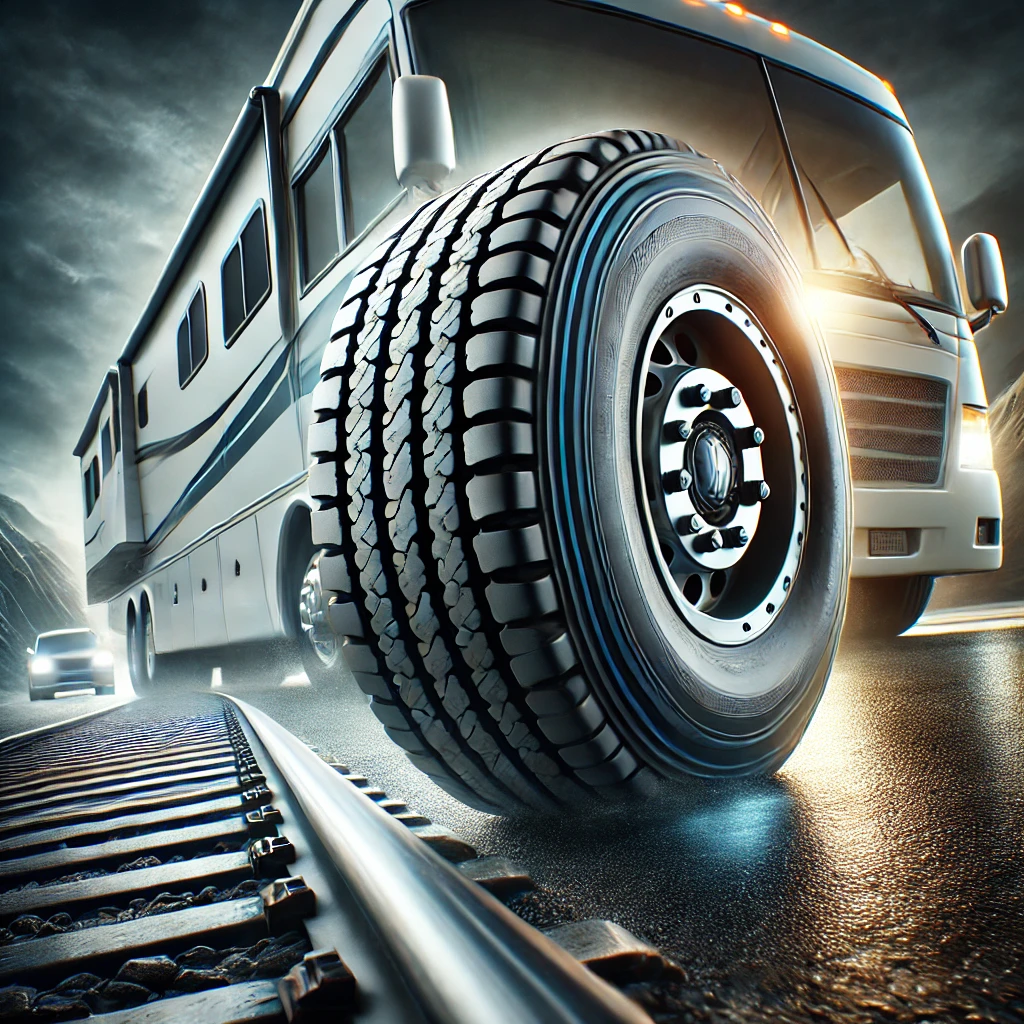
Your RV’s Most Important Safety Feature? It’s Not What You Think!
When people think about RV safety, they often focus on things like brakes, suspension, and weight distribution. But there’s one critical component that gets overlooked—your tires.
RV tires aren’t just rubber wheels; they are the only point of contact between your massive home-on-wheels and the road. That means they affect everything—from handling and braking to fuel efficiency and overall ride comfort.
Understanding how RV tires work, what affects their traction, and why choosing the right ones is crucial can mean the difference between a smooth, safe trip and a dangerous blowout.
Let’s dive into the science behind RV tires and why they matter more than you think. 🚐🛞✨
🛞 1. Traction: The Science of Grip on the Road
Traction is what keeps your RV from sliding, skidding, or losing control—especially in wet, icy, or gravelly conditions. But what actually determines tire grip?
Key Factors That Affect RV Tire Traction:
✔ Tread Design – Deep grooves help channel water away, reducing hydroplaning.
✔ Rubber Compound – Softer rubber grips better but wears faster.
✔ Tire Pressure – Overinflated or underinflated tires reduce grip and increase wear.
✔ Tire Size & Load Rating – The right size distributes weight properly.
🌟 Fun Fact: Tires rely on friction to grip the road. The weight of your RV actually helps increase traction—until you overload the tires and cause excessive wear!
⚠️ 2. The Hidden Danger of Blowouts (And How to Avoid Them)
RV blowouts are one of the most common causes of RV accidents, and they happen more often than you think.
What Causes RV Tire Blowouts?
🚧 Underinflation – Low tire pressure leads to overheating and weakens the rubber.
🚧 Overloading – Too much weight puts excessive stress on the tires.
🚧 Old, Dry-Rotted Tires – Even if the tread looks fine, rubber breaks down over time.
🚧 Extreme Heat – Hot pavement and long drives cause tires to expand and fail.
🚧 Uneven Wear – If your RV is not balanced properly, one side of your tires wears faster.
How to Prevent a Blowout:
✔ Check tire pressure before EVERY trip.
✔ Replace tires every 5-7 years, even if they look fine.
✔ Don’t overload your RV—check your weight limits!
✔ Inspect for cracks, bulges, or bald spots.
✔ Drive at reasonable speeds—excess speed increases heat buildup.
🌟 Pro Tip: Use a Tire Pressure Monitoring System (TPMS) to get real-time alerts if your tire pressure drops suddenly.
🚛 3. Load Ratings & Weight Distribution: Why It Matters
Not all tires can handle the weight of an RV. Using the wrong load rating could cause premature wear or catastrophic failure.
Understanding Tire Load Ratings:
🔹 Load Range D – Typically for lightweight trailers and small RVs.
🔹 Load Range E – Common for medium-sized motorhomes and fifth wheels.
🔹 Load Range G & H – Heavy-duty tires for large Class A RVs and commercial rigs.
Each RV has a Gross Vehicle Weight Rating (GVWR)—your tires must be rated to support that weight!
🌟 Pro Tip: Weigh your RV fully loaded (with water, gear, and passengers) to ensure your tires aren’t exceeding their load limit.
🌧️ 4. Weather & Road Conditions: Choosing the Right Tire Type
Your tires must handle rain, snow, heat, and rough terrain—but not all tires are built for every condition.
Types of RV Tires & When to Use Them:
✔ All-Season Tires – Good for most climates, but can struggle in extreme cold.
✔ All-Terrain (AT) Tires – Best for off-road RVing and rough terrain.
✔ Winter Tires – Extra grip in snow and icy conditions.
✔ High-Speed Trailer Tires – Designed for travel trailers that need to handle highway speeds.
🌟 Pro Tip: If you RV year-round, consider seasonal tire swaps to match the best rubber to the weather.
⛽ 5. How Tire Maintenance Affects Fuel Efficiency
Did you know that properly inflated tires can improve your fuel economy by up to 3%?
Why?
✔ Underinflated tires increase rolling resistance, meaning your engine works harder.
✔ Worn-out tires reduce aerodynamic efficiency, slightly lowering MPG.
✔ Balanced, aligned tires roll more smoothly, reducing drag.
Keeping your tires properly inflated and in good shape can save money at the pump—a big deal for RVers logging thousands of miles per year!
🔧 6. How to Choose the Best Tires for Your RV
Picking the right tires can mean the difference between a safe trip and a roadside nightmare.
What to Look for When Buying RV Tires:
✔ Load Rating – Match it to your RV’s weight capacity.
✔ Tread Depth – More tread = better traction.
✔ Date Code – Don’t buy tires older than 6 months (rubber degrades even when unused).
✔ Brand Reputation – Cheap tires can wear out faster and fail more often.
🌟 Pro Tip: Always replace ALL tires at once to maintain even wear and performance.
🚀 Final Thoughts: Why Your RV Tires Deserve More Attention
Your tires aren’t just wheels—they are the foundation of your safety, traction, fuel efficiency, and driving experience.
The Takeaways:
✔ Check tire pressure regularly to avoid blowouts.
✔ Choose the right load rating for your RV size.
✔ Replace old tires every 5-7 years, even if they look fine.
✔ Match tire types to your road conditions (all-season vs. all-terrain).
✔ Proper maintenance saves money on fuel and repairs.
🚐✨ Have you ever had an RV tire blowout or made an upgrade that changed your ride? Share your experience in the comments!