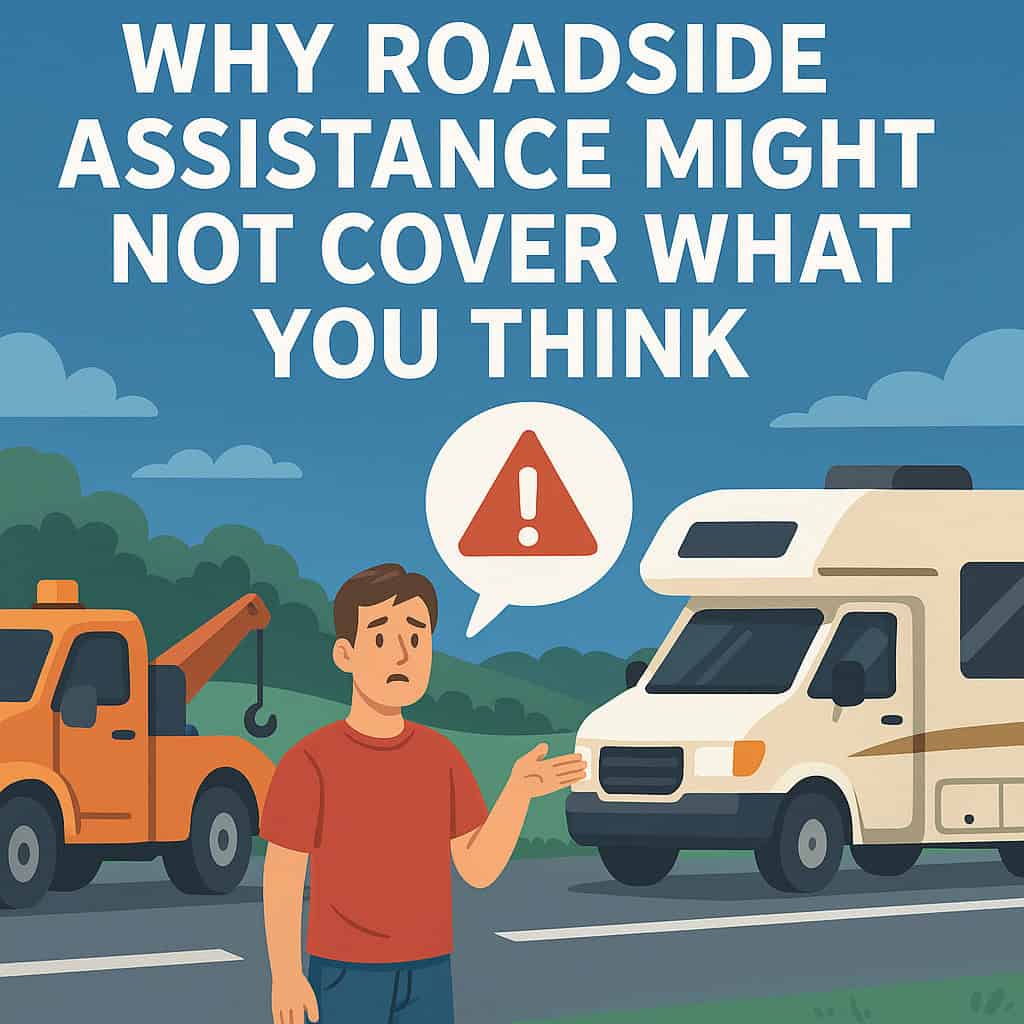
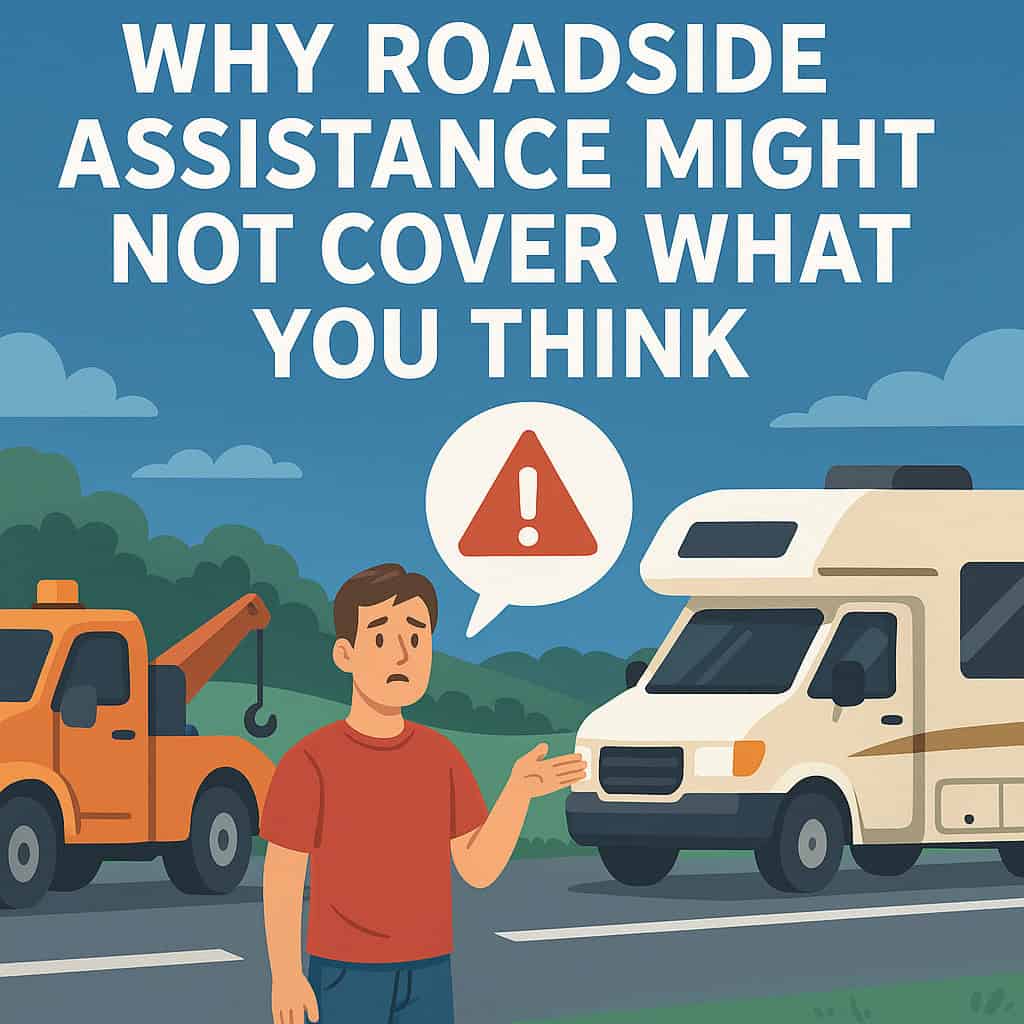
When you’re out on the road, it feels good to know you have roadside assistance. Whether it’s a flat tire, dead battery, or engine trouble, help is just a phone call away… right?
Well, maybe.
Many RVers think their roadside assistance plan will cover everything, but the truth is, some things aren’t included—or come with big limits.
Let’s take a look at what roadside assistance usually includes, where it can fall short, and how to make sure you’re really protected before your next trip.
🛠️ What Roadside Assistance Usually Covers
Most RV roadside assistance plans include help with:
-
Towing (up to a certain number of miles)
-
Jump-starts for dead batteries
-
Lockouts (if you’re locked out of your RV)
-
Fuel delivery (usually enough to get you to a gas station)
-
Flat tire changes
-
Mobile mechanic dispatch (if available)
That sounds great—but keep reading.
⚠️ What Might Not Be Covered (or Might Cost Extra)
Here’s where things can get tricky. Many plans have fine print, and some situations aren’t covered the way you expect:
1. Towing Distance Limits
Some plans only tow up to 10 or 25 miles—after that, you pay by the mile (and it adds up fast). Make sure you know your plan’s free towing range.
2. Only One Tow Per Breakdown
If they tow you to a closed repair shop and you need to be towed again the next day—guess what? That second tow may not be covered.
3. You Pay for Repairs
Roadside assistance sends help—but they don’t pay for parts or repairs. You’ll still be on the hook for:
-
Tires
-
Batteries
-
Labor fees beyond the call-out
4. Special Equipment Not Included
Some rigs need a flatbed, winch, or other gear to be safely towed. Many plans don’t include this—or charge extra.
5. Only One RV
Do you have a tow vehicle and a trailer? Or a motorhome and toad? Some plans only cover one—and may not tow both if you break down.
🧭 Real-World Examples
-
You break down in the desert. The nearest tow service is 60 miles away, but your plan only covers 25 miles free. You pay for the other 35.
-
Your Class A motorhome needs a heavy-duty tow truck. The basic plan doesn’t cover that kind of rig. You pay the full cost.
-
You get locked out of your RV—but your plan only covers vehicle lockouts, not RV doors. You call a locksmith yourself.
-
Your tire blows out, and roadside assistance arrives… but they don’t carry your tire size. You wait hours for a part (and still pay for it).
✅ How to Make Sure You’re Really Covered
Here’s what to do before you hit the road:
1. Read the Fine Print
Take 10 minutes to read the coverage details. Look for:
-
Tow mileage
-
Covered vehicles
-
Extra charges
-
Response time guarantees
2. Call and Ask Questions
Ask your roadside provider:
-
“Is my RV covered?”
-
“What’s the towing limit?”
-
“Do you cover travel trailers or toads?”
-
“What kind of tow trucks do you send?”
3. Check for Add-Ons
You might be able to add extra coverage for:
-
Longer towing distances
-
RV/trailer combo plans
-
Trip interruption or hotel coverage
🧰 Bonus Tip: Carry a Backup Plan
Sometimes roadside assistance isn’t nearby or available—especially in rural areas.
Be prepared with:
-
A spare tire (and the tools to use it)
-
A tire repair kit or plug kit
-
Emergency roadside lights
-
A list of local mobile RV techs (download before you lose signal)
Final Thoughts
Roadside assistance is still a great safety net—but it’s not magic. It has limits, rules, and fine print. The better you understand your coverage, the fewer surprises you’ll face when something goes wrong.
So take a few minutes to review your plan today. That way, when you need help on the road, you’ll know exactly what to expect—and how to stay safe.