When you're out camping in your RV, the fresh air, starry skies, and peaceful vibes make it easy to forget about safety worries. But there’s one danger that’s quiet, invisible, and sometimes forgotten:
☠️ Carbon monoxide.
You can’t see it. You can’t smell it. But it can be deadly.
Let’s talk about what carbon monoxide (CO) is, where it comes from, why it’s dangerous, and how to protect yourself and your family—without any fear, just facts.
💨 What Is Carbon Monoxide?
Carbon monoxide is a poisonous gas that has no color, no smell, and no taste. It’s made when something burns fuel, like:
-
Propane
-
Gasoline
-
Wood
-
Charcoal
-
Diesel
That means many things in and around your RV can create carbon monoxide.
🛠️ Common Sources of CO in Camping
Here’s where carbon monoxide might come from in or near your RV:
-
Portable generators
-
RV furnaces
-
Propane stoves or ovens
-
Water heaters
-
Gas-powered heaters or lanterns
-
Campfires near windows or vents
-
Nearby running vehicles
When used correctly in a well-ventilated area, these things are safe. But if the gas builds up in a small space—like inside your RV—it can become very dangerous.
😵 What Happens if You Breathe CO?
Breathing carbon monoxide can make you feel sick very quickly. Symptoms can be sneaky and feel like the flu:
-
Headache
-
Dizziness
-
Nausea
-
Confusion
-
Weakness
-
Sleepiness
If too much builds up, it can be deadly in just minutes.
Everyone is at risk—especially kids, pets, and older adults.
🔔 The #1 Way to Stay Safe: Install a CO Detector
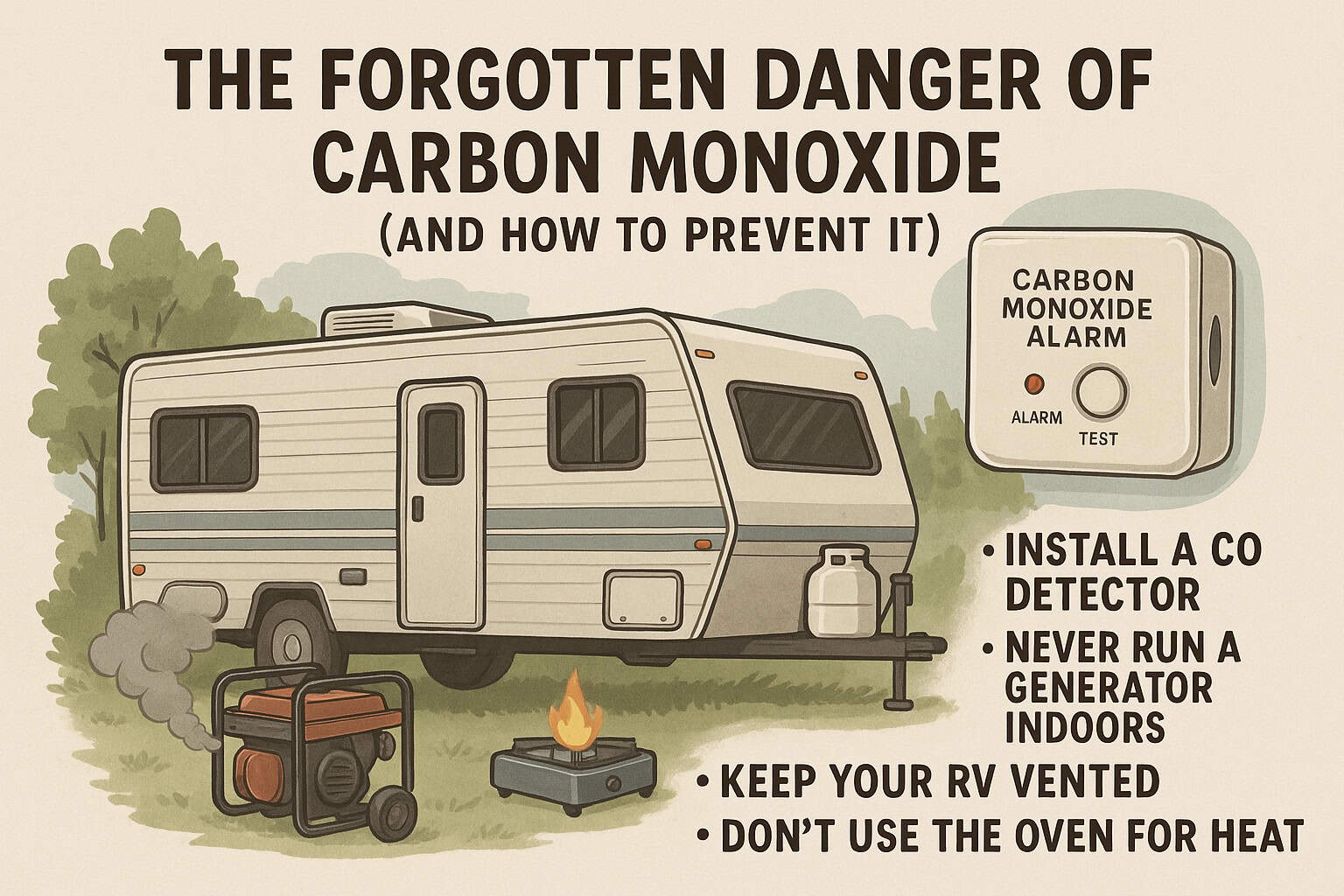
Just like a smoke alarm, a carbon monoxide detector is your best defense. Most RVs come with one—if yours doesn’t, get one today.
Important tips:
-
Test your CO detector every trip
-
Replace batteries regularly
-
Replace the unit every 5–7 years (check the label)
Some detectors are combination units that also alert you to propane leaks—double protection!
✅ Other Ways to Prevent CO Problems
1. Never Run a Generator Indoors
Only use your generator outside, far from windows, vents, or doors—at least 15 feet away.
2. Keep Your RV Vented
Crack a window when using your furnace, stove, or heater. Let fresh air in!
3. Don’t Use the Oven to Heat the RV
It might seem warm, but it’s not safe for long use.
4. Check Exhaust Pipes
Make sure nothing is blocking the exhaust from your generator or engine—snow, mud, and debris can trap fumes.
5. Be Extra Careful When Parked Close to Others
If your neighbor is running a generator right near your window, CO can sneak into your RV too.
🐾 Pets Can’t Tell You They’re Dizzy
CO affects animals too—but they can’t tell you they feel sick. If your pet is acting sleepy, shaky, or confused, get fresh air immediately and check your detector.
⛑️ What to Do If the Alarm Goes Off
-
Get outside right away
-
Shut off all fuel-burning appliances
-
Open all windows and doors
-
Call 911 if anyone feels sick
-
Don’t go back inside until it’s safe
Take it seriously—CO is no joke.
Final Thoughts
Camping should be fun, relaxing, and safe. Carbon monoxide is a hidden danger, but with a working detector and a few smart habits, you can protect your crew every time you hit the road.
So before your next trip, check your CO detector and share this info with your camping friends.
Because safety should never be silent.