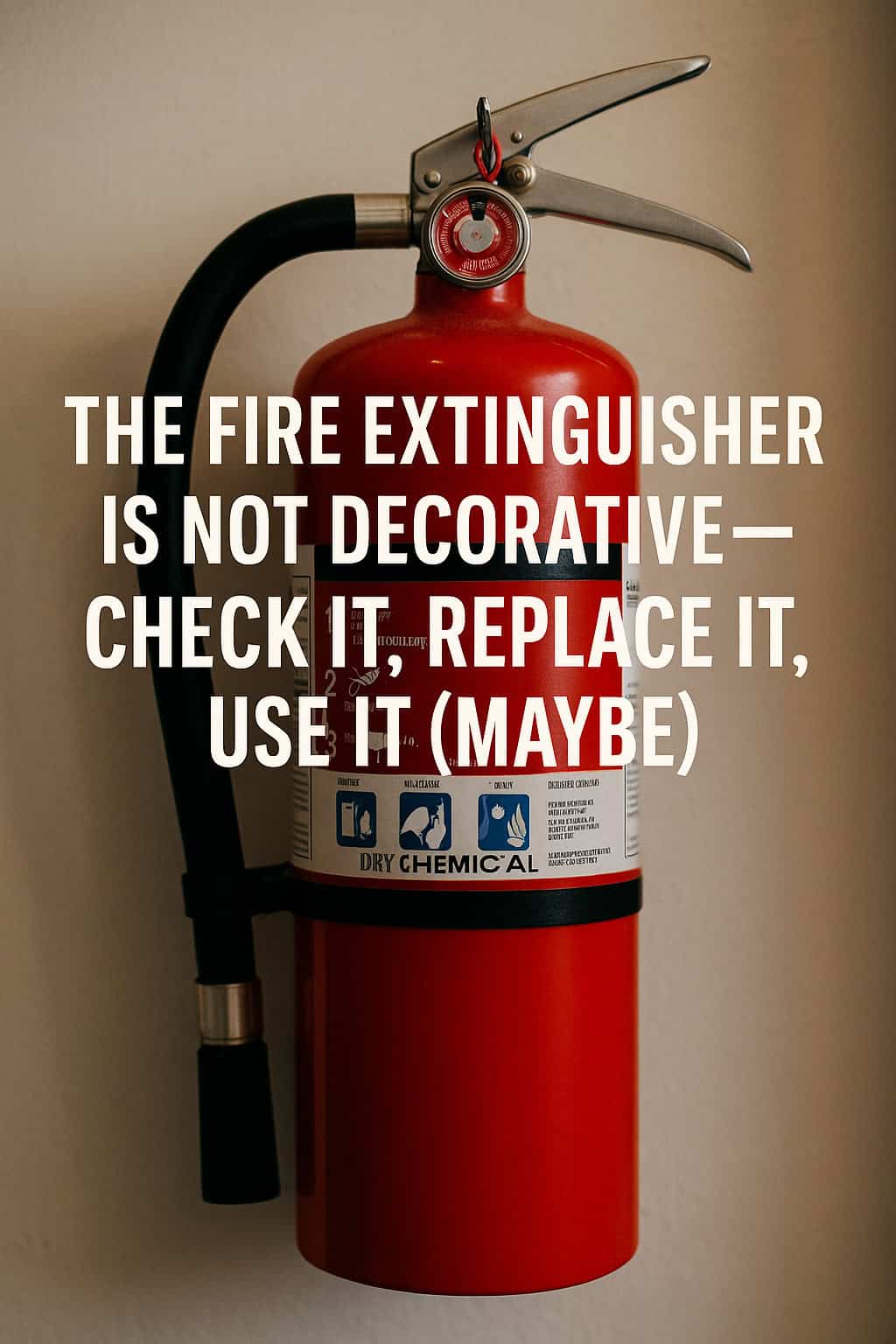
(Because it won’t help you if it’s zip-tied, buried, or expired since 2017.)
There it is.
Mounted near the RV door. Bright red.
Possibly zip-tied. Hopefully untouched.
Definitely covered in a little dust and a lot of wishful thinking.
It’s your fire extinguisher—and it’s not just there for show.
Because when a grease flare-up, electrical short, or propane leak goes sideways, that little canister might be the only thing between “problem” and “insurance claim.”
🔥 1. That Factory Extinguisher Is... Kind of a Joke
Let’s be honest: most RVs come with a 5-B:C dry chemical extinguisher.
Translation: It’s small, basic, and good for one short blast—maybe.
It’s rated for:
-
B fires = flammable liquids (like fuel)
-
C fires = electrical
But not A fires (wood, paper, fabric)—you know, the stuff your RV’s made of.
Upgrade tip: Consider a larger ABC-rated extinguisher and keep more than one. At least one in the kitchen, one near the bedroom, and one outside by the grill.
🔎 2. Know How to Check It (Takes 30 Seconds)
Here’s your monthly mini-inspection checklist:
✅ Pressure gauge in the green?
✅ No rust, dents, or leaks?
✅ Pin is secure, but pullable?
✅ It’s accessible—not hidden behind five tote bags and your folding table?
✅ Still within its serviceable life (check the label)?
If it fails any of those? Replace it. Now.
And if it’s a rechargeable model, get it inspected or serviced.
🚪 3. Can You Actually Reach It in a Fire?
The most common place for RV fires?
The kitchen.
Where’s your extinguisher mounted?
At the front door.
If the flames are between you and the extinguisher… you’re out of luck.
Fix that:
-
Add a second unit near the stove
-
Put one in exterior storage for grill-related surprises
-
Mount one near your sleeping area (for night emergencies)
Fire spreads fast. Seconds matter. So does location.
🧯 4. Practice With One Before You Need It
If you've never used a fire extinguisher before, don't wait for panic mode.
Practice the PASS method:
-
Pull the pin
-
Aim at the base of the fire
-
Squeeze the handle
-
Sweep side to side
You don’t need to discharge your only extinguisher—pick up an old one at a garage sale and use it once in a safe outdoor area to see how fast it empties (and how messy it is).
It’s not a magical fire-stopping wand. It’s a tool. And it needs your brain behind it.
🧠 5. Not Every Fire Should Be Fought
This isn’t a movie. Sometimes, the best thing to do is evacuate.
If the flames are already out of control, or you feel unsafe:
-
Get everyone out
-
Shut off power/propane only if it’s safe
-
Call 911
-
Let the pros handle it
No RV is worth your life. Period.
💬 Final Thoughts
Your fire extinguisher isn’t just another wall decoration.
It’s your first line of defense—and it only works if you’re ready to use it.
So dust it off. Check it. Learn it.
And maybe upgrade it while you’re at it.
🐟 Want to know if your next campground has wide roads, easy emergency access, or fire safety infrastructure?
Use Campground Views to preview layouts before you book—so you can park safe, set up smart, and focus on relaxing (not reacting).
🔗 Follow us for more down-to-earth RV safety advice, preparedness tips, and stories from people who now own two fire extinguishers… for a reason.