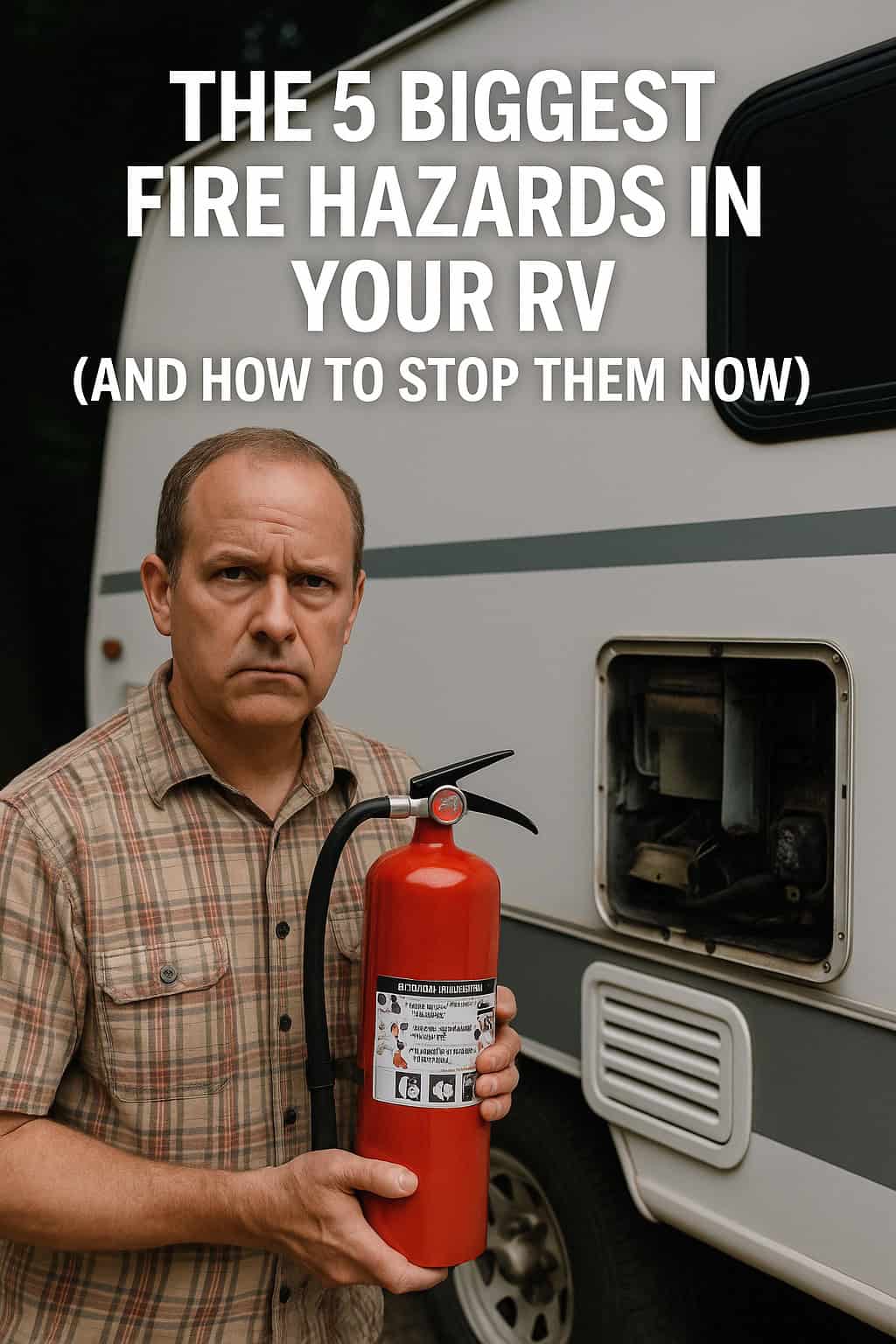
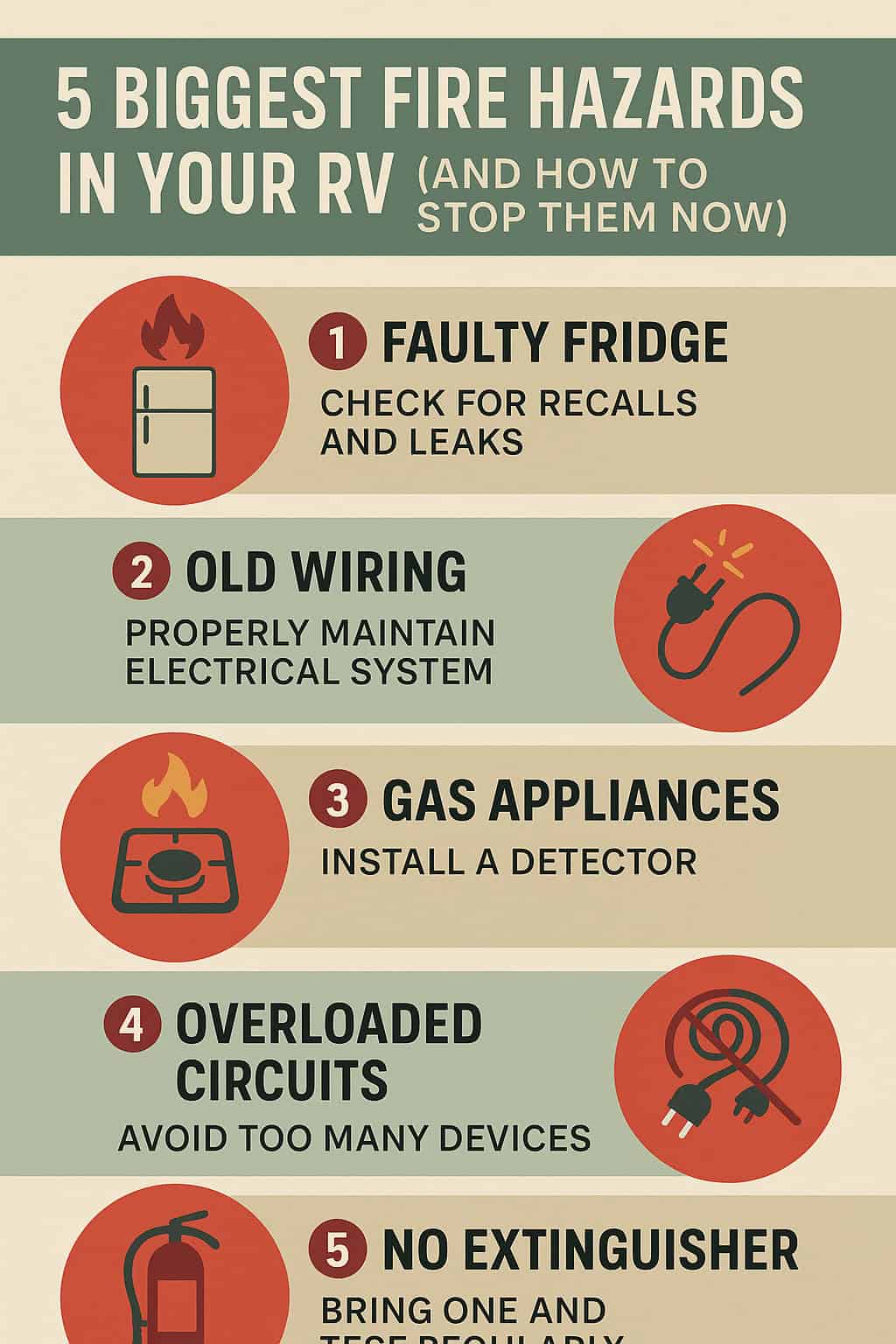
(Because one spark is all it takes to ruin everything.)
Your RV is your home on wheels—but it’s also full of things that can catch fire.
Propane, wires, appliances, heat… all packed into a small space.
And while RV fires aren’t super common, when they do happen, they spread fast.
The good news? Most of them can be prevented with a little know-how and attention.
🔥 Fire Hazard #1: The Fridge
Yep, your RV fridge can be a fire risk—especially if it’s older or has been recalled.
Watch out for:
-
Burn marks near the vents
-
A hot back panel
-
Yellow powder around the cooling unit
How to stop it:
Check for recalls. Give the fridge area good ventilation. Never block the vents with gear or covers while in use.
🔥 Fire Hazard #2: Propane Leaks
Propane is super useful—but also flammable. A leak near a flame or spark can lead to disaster.
How to stop it:
-
Test for leaks with soapy water around the connections
-
Shut off the tank when driving
-
Get regular inspections of hoses and fittings
If you ever smell gas, turn everything off and get outside immediately.
🔥 Fire Hazard #3: Electrical Problems
Old wires, loose outlets, or overloaded circuits are a major cause of RV fires.
How to stop it:
-
Don’t plug in too many devices
-
Watch for flickering lights or warm outlets
-
Use a surge protector at the power pedestal
And never “rig” a repair with tape or twist ties—bad fixes cause real problems.
🔥 Fire Hazard #4: Space Heaters
Space heaters are cozy but risky. They can tip, overheat, or catch things nearby on fire.
How to stop it:
-
Use heaters only when you’re awake and nearby
-
Keep them away from curtains, bedding, and walls
-
Never run them on a damaged outlet or extension cord
🔥 Fire Hazard #5: Cooking Inside
Stove flames and splattering grease? Not a great combo in a tight space.
How to stop it:
-
Stay in the RV while cooking
-
Keep a fire extinguisher nearby (and know how to use it)
-
Don’t store paper towels or cloths near the burners
Bonus tip: open a window to help with airflow while cooking.
🧯 Bonus: Fire Safety Must-Haves
-
Smoke detectors – test them monthly
-
CO detectors – propane leaks can produce deadly carbon monoxide
-
Fire extinguishers – have at least one, mounted and ready
-
An escape plan – know how to exit fast, especially at night
💬 Final Thoughts
You don’t need to live in fear—but you do need to stay alert.
Most RV fires start from little things—things you can fix or avoid before they ever spark.
🐟 Want to feel even safer before you park?
Campground Views lets you take a virtual walkthrough and get the full vibe before you roll in.
Because peace of mind starts before the wheels stop.
🔗 Follow us for safety tips, smart camper habits, and practical RV know-how.
The more you know, the better you roll.