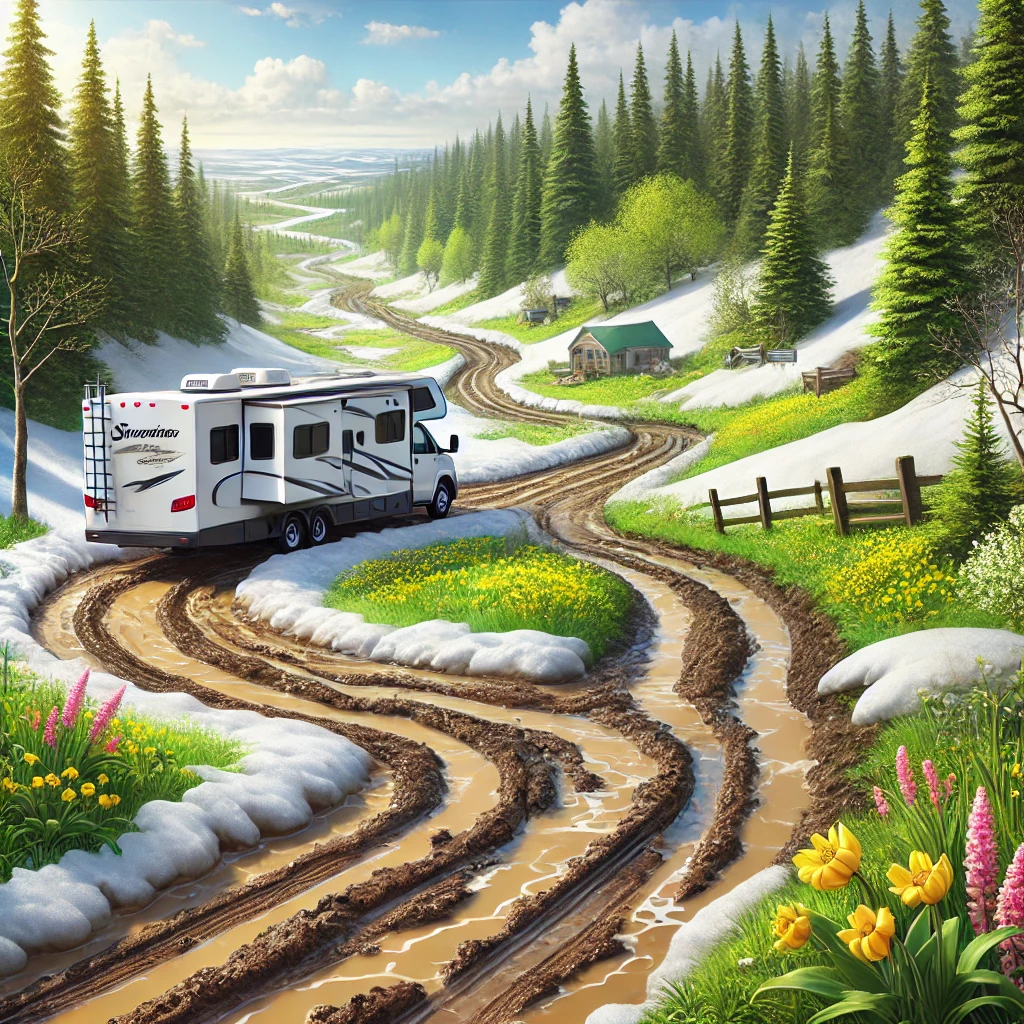
The Challenges of Spring Camping
As winter fades and the first signs of spring emerge, many RVers and campers are eager to hit the road. But with the change in seasons comes one major obstacle—muddy campgrounds and slushy roads. The thawing snow and seasonal rains turn otherwise scenic spots into a muddy mess, making parking, driving, and even walking around camp tricky.
If you’re planning early-season camping, knowing how to handle these conditions can keep your RV from getting stuck, protect your gear, and ensure a smoother trip. Here’s what you need to know.
1. Choose the Right Campsite
Not all campsites are created equal when it comes to handling spring’s muddy conditions. When booking or scouting your site:
- Look for gravel or paved sites. These drain better than grassy or dirt areas.
- Avoid low-lying spots. Water tends to pool in dips and valleys, making them extra muddy.
- Check recent reviews. Other campers can give insight into whether a campground gets swampy in spring.
- Confirm drainage. Campgrounds with good drainage systems (ditches, gravel pads, or sloped sites) stay drier.
If you're boondocking, opt for higher ground where water won’t collect.
2. Parking & Leveling in Muddy Conditions
Parking your RV in a wet or muddy spot can quickly turn into a struggle. Here’s how to prevent sinking in:
✔️ Use leveling blocks or planks. Placing plastic or wood blocks under your tires distributes weight and prevents sinking.
✔️ Lay down traction mats. If the ground is soft, traction mats or even old rugs can help keep your tires from digging in.
✔️ Keep your tires aired up. Softer tires sink faster—ensure they’re properly inflated.
✔️ Consider four-wheel drive or traction assist. If your RV or tow vehicle has these features, they can help you move through mud.
Pro Tip: If you’re setting up camp for a while, park slightly downhill so water runs away from your site instead of pooling under your rig.
3. Driving on Slushy & Muddy Roads
Spring roads can be a mix of mud, snowmelt, and deep slush—making for slippery conditions.
🚗 Drive slow and steady. Sudden acceleration or braking can cause skidding or getting stuck.
🚗 Stick to main roads when possible. Dirt or forest service roads can quickly become impassable.
🚗 Carry traction aids. Items like sand, gravel, cat litter, or recovery boards can help if your tires lose grip.
🚗 Know your vehicle’s weight. A heavy RV can sink fast in soft mud—avoid deep puddles that may hide ruts.
🚗 Have a tow strap or winch. If you're traveling remote, these can be a lifesaver if you get stuck.
Avoid ruts from other vehicles—they may look like a clear path, but they can be deeper and muddier than they appear.
4. Gear to Stay Dry & Comfortable
Spring camping means mud gets everywhere, so come prepared with:
✔️ Waterproof boots – Essential for staying dry when walking around camp.
✔️ Extra mats or towels – Keep mud from being tracked inside your RV.
✔️ Rain gear & ponchos – Spring weather is unpredictable, and wet clothes make for a miserable trip.
✔️ A portable boot tray – Great for keeping muddy footwear contained near your door.
✔️ Tarps & awnings – Helps create a dry area outside your RV entrance.
Pro Tip: A small bucket of water near your door lets you rinse boots before stepping inside!
5. Cleaning & Maintaining Your RV in Muddy Conditions
Mud and slush don’t just create a mess—they can lead to rust, clogged vents, and mechanical issues.
🧼 Rinse your undercarriage. After muddy or slushy drives, spray off dirt and road salt to prevent corrosion.
🧼 Check slide-outs & steps. Mud can get into gears and joints, causing them to stick.
🧼 Inspect seals & vents. Water and debris can build up, leading to damage or mildew.
🧼 Use RV skirting if stationary. This helps keep slush from splashing up and insulating from the cold.
Pro Tip: If you’re in an especially muddy area, consider placing a tarp under your RV to reduce the mess.
6. Know When to Pack Up & Move
Sometimes, conditions get too bad, and staying put isn’t worth the hassle. Here are signs it’s time to relocate:
⚠️ Your RV is sinking or tilting
⚠️ The road out is becoming impassable
⚠️ You’re struggling to keep your gear or clothes dry
⚠️ Standing water is collecting around your site
If you must leave, try to depart in the morning before the sun melts more snow and softens the ground even further.
Final Thoughts
Spring camping comes with its fair share of mud, slush, and unexpected roadblocks, but with the right preparation, it doesn’t have to ruin your trip. By choosing the right campsites, preparing for muddy conditions, driving carefully, and keeping your RV clean, you can enjoy the beauty of the season without the stress.
So, embrace the thaw, gear up, and make the most of those early spring camping adventures!