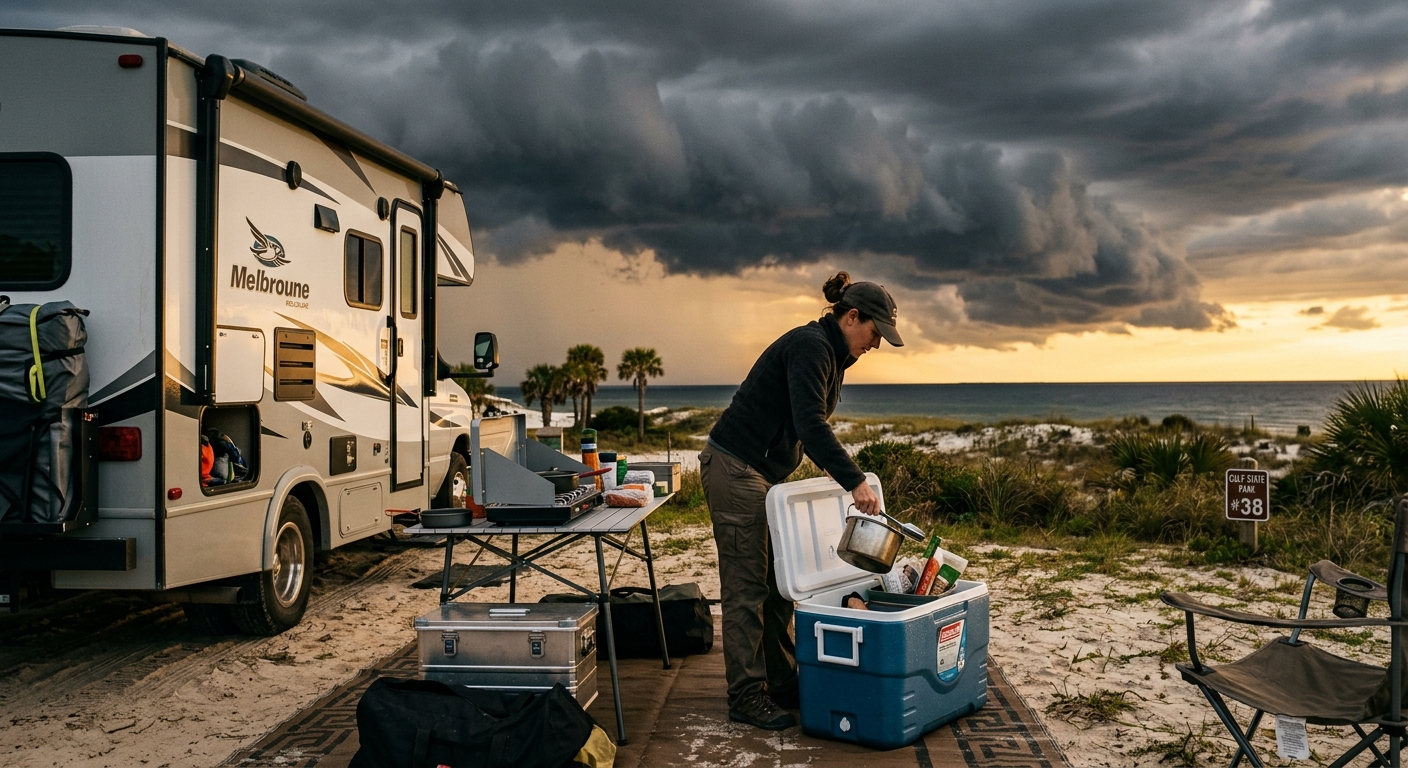
When the Weather Turns: Cooking Smart at Camp
Whether you're parked at a gorgeous Gulf Coast RV park or tucked into a wooded tent site, the threat of a tropical storm or hurricane can turn a dream camping trip into a high-stress scramble. The recent evacuations of Gulf County RV parks ahead of storms like Isaias remind us that outdoor adventurers need more than just a great campsite — they need a solid plan for campground cuisine when things go sideways fast.
At CampgroundViews.com, we believe the best campers are prepared campers. And part of that preparation? Knowing exactly how to handle your food supply before, during, and after an emergency evacuation. Let's dig in.
Before the Storm: Cook It or Pack It
The golden rule when a storm warning is issued at your campground is simple: don't let good food go to waste. The moment you hear an evacuation advisory, your camp kitchen becomes a priority zone.
Use What You Have First
- Fire up the grill immediately. Burgers, hot dogs, sausages, and marinated chicken all cook fast and travel well once done. Cook everything perishable before you pack.
- Drain and ice your cooler strategically. Consolidate your most valuable perishables into one cooler and pack it with fresh ice. Protein goes on the bottom, dairy and snacks on top.
- Make a quick pasta or rice dish. Carb-heavy meals fill bellies, are easy to make in bulk, and can be eaten cold on the road if needed.
- Hard-boil your eggs. They last longer than raw eggs and make a perfect high-protein road snack during a rushed evacuation drive.
The Evacuation Road Meal Kit: What to Pack
When Gulf County campgrounds started emptying out ahead of Isaias, families had to make quick decisions about what food to bring along. Here's a battle-tested evacuation food kit that every camper should have ready to go:
- Non-perishable snacks: Trail mix, beef jerky, nut butter packets, crackers, and granola bars are calorie-dense and need zero refrigeration.
- Canned goods with a pull-tab: Canned beans, tuna, soups, and chili require no can opener and can be eaten straight from the can in a pinch.
- A portable camp stove and fuel canister: Even when evacuating to a hotel or inland campground, a small butane burner lets you make hot coffee, oatmeal, or instant noodles — a major morale boost.
- A filled water jug: At least one gallon per person per day. Don't rely on finding clean water en route.
- Comfort food treats: A bag of your favorite candy or a box of hot cocoa packets sounds small, but after a stressful evacuation, familiar treats are genuinely powerful mood lifters.
After the Storm: Returning to Camp and Resetting Your Kitchen
Once the storm passes and campgrounds reopen — you can often check updated site conditions and availability on CampgroundViews.com before heading back — it's time to reset your camp kitchen with safety in mind.
Food Safety After an Evacuation
- When in doubt, throw it out. If your cooler's ice melted and perishables sat above 40°F for more than two hours, discard them. Food poisoning after a storm is the last thing you need.
- Sanitize your cookware. Use a diluted bleach solution to clean any pots, utensils, or surfaces that may have been exposed to floodwater or debris.
- Restock with simple, celebratory meals. You survived! Treat your crew to campfire nachos, s'mores, or a big Dutch oven chili as a welcome-back-to-camp celebration.
Plan Ahead Every Trip — Not Just Storm Season
The best campground cuisine strategy isn't just about gourmet campfire meals on calm summer nights. It's about being ready for anything nature throws at you. Before your next coastal or Gulf region camping trip, browse campground reviews and virtual tours on CampgroundViews.com to understand the terrain, nearby facilities, and evacuation routes available to you.
A well-fed camper is a resilient camper. Pack smart, cook with confidence, and always have a backup plan — because the great outdoors doesn't always follow the forecast.