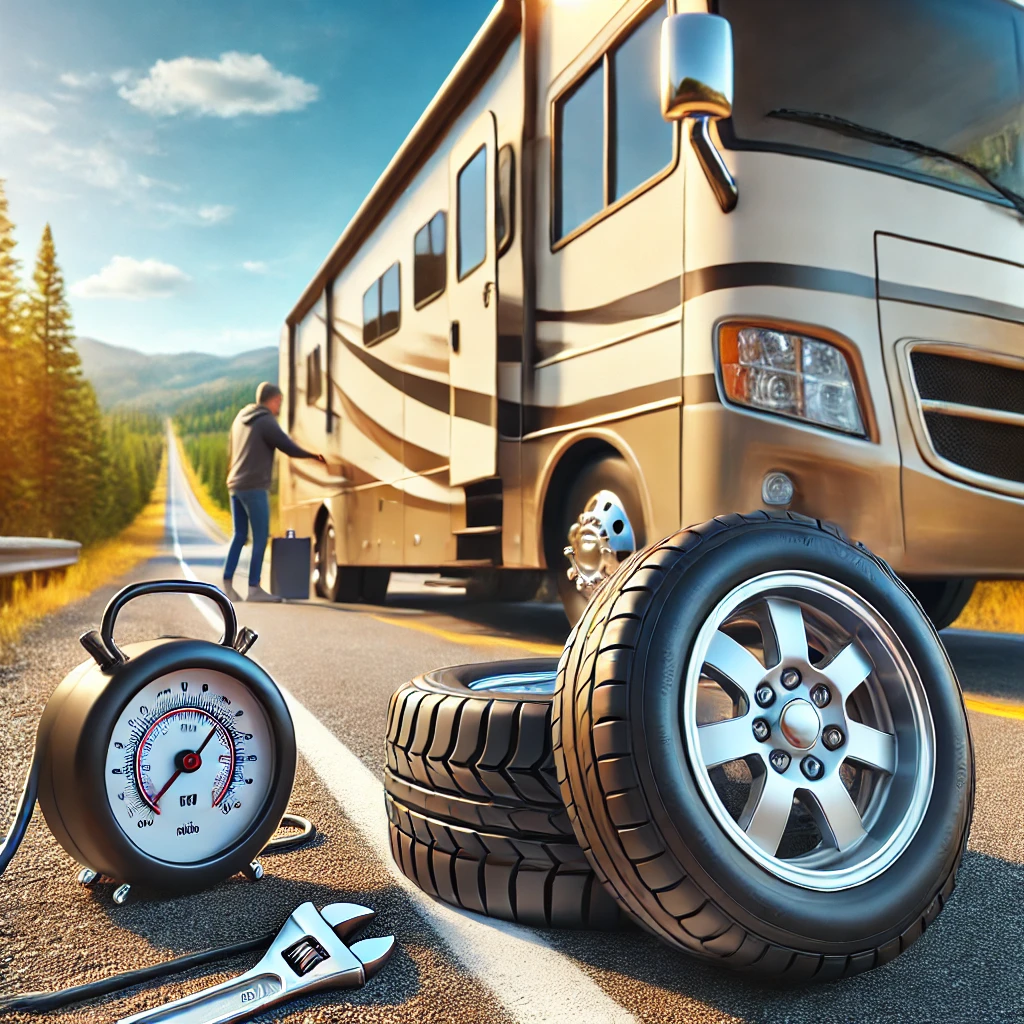
Your RV’s tires are
the only thing between you and the road, yet they’re often the
most overlooked part of vehicle maintenance. Proper tire care isn’t just about preventing flats—it’s about
safety, fuel efficiency, and maximizing the lifespan of your tires.
A blowout at highway speeds can be
dangerous and expensive, so knowing how to
inspect, maintain, and replace your tires is essential for
every RV owner. In this guide, we’ll cover the
best practices for tire safety and longevity, so you can travel with confidence!
1. Know Your RV Tire Type & Load Rating
Not all RV tires are the same! Your
tire type and load rating impact performance, durability, and how much weight your RV can safely handle.
Common RV Tire Types:
✔
ST (Special Trailer) Tires – Built for trailers, designed to handle
heavy loads and straight-line towing.
✔
LT (Light Truck) Tires – Found on many Class B and Class C motorhomes, offering
durability and traction.
✔
Commercial Truck Tires – Used for
large Class A motorhomes and heavy-duty vehicles.
Load Ratings Matter!
Every tire has a
maximum weight limit—exceeding it can lead to
blowouts or poor handling. Always check your
RV’s Gross Vehicle Weight Rating (GVWR) and match your tires accordingly.
💡
Pro Tip: Find your
recommended tire pressure and load rating in your RV owner’s manual or on the
driver’s side door sticker.
2. Check Tire Pressure Regularly 🚐💨
Proper tire pressure is
critical for safety and performance. Underinflated or overinflated tires can cause
uneven wear, blowouts, and poor fuel efficiency.
Best Practices for Tire Pressure:
✔ Check tire pressure
before every trip (or at least once a month).
✔ Always measure pressure
when tires are cold (before driving).
✔ Use a
high-quality tire pressure gauge—digital ones are the most accurate.
✔ Inflate to the
manufacturer’s recommended PSI (not the max listed on the tire).
💡
Pro Tip: Use
TPMS (Tire Pressure Monitoring System) to get real-time pressure readings and prevent surprises on the road!
3. Inspect Tires for Damage & Uneven Wear
Tires naturally wear down over time, but
uneven wear patterns can indicate bigger issues like misalignment or suspension problems.
What to Look For:
🔹
Cracks or Dry Rot – Sun exposure and age cause rubber to crack, leading to blowouts.
🔹
Bald Spots or Cupping – Uneven wear suggests
alignment or suspension issues.
🔹
Embedded Objects – Check for nails, screws, or sharp debris.
🔹
Bulges or Bubbles – A sign of internal tire damage—replace immediately!
💡
Pro Tip: Even if your tires
look fine, replace them every
5-7 years, regardless of mileage. RV tires age faster due to long periods of sitting.
4. Rotate & Balance Your Tires for Even Wear
Just like with a car, RV tires need
rotation and balancing to prevent uneven wear and extend their lifespan.
Rotation Guidelines:
✔ Rotate tires
every 6,000–8,000 miles or at least once a year.
✔ If towing a trailer, check for
uneven tire wear on the rear axle.
✔ Get a professional
alignment check to prevent unnecessary wear.
💡
Pro Tip: If you notice
steering pulling to one side, it may be time for an alignment!
5. Store Your RV Properly to Prevent Tire Damage
When your RV sits for long periods, tires can develop
flat spots and dry rot from lack of use.
Storage Tips to Protect Your Tires:
✔
Use tire covers to block UV rays and prevent sun damage.
✔
Park on solid, level ground—avoid gravel or mud.
✔
Move your RV every few weeks to prevent flat spots.
✔
Inflate tires to the recommended PSI before long-term storage.
💡
Pro Tip: If storing for
several months, use
tire cradles or lift your RV slightly to reduce pressure on the tires.
6. Replace Your Tires Before It’s Too Late!
RV tires don’t just
wear out from mileage—they
age even when not in use.
When to Replace RV Tires:
✔
Every 5-7 years, even if they look fine.
✔ If the
tread depth is below 2/32 inches.
✔ If you see
bulges, cracks, or sidewall damage.
✔ After a
major impact or blowout.
💡
Pro Tip: Check the
DOT code on your tire’s sidewall—it tells you when the tire was manufactured. Example:
“4219” means the tire was made in the
42nd week of 2019.
7. Carry the Right Tire Tools & Emergency Kit
A
flat tire on the road can be a disaster if you’re not prepared. Always carry:
✔
Spare tire (in good condition)
✔
Heavy-duty jack (rated for RV weight)
✔
Lug wrench & torque wrench
✔
Portable air compressor
✔
Tire patch kit & sealant
💡
Pro Tip: Know your RV’s lug nut torque specs—loose lug nuts can lead to
wheel detachment on the highway!
8. Invest in a Quality Tire Pressure Monitoring System (TPMS)
A
TPMS system constantly monitors
tire pressure and temperature, alerting you to potential blowouts
before they happen.
✔
Wireless TPMS systems send alerts to your phone or dashboard.
✔ Helps detect
slow leaks and underinflation before they become dangerous.
✔ Saves fuel by ensuring
proper inflation at all times.
💡
Pro Tip: Some TPMS systems also monitor
trailer tires, making them a great investment for towable RVs!
Final Thoughts: Tire Care Saves Money & Keeps You Safe
Your
RV tires are one of the most important safety components—taking care of them properly can
prevent accidents, reduce breakdowns, and save you thousands in repairs.
Key Takeaways:
✔ Check
tire pressure before every trip.
✔ Inspect for
cracks, bulges, and uneven wear.
✔ Rotate, balance, and align tires
regularly.
✔ Replace tires
every 5-7 years—even if they look fine.
✔ Use
TPMS for real-time tire monitoring.
Taking
just a few extra minutes to maintain your tires will
keep you safer on the road and extend the life of your investment.