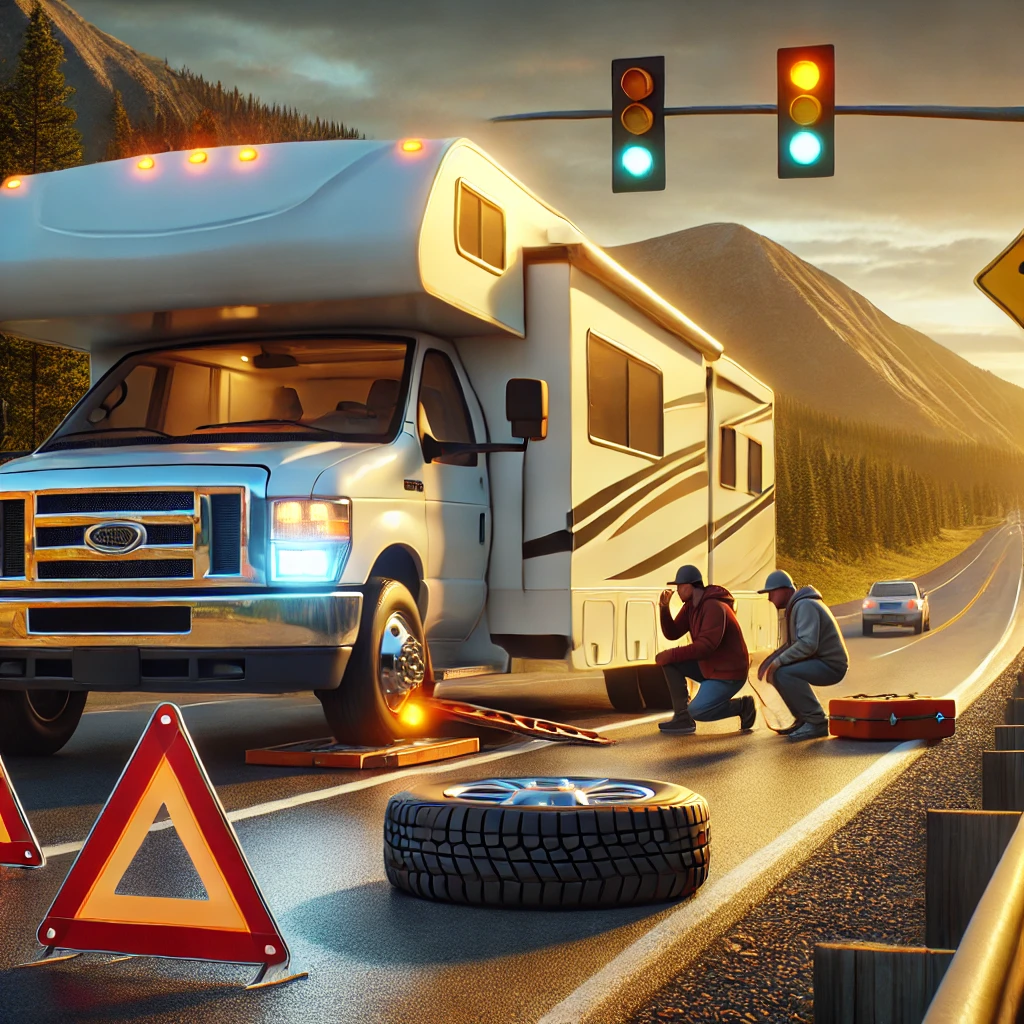
RVing offers the freedom to explore the open road, but unexpected emergencies can happen anywhere, anytime. Whether it’s a mechanical breakdown, extreme weather, or a medical issue, being prepared can make the difference between a minor inconvenience and a major disaster.
Here’s how to prepare for the unexpected, stay safe, and handle common RV emergencies with confidence.
1. Mechanical Breakdowns: When Your RV Won’t Move
🚐 Common Issues:
- Flat tires or blowouts
- Dead battery
- Overheated engine
- Brake failure
What to Do:
✅ Get to a safe location. If possible, pull over to a rest area, shoulder, or parking lot away from traffic.
✅ Use hazard lights and warning triangles. Set up reflective road triangles or flares at least 100 feet behind your RV.
✅ Call roadside assistance. Services like Good Sam, AAA, or Coach-Net can help with towing or on-site repairs.
✅ Check for simple fixes. If safe, check your battery cables, tire pressure, and engine coolant before calling for help.
💡 Pro Tip: Keep a basic tool kit, spare fuses, jumper cables, and a tire repair kit in your RV at all times.
2. Flat Tires & Blowouts: Staying in Control
🚨 Warning Signs of a Tire Blowout:
- Sudden loud "boom" or "thud"
- Steering feels heavy or wobbly
- Smoke or burning rubber smell
What to Do If a Tire Blows Out While Driving:
✅ Stay calm and maintain control. Keep a firm grip on the wheel and avoid sudden braking.
✅ Slow down gradually. Ease off the gas and let the RV slow down naturally before pulling over.
✅ Inspect the damage. If the tire is completely shredded, do not attempt to drive further.
💡 Pro Tip: Always carry a properly inflated spare tire and a portable air compressor for emergency repairs.
3. Weather Emergencies: Preparing for Storms & Extreme Conditions
🌪 Common Weather Threats:
- High winds & tornadoes
- Thunderstorms & lightning
- Snow & ice storms
- Flash floods
What to Do in Severe Weather:
✅ High Winds: Park your RV in a low, sheltered area and point it nose-first into the wind to reduce sway.
✅ Lightning Storms: Avoid parking under trees or power lines. Unplug your RV to prevent power surges.
✅ Flash Floods: If water starts rising, move to higher ground immediately—RV parks can flood quickly.
✅ Snow/Ice: Keep tire chains and use RV antifreeze to prevent frozen pipes.
💡 Pro Tip: Install a NOAA weather radio or weather alert app for real-time updates.
4. Medical Emergencies: First Aid & When to Seek Help
🚑 Be Ready For:
- Minor injuries (cuts, burns, allergic reactions)
- Heat exhaustion or dehydration
- Severe illnesses or accidents
What to Do:
✅ Have a fully stocked first aid kit. Include bandages, antiseptic, pain relievers, and emergency medications.
✅ Know your location. If calling 911, be ready to give the exact highway mile marker, coordinates, or nearest landmark.
✅ Stay calm & assess the situation. If necessary, perform CPR or basic first aid until medical help arrives.
💡 Pro Tip: Take a basic first aid & CPR course before going on long trips.
5. Fire & Electrical Issues: Avoiding an RV Disaster
🔥 Common Causes of RV Fires:
- Electrical malfunctions
- Propane leaks
- Cooking accidents
What to Do in a Fire Emergency:
✅ Evacuate immediately. Do not attempt to fight large fires—get everyone out!
✅ Turn off propane. If safe, shut off the propane supply to prevent explosions.
✅ Use a fire extinguisher. Every RV should have at least one ABC-rated fire extinguisher.
💡 Pro Tip: Install smoke detectors, CO2 monitors, and propane leak detectors for early warning signs.
6. Getting Locked Out of Your RV
🚪 It Happens! Many RVers accidentally lock themselves out—often with the keys inside.
What to Do:
✅ Check all storage compartments. Some RV models have pass-through storage that can give access inside.
✅ Try your spare key. Keep an extra set of keys with a trusted travel companion.
✅ Call an RV locksmith. Many mobile locksmiths specialize in RV locks and key replacements.
💡 Pro Tip: Use a combination lockbox to store a spare key outside the RV (hidden from sight).
7. Navigational Mishaps: Stuck on a Restricted Road
🚧 What Can Go Wrong?
- Low bridges (damaging your RV roof)
- Narrow roads with no turnarounds
- Weight-restricted bridges
What to Do:
✅ Use an RV-specific GPS. Apps like RV Life, CoPilot, or Garmin RV GPS will keep you on safe routes.
✅ Scout ahead if unsure. If roads look tight, stop at a safe location and check the route ahead.
✅ Know your RV dimensions. Always be aware of height, width, and weight limits.
💡 Pro Tip: Download offline maps in case you lose signal in remote areas.
8. Emergency Contacts & Must-Have Supplies
Essential Emergency Contacts:
📞 Roadside Assistance: Good Sam, AAA, Coach-Net
📞 Local 911 Services: Know the closest hospital or urgent care
📞 Insurance Provider: Have your policy details handy
📞 Family/Friends: Keep a trusted emergency contact aware of your trip
Must-Have RV Emergency Supplies:
✔ Basic tool kit (screwdrivers, wrench set, pliers)
✔ Jumper cables & battery charger
✔ Tire pressure gauge & spare tire
✔ First aid kit & medications
✔ Flashlights & extra batteries
✔ Non-perishable food & water
✔ Portable power bank for phone charging
Final Thoughts: Stay Prepared, Stay Safe
RV emergencies can be stressful, but being prepared reduces panic and helps you stay in control. Whether it's mechanical failures, bad weather, medical issues, or navigation problems, knowing what to do makes all the difference.
Take time to review your emergency plan, pack essential supplies, and practice basic troubleshooting before hitting the road. Safe travels!