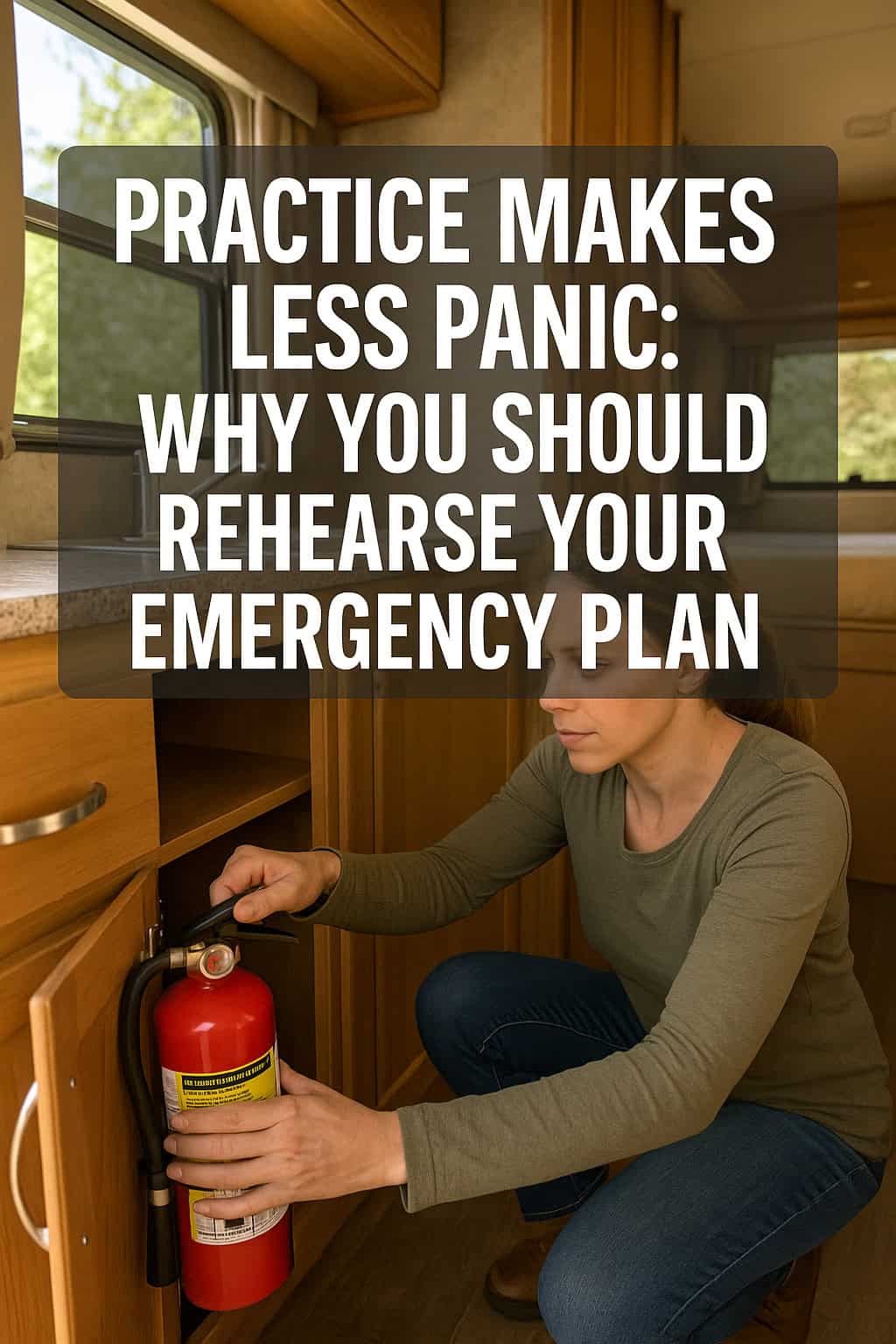
(Because the middle of a fire is the wrong time to read instructions.)
Nobody wants to think about emergencies when they’re out camping.
You’re here for the fresh air, the sunsets, the s’mores—not disaster drills.
But here’s the truth: things go wrong in RV life.
Flat tires. Propane leaks. Wildfires. Medical scares. Tornadoes.
And when they do? You’ll wish you’d practiced.
Because the first time you try to open that emergency exit window shouldn’t be in the middle of a crisis.
🚨 1. Emergencies Feel Bigger When You’re Not Ready
Even small problems feel chaotic when you’re caught off guard:
-
You forgot where the fire extinguisher is
-
You can’t find your flashlight
-
Your partner’s asking what the plan is… and you’re Googling “RV gas leak what to do?”
Rehearsing gives you muscle memory.
So when adrenaline kicks in, you’re acting, not scrambling.
🧯 2. Know Where Everything Is—Blindfold Optional
Can you point to these items right now?
-
Fire extinguisher
-
Propane shut-off
-
Main battery disconnect
-
First aid kit
-
Emergency exit window latch
-
Flashlight/headlamp
-
Your spouse/partner’s last known state of calm?
If not, it’s time for a walkthrough.
Set a timer and do it like a fire drill. No judgment, just clarity.
👟 3. Actually Open That Emergency Window
RV emergency exits are not intuitive. They stick. They hiss. They open weirdly.
And if you’ve never used one before, now is the time.
✅ Practice unlatching and pushing it open
✅ Know who’s going through first (kids? pets?)
✅ Try it with the lights off and time yourself
✅ Bonus: make sure it’s not blocked by your favorite decorative throw pillows
🧠 4. Run Through Your Plan as a Team
Whether you camp solo, as a couple, or with the whole crew, everyone should know:
-
Who grabs what
-
Who calls 911
-
Where to meet if separated
-
What to do if one of you is unavailable (injured, out of the rig, etc.)
You don’t need a binder. You need clear roles and fast decisions.
Talk through “what if” scenarios over coffee—not flames.
🧳 5. Prep the Grab-and-Go Bag
You hope you’ll never use it. But if you do, it should include:
-
IDs, copies of insurance, and emergency contact info
-
Medications
-
Flashlight & batteries
-
Cash (because sometimes, cards are useless)
-
A backup phone charger
-
Dog leash, baby wipes, and one snack that isn’t stale
Store it where you can grab it on the way out—not buried under the wheel chocks.
💬 Final Thoughts
Emergency planning doesn’t have to be scary.
It’s not about paranoia—it’s about peace of mind.
Practice now so panic doesn’t take over later.
Because the best campers aren’t fearless—they’re just prepared.
🐟 Want to see how your campground handles site spacing, emergency access, or storm risk?
Use Campground Views to preview the layout before you arrive—so you can make a safe, smart choice without the guesswork.
🔗 Follow us for more real-world safety tips, RV prep advice, and the kind of info that makes you a calm camper when it counts.