You’ve found the perfect place to park for the night—gorgeous views, fresh air, and a great setup. But wait… is it actually
safe?
Whether you're pulling into a campground, boondocking in the wild, or stopping at a rest area,
where and how you park your RV can make all the difference in keeping you secure. A good parking strategy can prevent break-ins, accidents, and even unwanted late-night visitors (both human and wildlife).
Here’s how to
pick the right spot and position your RV like a security pro.
1. Know Your Location: Not All Parking Spots Are Created Equal
Before pulling into any site, do a quick
risk assessment:
✅
Campgrounds & RV Parks: Generally safe but watch for poorly lit areas, flood-prone spots, or high-traffic zones.
✅
Boondocking in the Wild: Stay hidden but accessible—too remote can be unsafe, but too exposed can attract unwanted attention.
✅
Truck Stops & Rest Areas: Use only as a last resort, and park near well-lit areas with other RVs or trucks.
✅
Retail Parking (Walmart, Cabela’s, etc.): Always ask for permission, park near security cameras, and
never stay more than a night.
🚨
Pro Tip: Check apps like
Campendium, iOverlander, or AllStays for reviews on specific spots. Fellow travelers often report sketchy activity.
2. Position Your RV for a Quick Exit
Always park as if you might need to leave in a hurry. This means:
🚐
Back into your site whenever possible. This allows for a quick and easy exit.
🚐
Point toward an exit path—don’t park in a way that forces you to do a 12-point turn to get out.
🚐
If boondocking, keep your driver’s seat accessible—you don’t want to climb over furniture in an emergency.
🚨
Pro Tip: If you’re towing a trailer, make sure you can pull out
without needing to disconnect in a rush.
3. Choose a Spot With Good Visibility (But Not Too Exposed)
Where you park should offer
a balance of visibility and privacy:
✅
Avoid hidden areas—while parking behind a building or deep in the woods might seem safer, it’s also where break-ins are more likely.
✅
Park near others—safety in numbers is real! Campgrounds are generally safer when you’re closer to well-lit areas or fellow RVers.
✅
Use nature as cover—trees or hills can provide some privacy without fully hiding you from view.
🚨
Pro Tip: If a parking lot or campsite seems
completely empty, it might be a bad sign. Ask yourself why no one else is there.
4. Light It Up Without Blinding Yourself
Strategic lighting can be a
powerful security tool, but overdoing it can attract the wrong kind of attention.
✅
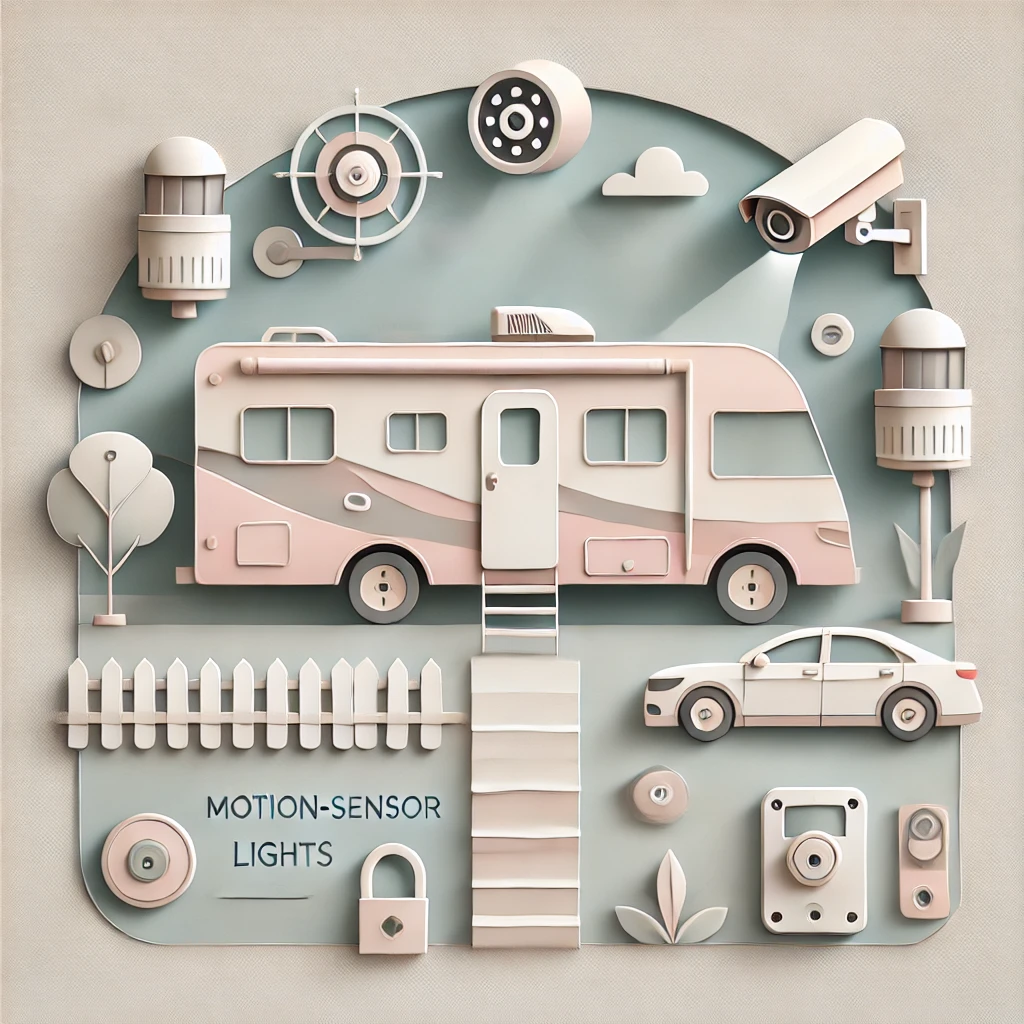
Use motion-sensor lights: These startle intruders while keeping your setup low-profile.
✅
Interior lights on a timer: Makes it look like someone is home, even when you're out.
✅
Keep a flashlight nearby: A powerful beam (like a tactical flashlight) can stop someone in their tracks.
🚨
Pro Tip: Avoid blinding your campsite with floodlights all night—it disturbs wildlife
and fellow campers.
5. Lock It Down: Secure Your RV Like a Fortress
Don’t make it easy for someone to break in. Take these extra security measures:
🔐
Lock all doors and windows (even if you're just stepping out for a few minutes).
🔐
Use a hitch lock if towing a trailer—this prevents thieves from driving off with it.
🔐
Upgrade your locks—factory RV locks are notoriously easy to pick. Consider an
RV deadbolt or
keypad lock.
🔐
Secure outdoor gear—bikes, generators, and grills are common targets for theft. Use
cable locks or motion alarms.
🚨
Pro Tip: Hang a
"Beware of Dog" sign—even if you don’t have a dog. It makes thieves think twice.
6. Be Smart About Parking in Cities & Rest Areas
Sometimes, you need to park in urban areas or rest stops. Here’s how to do it safely:
🏙️
In Cities:
✅ Park near
security cameras and
store entrances (not in dark corners).
✅ Don’t stay overnight in places with
"No Overnight Parking" signs—police may ask you to leave in the middle of the night.
✅ Don’t let
passersby see inside your RV—close curtains and use
reflective window covers.
⛽
At Rest Stops & Truck Stops:
✅ Stay
near other RVs & truckers—safety in numbers.
✅ Park
away from main traffic to avoid loud idling trucks.
✅ Lock doors, but
keep the driver’s seat accessible in case you need to leave quickly.
🚨
Pro Tip: If you hear
tapping on your RV at night, don’t open the door. Use
a peephole, security camera, or flashlight to assess the situation.
7. Be Aware of Your Surroundings (Always)
Your best security system?
Your own awareness.
👀
Do a quick scan of your surroundings when you arrive.
🚷
Watch for odd behavior—people loitering, unfamiliar vehicles, or anything that feels “off.”
🎧
Don’t wear headphones while setting up—stay alert to who’s nearby.
🚨
Pro Tip: Take a
photo of your campsite or parking area when you arrive—this helps if you need to report anything later.
8. Fake It ‘Til You Make It (Look Like You’re Not Alone)
Many solo travelers use
decoys to make it seem like they aren’t alone.
✅ Set out
two chairs instead of one.
✅ Hang a
men’s jacket outside your RV.
✅ Play
talk radio when parked alone to mimic conversation.
🚨
Pro Tip: When someone asks,
"Are you traveling alone?"—your answer is always,
"Nope, my partner is inside!"
9. Have an Emergency Plan (Just in Case)
Nobody likes to think about worst-case scenarios, but being prepared
can save your life.
✅
Keep a personal safety device—bear spray, a taser, or an alarm.
✅
Have emergency contacts ready and share your location with someone you trust.
✅
Know where the nearest police station, hospital, or ranger station is.
✅
Keep your phone charged—a dead phone is useless in an emergency.
🚨
Pro Tip: Set up an
emergency text shortcut on your phone (like “911 HELP”) that you can send quickly if needed.
10. Move If You Feel Unsafe—No Questions Asked
At the end of the day,
if something feels wrong, leave.
- Sketchy vibes? Move.
- Weird people lurking? Move.
- Loud late-night partying near your site? Move.
No campsite or parking spot is worth
risking your safety.
🚨
Pro Tip: Always have enough fuel to relocate in the middle of the night if necessary.
Final Thoughts: Safety First, Always
RV life is all about
freedom and adventure, but a little
situational awareness goes a long way. By choosing safe parking spots, securing your RV, and staying alert, you can
enjoy your travels with confidence.
🚐
Park smart. Stay safe. Enjoy the journey.