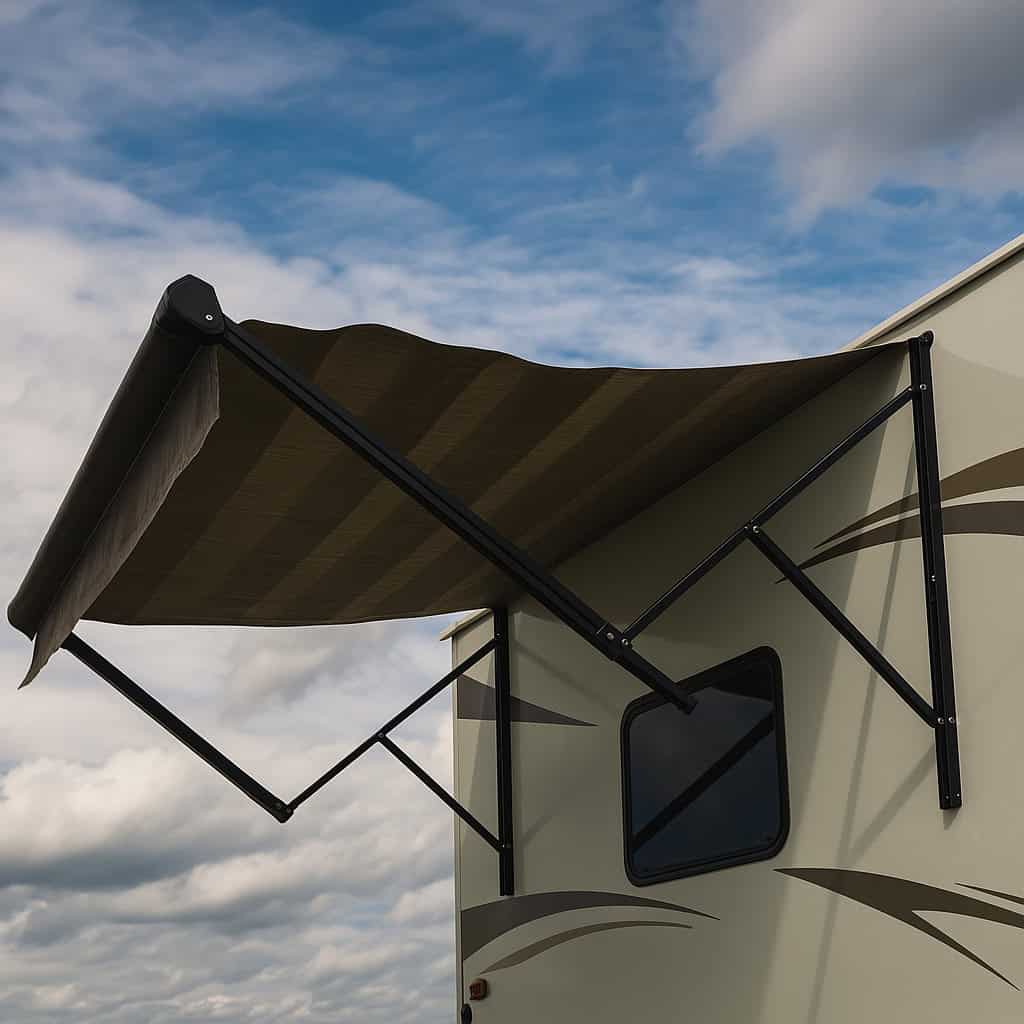
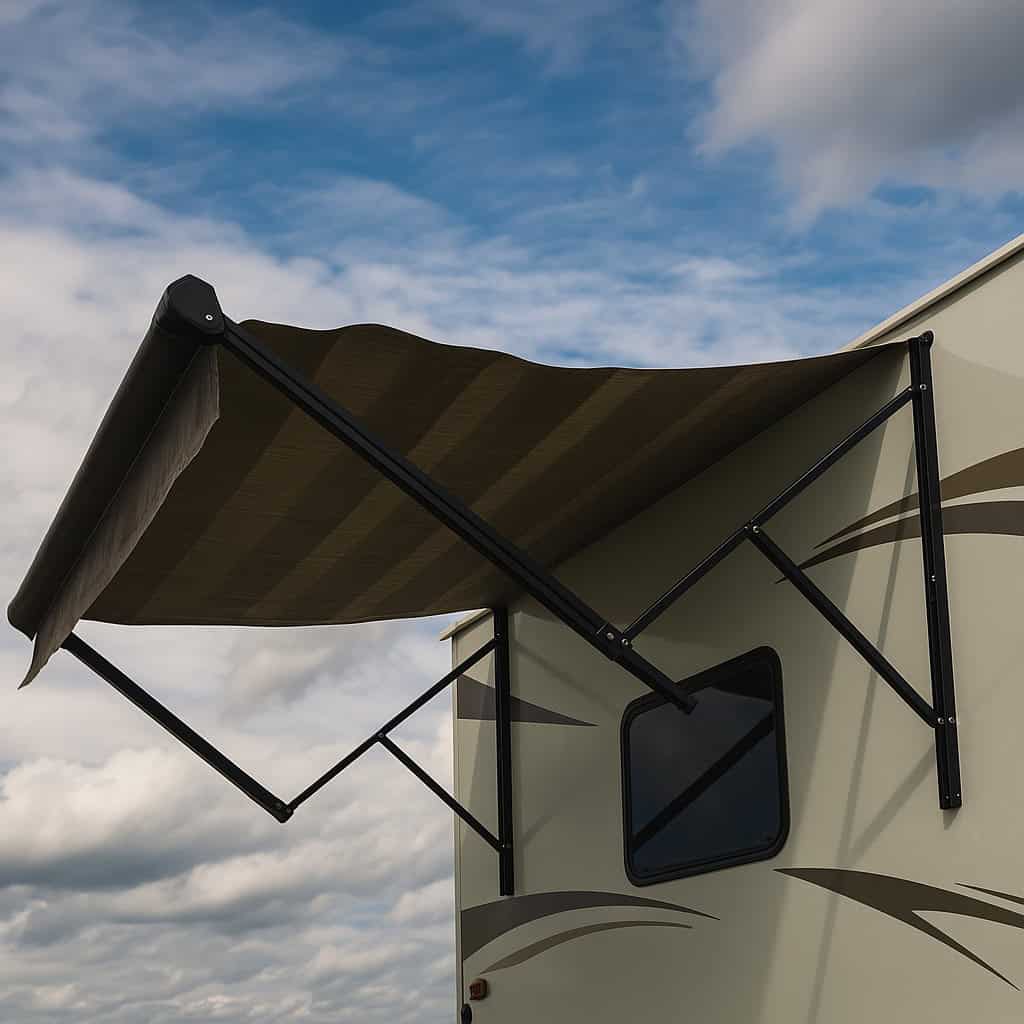
RV awnings are amazing. They give you shade, help keep your rig cool, and make the campsite feel like home. But while most campers worry about rain, the real danger might be something else:
🌬️ Wind.
That’s right—wind, not just storms or heavy rain, can seriously damage your awning. Sometimes even a strong breeze can cause problems if you’re not prepared.
Let’s look at why wind is a risk and how you can protect your awning before it’s too late.
💨 Why Wind Is So Dangerous for Awnings
Even a small wind can turn into a big problem when it hits your awning just right. Think of your awning like a giant sail—when wind gets underneath, it can:
-
Flap loudly
-
Shake your rig
-
Bend or snap support arms
-
Rip the fabric
-
Tear the entire thing off
And it doesn’t take a storm! Sometimes, a sudden wind gust on a clear day is all it takes.
⏱️ Wind Can Hit Fast
Wind doesn’t always come with warning. Many RVers have lost their awning while:
-
Taking a quick hike
-
Going to the store
-
Cooking inside the rig
-
Napping!
One gust is all it takes to do damage in seconds.
🧭 Common Windy Campsites
Watch out when camping near:
-
Beaches or open shorelines
-
Wide-open desert flats
-
Mountain passes
-
Plains with no trees or wind blocks
These spots are beautiful—but breezy!
✅ How to Protect Your Awning from Wind
1. Always Retract When Leaving
If you’re leaving camp—even just for a little—roll in the awning. It's the safest way to stop wind damage.
2. Use Awning Tie-Downs or Deflappers
Special straps or clamps help reduce movement and noise in mild wind. But don’t rely on them in heavy gusts.
3. Listen for Flapping
If your awning starts to flap or bounce, that’s a warning. It means wind is picking up—put it away.
4. Check the Weather Often
Use a weather app or check with the camp host. Wind advisories are your best heads-up.
5. Retract Before Bed
Even if the night feels calm—wind can pick up while you’re sleeping. Don’t risk it.
🛠️ What If It’s Already Damaged?
If the wind gets you before you catch it:
-
Stop the flapping if you can—don’t leave it blowing
-
Check for bent arms or torn fabric
-
Retract slowly if it still moves
-
Tape small rips until repairs can be made
-
If it won’t close, use bungee cords to secure it tight and call for help
💡 Bonus Tip: Know Your Awning Type
Different awnings work in different ways:
-
Manual awnings give you more control (and work without power)
-
Electric awnings are easy—but need power and can jam
-
Some high-end models have wind sensors and auto-retract!
No matter what kind you have, the key is to be watchful and ready.
Final Thoughts
Rain may get all the attention, but wind is the sneaky troublemaker when it comes to awnings. It’s fast, strong, and can ruin your day (and your gear) before you know it.
So be smart:
-
Keep an eye on the sky
-
Listen for flapping
-
Put it away when in doubt
Better safe than sorry—because no sunset view is worth a shredded awning!