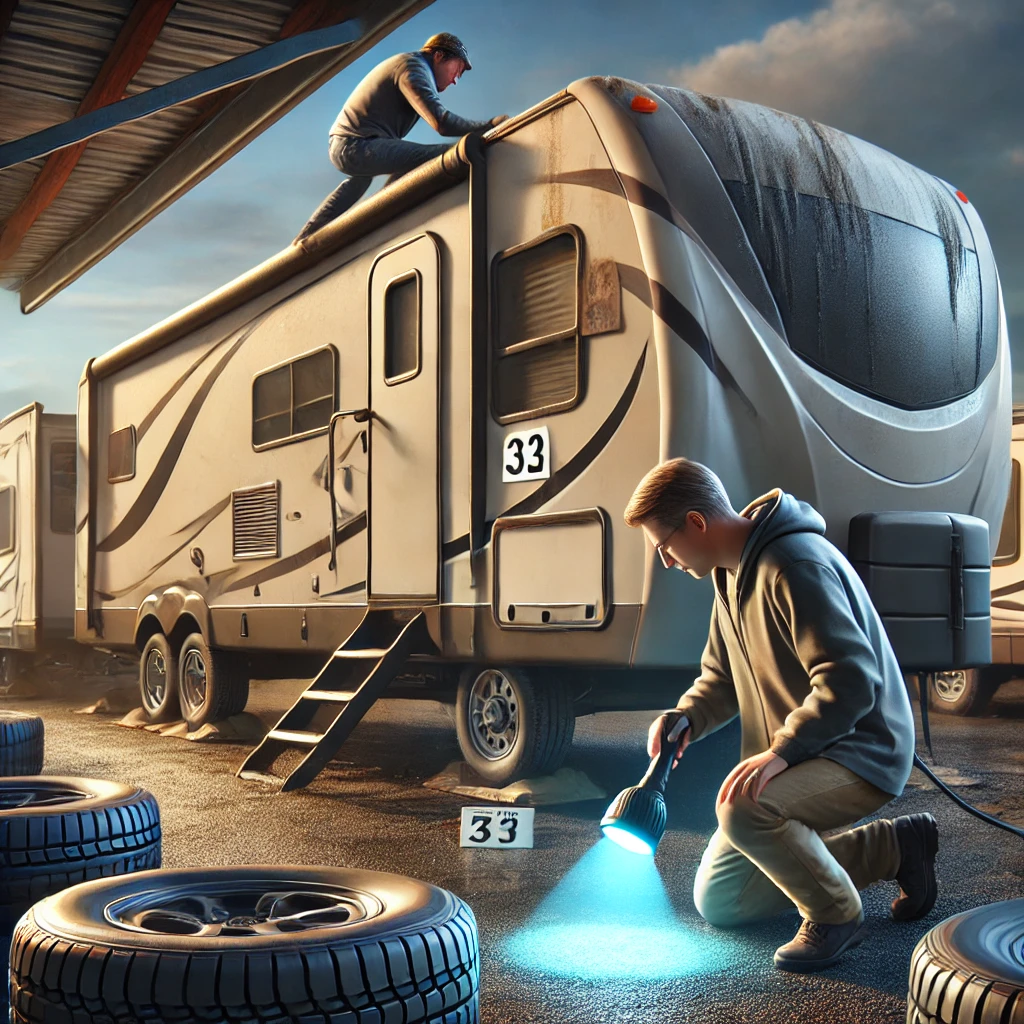
Don’t Get Stuck with a Lemon—Know What to Look For!
Buying a used RV can be a great way to save money—but only if you know what to look for. Many sellers (both private owners and dealerships) will focus on the shiny upgrades and low mileage, while conveniently glossing over some of the hidden issues that could cost you thousands in repairs.
Before you sign that bill of sale, make sure you’re not buying someone else’s problem. Here are the most common hidden problems in used RVs—and how to spot them before it’s too late! 🚐🔍
🚨 1. Water Damage (The Silent RV Killer!)
Why It’s a Problem:
Water damage is one of the most expensive and difficult issues to repair in an RV. A small leak can lead to mold, rot, and structural damage over time.
Signs of Water Damage:
✔ Soft spots in the floor, walls, or ceiling
✔ Bubbling or discoloration on walls and ceiling panels
✔ Musty smell (a sign of mold or hidden leaks)
✔ Rust on screws, hinges, or metal frames inside cabinets
✔ Warped cabinetry or peeling wallpaper
🌟 Pro Tip: Bring a moisture meter to check for hidden water damage in walls and under flooring.
💨 2. Hidden Roof Leaks
Why It’s a Problem:
Even a tiny roof leak can cause major interior damage over time. Many RV owners patch leaks instead of fully repairing them, leaving you with a temporary fix that will fail later.
How to Check for Roof Leaks:
✔ Look for cracked or missing sealant on the roof seams and vents
✔ Check inside overhead cabinets for water stains
✔ Inspect the edges of slide-outs for signs of water intrusion
✔ Look for ripples or soft spots on the ceiling
🌟 Pro Tip: If possible, spray the roof with a hose and check inside for leaks before buying.
🔌 3. Electrical System Issues
Why It’s a Problem:
Older RVs often have electrical gremlins that cause flickering lights, non-working outlets, or even dangerous wiring failures.
What to Test:
✔ Plug into shore power and test all outlets, lights, and appliances
✔ Check for loose, exposed, or DIY electrical work
✔ Test the generator (if equipped) to see if it runs smoothly
✔ Inspect the breaker panel for signs of burnt or melted wires
🌟 Pro Tip: If the RV has a solar system, make sure it’s wired properly and charging the batteries.
💧 4. Plumbing & Tank Problems
Why It’s a Problem:
A leaking pipe or malfunctioning tank can turn your RV into a soggy, smelly nightmare.
What to Inspect:
✔ Fill the freshwater tank and check for leaks under the RV
✔ Test all faucets, showerheads, and toilets for leaks or weak pressure
✔ Empty the black & gray tanks to check for odors or slow draining
✔ Look for soft flooring near the bathroom (could indicate a past toilet leak)
🌟 Pro Tip: If the RV has low water pressure, there may be clogs or damaged water lines.
🛠️ 5. Slide-Out Alignment Issues
Why It’s a Problem:
If slide-outs aren’t aligned properly, they can leak, get stuck, or cause structural damage.
How to Test Slide-Outs:
✔ Extend each slide-out fully and listen for strange noises
✔ Check for gaps or misalignment when closed
✔ Look at the seals—cracked or missing seals lead to leaks and drafts
✔ Inspect the floor under the slide-out for water damage
🌟 Pro Tip: If the slide-out struggles to move, the motor, track, or hydraulic system could be failing.
🏁 6. Soft or Rotted Subfloor
Why It’s a Problem:
A soft floor means water damage, weak supports, or rotted wood, and repairs can be expensive.
How to Check:
✔ Walk around barefoot—do you feel soft spots?
✔ Pay special attention to high-traffic areas like near the bathroom or kitchen
✔ Look under the RV for sagging or exposed plywood
🌟 Pro Tip: Soft floors can sometimes be camouflaged by thick carpets—so always test different areas!
🛞 7. Worn-Out Tires & Axle Damage
Why It’s a Problem:
Many sellers don’t replace tires, even when they’re dangerously old. Tires may look fine but can have dry rot and be prone to blowouts.
What to Check:
✔ Tire age (find the DOT code—anything older than 5 years should be replaced)
✔ Uneven wear (could indicate axle or alignment issues)
✔ Cracks in the sidewalls (a sign of dry rot)
✔ Wheel bearings—listen for noise while driving
🌟 Pro Tip: A used RV with brand new tires may have had alignment problems—inspect for uneven wear.
🔧 8. Hidden Frame & Structural Issues
Why It’s a Problem:
A bent or cracked frame means major damage—possibly from an accident or improper towing.
How to Inspect:
✔ Check underneath the RV for rust, cracks, or welding marks
✔ Look at the hitch and tow bar for signs of stress
✔ Inspect the walls for warping—a sign of a damaged frame
✔ Open and close all doors & windows—misalignment could mean frame issues
🌟 Pro Tip: If the RV leans to one side, there could be frame damage or suspension issues.
🚀 Final Thoughts: Don’t Buy a Lemon!
A shiny RV can hide a lot of problems, but knowing where to look can save you thousands in repairs. Always do a thorough inspection, and if something feels off, don’t be afraid to walk away—there are plenty of great used RVs out there!
🔥 Quick Recap: Major Hidden Problems to Check For
✔ Water Damage & Roof Leaks – Look for soft spots, bubbling, and stains.
✔ Electrical Issues – Test outlets, appliances, and the breaker panel.
✔ Plumbing & Tanks – Fill and drain tanks to check for leaks and odors.
✔ Slide-Out Problems – Extend and retract to check for misalignment.
✔ Soft or Rotted Floors – Feel for weak spots, especially near sinks and showers.
✔ Tire & Axle Wear – Check tire age, alignment, and cracks.
✔ Frame Damage – Look for rust, warping, and signs of past repairs.
🚐 Ever bought a used RV with unexpected problems? Share your experience in the comments!