Buying an RV is exciting—you imagine yourself
traveling the open road, exploring scenic destinations, and enjoying the freedom of mobile living. But before you make the leap, there’s something many first-time buyers don’t realize:
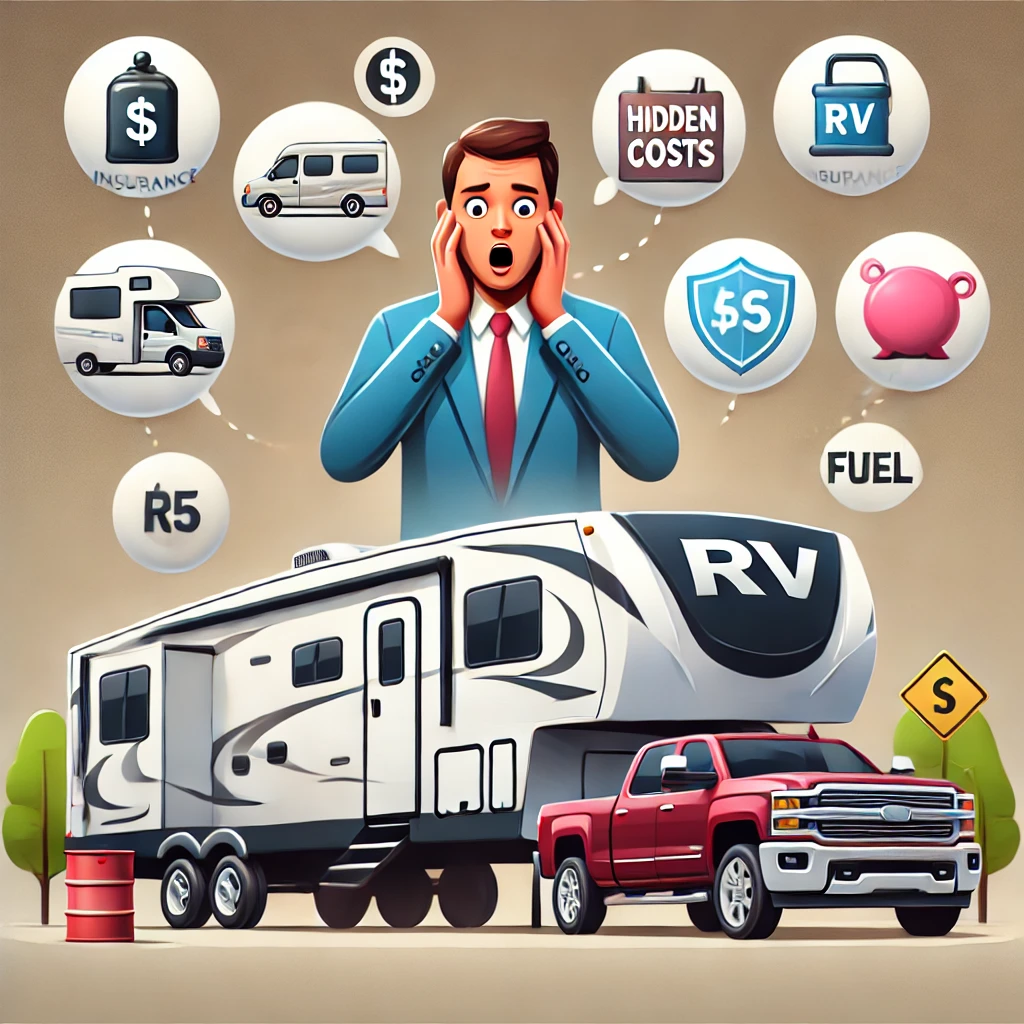
RVs come with a lot of hidden costs.
Sure, you’ve budgeted for the
RV purchase price, but what about
maintenance, insurance, unexpected repairs, and campground fees? If you’re not careful, these hidden expenses can
quickly add up and put a dent in your travel budget.
To help you prepare, here are the
hidden RV expenses first-time buyers often overlook—and how to budget for them!
1. Sales Tax, Registration & Fees 💰
The Hidden Cost:
When you buy an RV, the
sticker price isn’t the final cost. There are
sales taxes, registration fees, title fees, and dealer charges that can add
thousands of dollars to your total.
How Much?
✔ Sales tax varies by
state, ranging from
0% to 10%.
✔ Registration fees can be
hundreds of dollars per year.
✔ Some states require an
RV-specific driver’s license, which costs extra.
How to Prepare:
✔ Check your state’s
sales tax rates and RV registration costs before buying.
✔ Factor in
dealer fees if buying from a dealership.
✔ If buying used, ask if
property taxes or back fees are owed.
💡
Pro Tip: Some states (like Montana) have
no sales tax on RVs—some buyers register their RVs there to save money!
2. RV Insurance & Roadside Assistance 🚐
The Hidden Cost:
RV insurance isn’t
as cheap as car insurance—larger rigs, full-time living, or frequent travel can drive costs up. You’ll also want
RV roadside assistance, as regular towing services
won’t handle RVs.
How Much?
✔
RV Insurance: $500–$2,500+ per year (varies by RV type, coverage, and usage).
✔
Roadside Assistance: $100–$400 per year (a must-have for breakdowns and flat tires).
How to Prepare:
✔ Get insurance quotes
before you buy.
✔ Ask about
discounts for bundling with auto or home insurance.
✔ Invest in
RV-specific roadside assistance plans (AAA RV, Good Sam, Coach-Net).
💡
Pro Tip: If you plan to
live in your RV full-time, you’ll need
full-time RV insurance, which costs more than standard policies.
3. Routine Maintenance & Repairs 🔧
The Hidden Cost:
Just like a house and car combined, RVs require
constant upkeep—and repairs can get
expensive. Unlike cars, many repairs require
RV-specific mechanics, which means
higher labor costs.
How Much?
✔
Oil Changes: $100–$300 (every 5,000–10,000 miles).
✔
Tires: $250–$800
each (RVs have 4–8 tires).
✔
Roof Sealing: $500–$1,000 (every few years).
✔
Brake Replacement: $500–$2,000.
How to Prepare:
✔ Set aside
$1,000–$3,000 per year for maintenance.
✔ Learn
basic DIY RV repairs (changing fuses, resealing the roof, tire care).
✔ Get an
extended warranty or RV repair coverage.
💡
Pro Tip: Roof leaks are one of the most
expensive and common RV repairs—inspect and reseal your roof
annually to avoid costly water damage.
4. Campground Fees & Hookups 🏕️
The Hidden Cost:
Many first-time RVers assume they can park anywhere for free—but most
campgrounds charge fees, and
boondocking requires its own setup (like solar panels and large water tanks).
How Much?
✔
Private Campgrounds (with full hookups): $30–$100 per night.
✔
National & State Parks: $20–$50 per night.
✔
Boondocking (free public land): Free, but requires
solar power, generators, and extra water storage.
How to Prepare:
✔ Use
discount programs (Passport America, Thousand Trails, Harvest Hosts).
✔ Plan for a mix of
boondocking and paid campgrounds to save money.
✔ Get a
solar setup if you want to camp off-grid.
💡
Pro Tip: Some RVers
spend more on campgrounds per month than they would on rent or a mortgage!
5. Fuel Costs & Gas Mileage ⛽
The Hidden Cost:
RVs are
gas guzzlers—expect
poor fuel economy and high costs when gas prices rise.
How Much?
✔ Class A RVs:
6–10 mpg
✔ Class C RVs:
10–15 mpg
✔ Camper Vans:
15–25 mpg
✔ Diesel is often
more fuel-efficient, but costs
more per gallon.
How to Prepare:
✔ Use
gas discount programs (Open Roads, GasBuddy).
✔ Plan routes to avoid
steep grades and unnecessary detours.
✔ Travel
slowly and efficiently to conserve fuel.
💡
Pro Tip: Many RVers
spend $300–$1,000 per month on fuel alone—budget accordingly!
6. Propane, Water, and Dumping Fees 💧🔥
The Hidden Cost:
✔
Propane (for heating, cooking, and refrigerators): $30–$100 per month.
✔
Water & Dump Stations: Free to $20 per use (some campgrounds charge for water refills and sewage disposal).
How to Prepare:
✔ Use
membership programs (Love’s, Flying J) for fuel and propane discounts.
✔ Carry extra
fresh water storage for boondocking.
✔ Budget for
propane refills, especially in winter.
💡
Pro Tip: Some gas stations offer
free RV dump stations, but many charge—plan ahead to avoid surprises!
7. Storage Costs (If You’re Not Full-Time) 📦
The Hidden Cost:
If you don’t live in your RV full-time, you’ll need to
store it somewhere when not in use.
How Much?
✔
Uncovered storage: $50–$200/month
✔
Covered storage (climate-controlled): $150–$500/month
How to Prepare:
✔ If you have
space at home, check local regulations before parking your RV there.
✔ If using a storage facility, choose
one with security and weather protection.
💡
Pro Tip: Leaving an RV
uncovered in extreme heat or cold can cause
roof leaks, tire cracking, and system damage—covered storage is worth the investment!
Final Thoughts: Be Ready for the Hidden Costs!
While RVing offers
freedom and adventure, it’s not always as
cheap as it seems. Before buying, make sure you’ve
budgeted for these hidden expenses:
✔
Taxes, registration, and insurance
✔
Repairs, maintenance, and roadside assistance
✔
Campground fees and fuel costs
✔
Propane, water, and dumping fees
✔
Storage (if needed) and boondocking setup
With the right
financial planning, you can enjoy RV life
without breaking the bank!