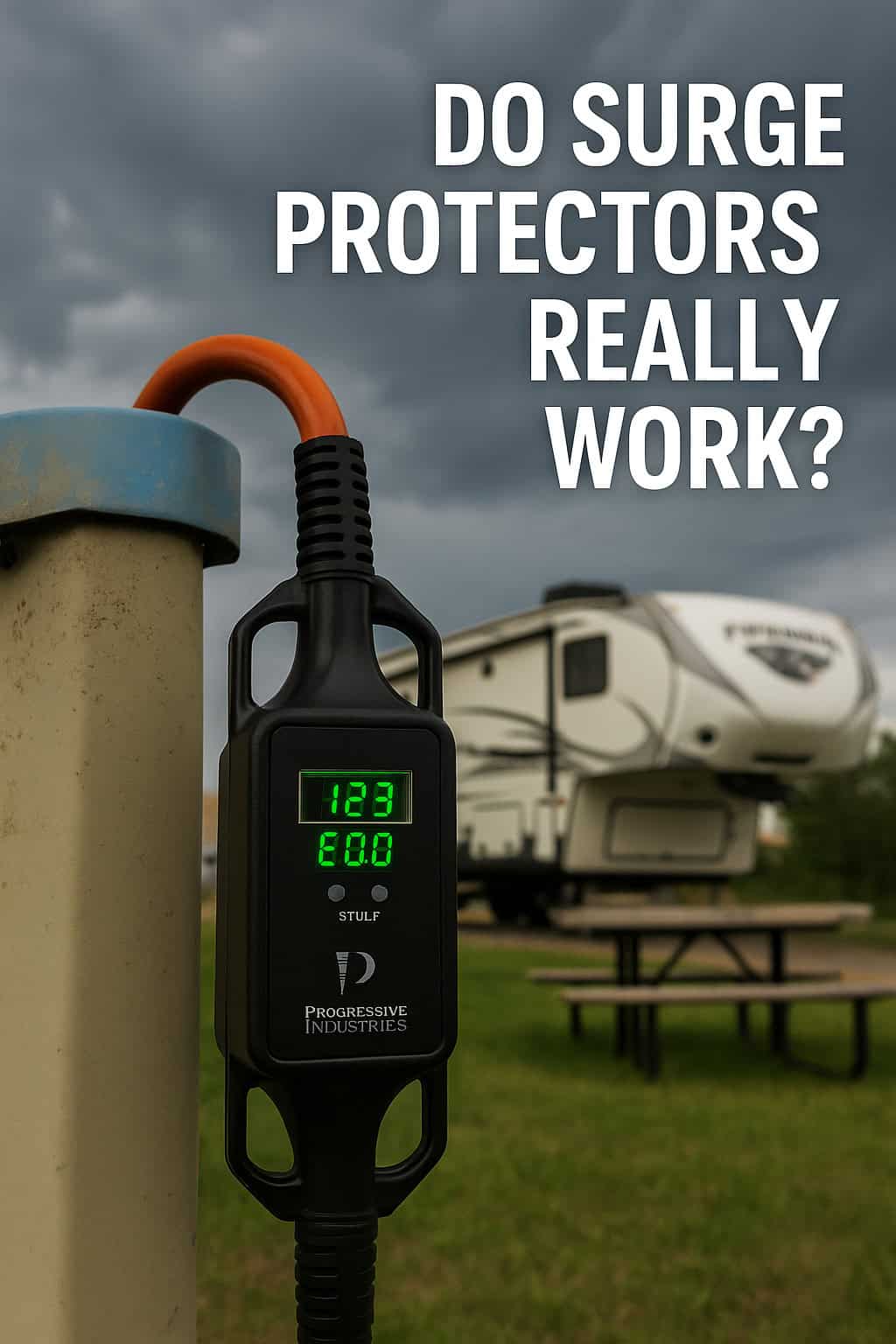
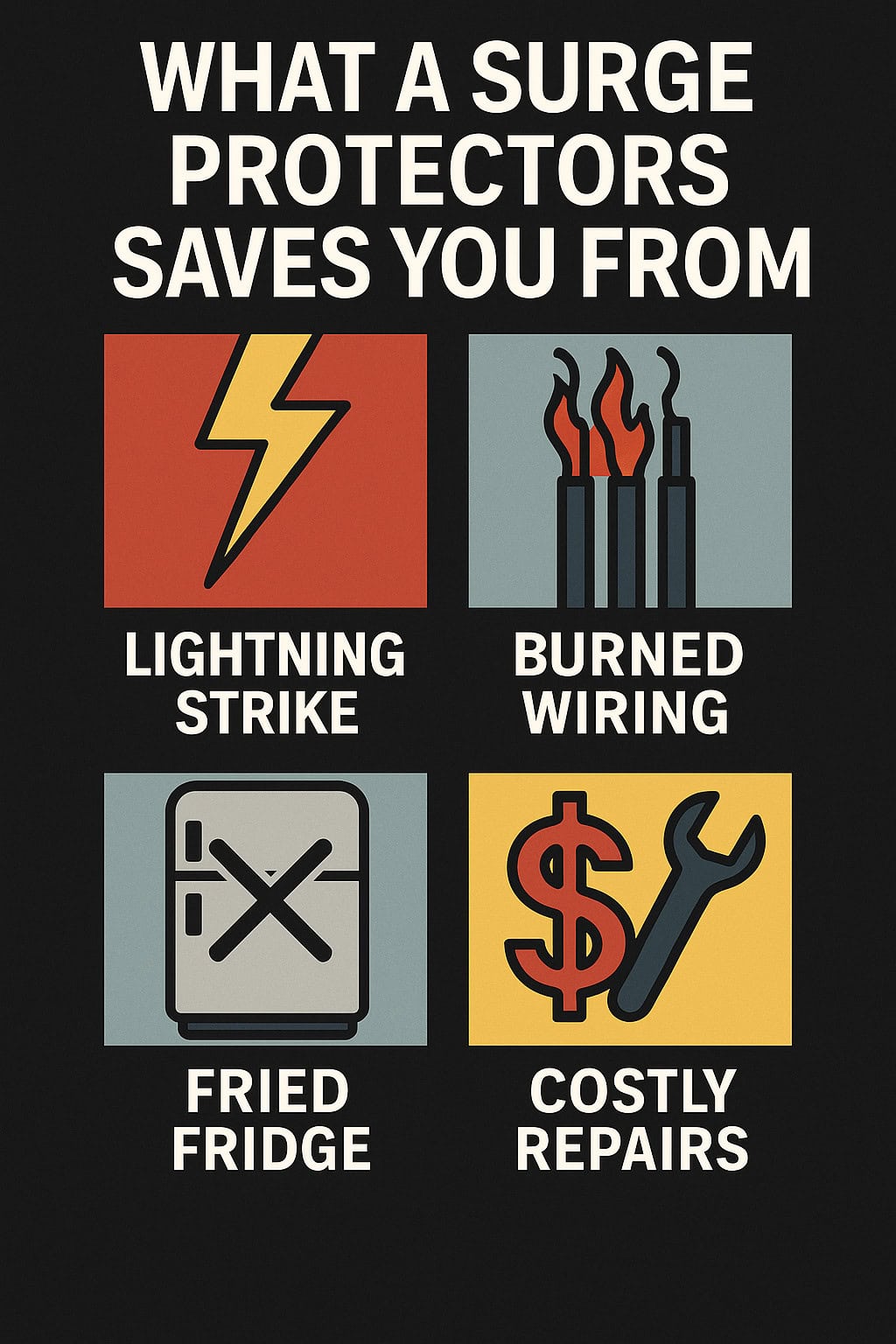
(RV power is unpredictable. Your gadgets—and wallet—are on the line.)
You’ve probably heard the advice: “Always use a surge protector when plugging in your RV.”
But how important is it really? And what happens when one fails—or you skip it altogether?
Here’s what you need to know about RV surge protection, what it actually does, and what can go very wrong without it.
⚡ What a Surge Protector Actually Does
An RV surge protector monitors the electrical current coming from the campground pedestal. If it detects a sudden voltage spike—usually from lightning strikes or power grid issues—it blocks or diverts that surge before it hits your RV’s internal wiring.
Some advanced models also protect against:
-
Low voltage (brownouts that cook your A/C)
-
Reverse polarity or miswired pedestals
-
Frequency irregularities
In short: it’s a firewall for your electronics.
😬 What Happens When You Don’t Use One?
Real-world risks:
-
Fried A/C unit ($1,000+)
-
Burned out microwave, fridge, or control board
-
Tripped breakers and melted wiring
-
Literal smoke or fire in the breaker box
Even a minor voltage fluctuation can shorten the life of your expensive RV systems.
🧨 Do Surge Protectors Ever Fail?
Yes—but here’s the twist:
-
A surge protector that “fails” usually means it took the hit for your RV and sacrificed itself
-
If it no longer works, it did its job (and saved you hundreds or thousands in repairs)
Always choose a model with indicator lights or a display so you know when it’s time to replace it.
🔍 What to Look for in a Good Surge Protector
-
Rated for your RV: 30-amp or 50-amp
-
UL-listed or ETL certified
-
Weather-resistant casing
-
Voltage display or error codes
-
Built-in EMS (Electrical Management System) if you want full protection
Final Thoughts
Your surge protector is your RV’s front-line defense against power-related chaos. It only has to save you once to be worth every penny.
🐟 Want to preview campground pedestals, hookups, and guest reviews before plugging in? Use Campground Views to know what you’re getting into—before your gear is at risk.
🔗 Follow us for more electrical tips, rig-saving gadgets, and real-world RV protection advice.