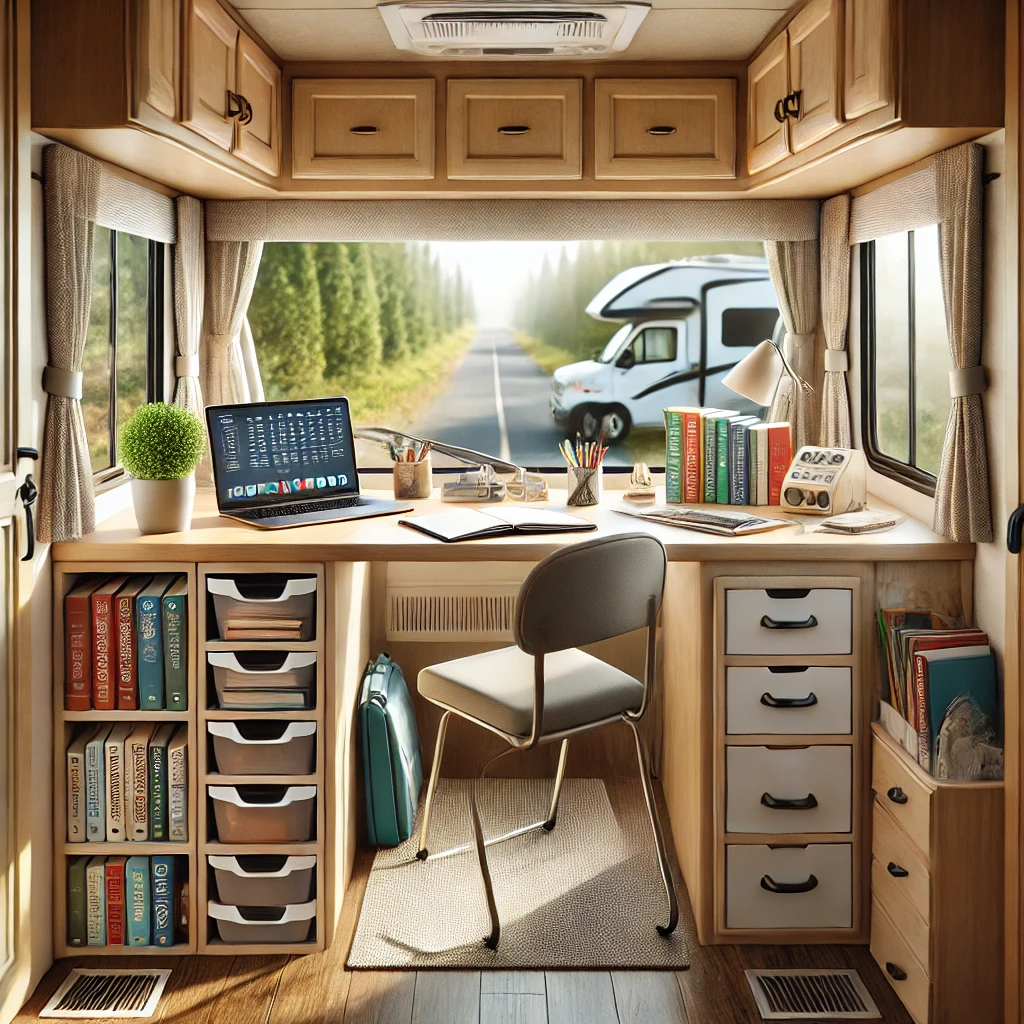
Homeschooling while living in an RV comes with incredible opportunities—traveling to historical sites, exploring nature firsthand, and learning through real-world experiences. However, keeping an
organized, functional, and distraction-free learning environment inside a small RV can be a challenge.
The key to
successful RV homeschooling is
creating a space that promotes focus, creativity, and adaptability while keeping your RV clutter-free. In this guide, we’ll cover how to
set up an efficient mobile classroom, organize supplies, and make learning on the road seamless.
1. Designating a Learning Space 🏕️📚
One of the biggest challenges of homeschooling in an RV is
limited space. Since there’s no dedicated “classroom,” it’s important to
create a flexible learning area that can be used when needed and stored away when not in use.
✔
The RV Dining Table: The most popular homeschool setup—use foldable bins to quickly store school materials when it’s time for meals.
✔
Lap Desks for Versatility: Great for learning in bed, outside, or while traveling.
✔
Foldable or Portable Desk: If you have a bunkhouse or an extra slide-out space, a compact desk can help create a more structured workspace.
✔
Outdoor Learning Zone: When the weather is nice, take lessons outside! A picnic table or folding chairs make great workstations.
💡
Pro Tip: Set up a
daily routine that includes “school time” so kids understand when it’s time to focus, no matter where they’re sitting.
2. Smart Storage Solutions for Homeschool Supplies 📦
Since space is limited in an RV, organization is
key to preventing clutter from taking over your home on wheels.
Best Ways to Store School Materials:
✔
Over-the-Door Shoe Organizers – Perfect for storing pencils, markers, flashcards, and workbooks.
✔
Collapsible Storage Bins – Keep books and supplies organized while still being easy to tuck away when not in use.
✔
Magnetic Whiteboards – Stick lesson plans or reminders on the fridge or walls without taking up counter space.
✔
Rolling Carts or Drawers – Ideal for keeping multiple subjects organized while still allowing mobility.
✔
Digital Storage & E-Books – Use tablets or e-readers to cut down on physical book storage.
💡
Pro Tip: Color-code storage bins for different subjects so kids can easily grab what they need.
3. Balancing Structure & Flexibility in a Mobile Classroom 📅
One of the greatest benefits of
RV homeschooling is the ability to
adapt learning to your surroundings—but having some structure helps kids stay on track.
Creating a Homeschool Routine:
✔
Morning Routine: Start with reading, journaling, or educational games.
✔
Dedicated School Time: Choose a block of time (morning or afternoon) when your kids focus on core subjects.
✔
Learning Breaks: Use outdoor activities, nature walks, or travel days for hands-on experiences.
✔
Nighttime Recap: Use evening storytelling or journaling to reinforce the day’s lessons.
💡
Pro Tip: Many homeschooling families follow a
four-day school week to allow for extra field trips and exploration time.
4. Using Technology to Enhance Learning While Traveling 💻
RV homeschooling doesn’t have to rely only on traditional workbooks—
online learning tools can make a huge difference in keeping lessons engaging.
✔
Educational Apps – Apps like
Khan Academy, Duolingo, Prodigy Math, and BrainPOP make learning interactive.
✔
Audiobooks & Podcasts – Perfect for
learning on the road, especially during long drives.
✔
Virtual Field Trips – Museums, zoos, and even NASA offer
free online tours.
✔
Online Co-Ops & Tutors – Join virtual homeschooling groups for
socialization and extra learning support.
💡
Pro Tip: Use
downloadable lessons and offline apps for times when
Wi-Fi is unavailable.
5. Making Learning Hands-On & Location-Based 🏔️🏛️
One of the biggest
benefits of RV homeschooling is the ability to
learn through travel. Instead of just reading about history, science, or geography, kids can
experience it firsthand.
Creative Ways to Make RV Homeschooling Interactive:
✔
Visit National Parks – Learn about ecosystems, wildlife, and conservation.
✔
Explore Historical Landmarks – Turn history lessons into real-world experiences.
✔
Hands-On Science Experiments – Conduct simple experiments outdoors with household items.
✔
Keep a Travel Journal – Have kids
write about their experiences to practice writing skills.
✔
Local Culture Studies – Visit museums, talk to locals, and try regional foods to explore different cultures.
💡
Pro Tip: Use a
travel map or a scrapbook to document places visited and lessons learned.
6. Socializing on the Road: Finding Homeschool Communities 👨👩👧👦
One concern many parents have is how to keep their kids
socialized while homeschooling on the road. Thankfully, there are
tons of ways to find other traveling families!
✔
Join Full-Time RVing Groups – Look for homeschooling families in RV Facebook groups or forums.
✔
Connect with Local Co-Ops – Some cities offer temporary homeschool meetups.
✔
Attend Homeschool-Friendly Events – Many museums, zoos, and libraries offer programs for homeschoolers.
✔
Find RV Parks with Activities – Parks with playgrounds, swimming pools, and group activities make it easier for kids to make friends.
💡
Pro Tip: Check apps like
Boondockers Welcome, Harvest Hosts, and Campendium to find family-friendly camping spots.
Final Thoughts: Homeschooling in an RV is an Adventure! 🚐
Creating a
mobile-friendly learning environment doesn’t have to be complicated. With
smart organization, the right tools, and an open mind, you can give your child a
unique, hands-on education while exploring the world.
✔
Designate a learning space that works for your family.
✔
Stay organized with smart storage solutions.
✔
Use technology to keep lessons engaging.
✔
Incorporate real-world learning through travel experiences.
✔
Connect with other families to make homeschooling more social.
Homeschooling on the road isn’t just about education—it’s about creating lifelong memories. So hit the road, embrace the adventure, and watch your child thrive in a one-of-a-kind learning environment!