RV fridges are picky. Unlike the one in your house, they don’t like being off-kilter. In fact, being even a couple degrees off level can ruin their performance—or even damage them permanently.
Let’s break down why your RV fridge needs to be level, how to check it, and what can happen if you ignore this surprisingly important detail.
❄️ How an RV Fridge Works (The Short Version)
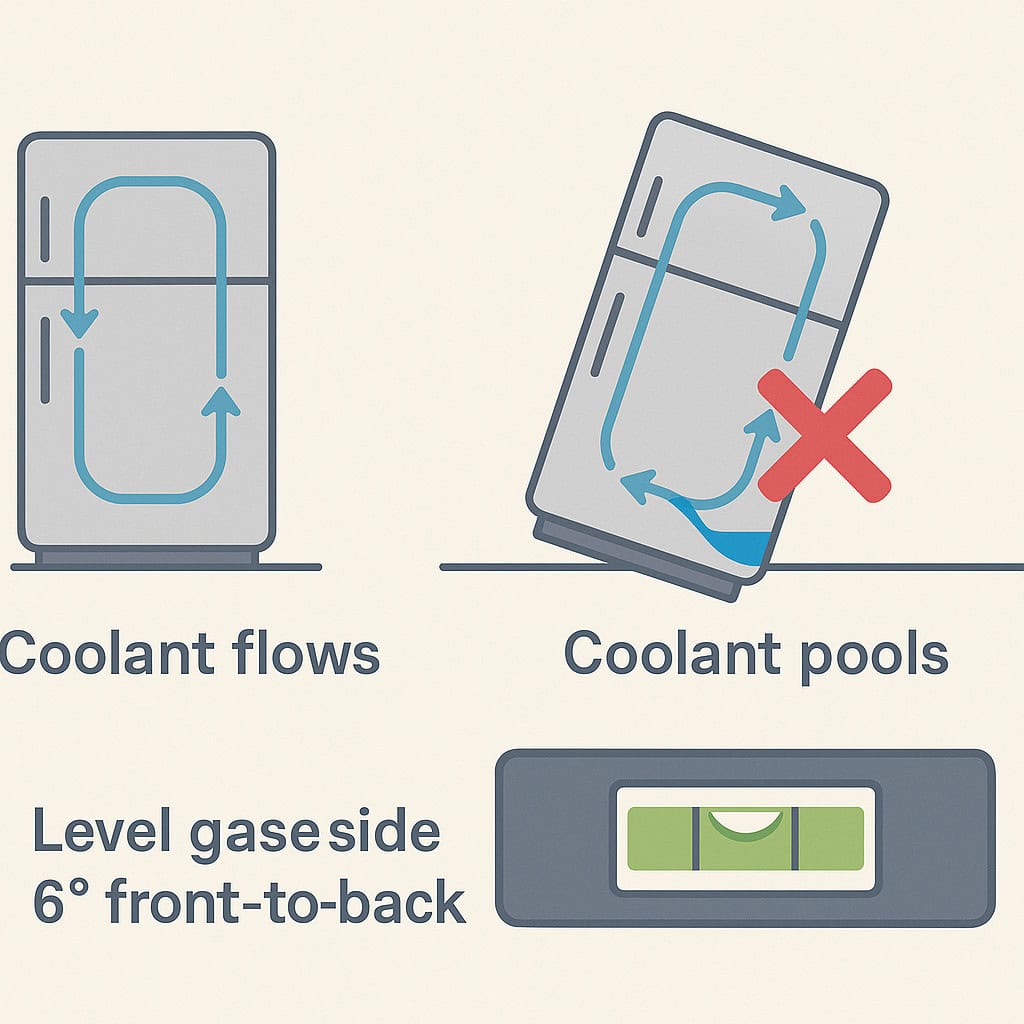
Most RV fridges use absorption cooling—a process that relies on heat, gravity, and a chemical mix of ammonia, hydrogen, and water cycling through tubes.
When your fridge isn’t level, that cycle gets thrown off. Liquid pools in places it shouldn’t, and heat can’t move the fluid properly.
🚫 What Happens If It’s Not Level
-
Cooling gets spotty (warm milk, anyone?)
-
Ammonia can crystallize, blocking the coils
-
The cooling unit can overheat and fail permanently
The worst part? You may not notice the damage until the fridge stops cooling altogether—and by then, it’s too late.
🧭 How to Know If It’s Level Enough
Here’s the general rule:
-
Within 3 degrees side to side
-
Within 6 degrees front to back
You don’t need lab precision—but a $5 bubble level is your fridge’s best friend.
Pro tip: Check the level inside the fridge—not just the RV floor. Some rigs slope naturally and still pass the eye test.
🛠 Quick Fixes If You’re Off-Level
-
Use leveling blocks under tires
-
Use a tongue jack (on trailers) or auto-level system (on motorhomes)
-
Try parking on more even terrain if possible
And if you're boondocking or in a weirdly sloped campsite? Run your fridge on propane only when level—switch it off if you're severely off-balance.
Final Thoughts
Keeping your RV fridge level is one of those little habits that makes a big difference. It protects your food, your wallet, and your cooling system from costly damage.
🐟 Want to avoid awkward slopes and fridge disasters? Use Campground Views to preview your site and make sure it’s level before you roll in.
🔗 Follow us for more quick RV tips, setup hacks, and road-smart know-how.