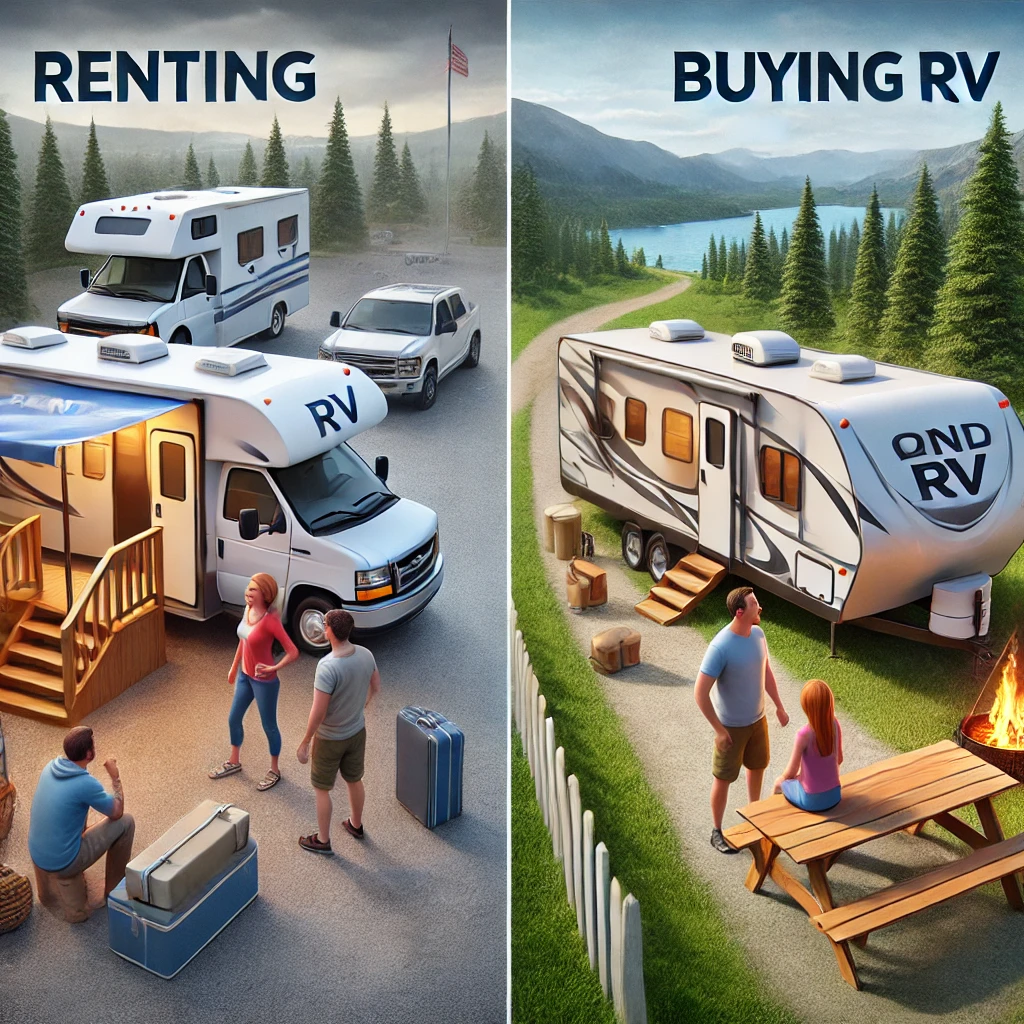
Owning an RV sounds like the ultimate freedom—the open road, your home on wheels, and endless adventures. But is it the smartest financial move?
For some, buying an RV is a long-term investment in a lifestyle they love. For others, renting allows them to experience the RV life without the commitment. So how do you know which is the right choice for you?
Let’s break it down so you can make the best financial decision based on your travel style, budget, and long-term goals.
1. Upfront Costs: Renting vs. Buying
The first major difference is how much you pay upfront.
Buying an RV
- New RVs cost anywhere from $50,000 to $300,000+ (motorhomes, fifth wheels, travel trailers, etc.).
- Used RVs can range from $10,000 to $100,000, depending on the type and condition.
- Expect a down payment of 10-20% if financing.
- Additional upfront costs: registration, insurance, taxes, and accessories.
Renting an RV
- Rental rates typically range from $100 to $300 per night for a standard RV.
- Luxury motorhomes can cost $300-$500 per night.
- Many rental platforms, like Outdoorsy or RVshare, charge service fees and deposits.
💡 Key Takeaway: If you only plan to RV a few times a year, renting is the cheaper option upfront. If you plan to travel often, buying may be more cost-effective long-term.
2. Cost of Ownership vs. Renting Long-Term
Many first-time RV buyers focus only on the sticker price, but owning an RV comes with ongoing expenses.
Owning an RV: Ongoing Costs
- Insurance – $500-$2,000 per year.
- Storage fees – $50-$250 per month (if you can’t park it at home).
- Maintenance & repairs – $1,000-$3,000 per year (more for older RVs).
- Depreciation – Most RVs lose 30-40% of their value in the first five years.
Renting an RV: Costs Over Time
- If you rent for 10 days per year at $200 per night, you’ll spend $2,000 annually—far less than owning.
- No storage, maintenance, or depreciation worries.
- You can choose different types of RVs for different trips, avoiding commitment.
💡 Key Takeaway: If you RV frequently (several months per year), buying makes sense. If you only travel occasionally, renting eliminates the financial burden of ownership.
3. How Often Do You Travel?
Ask yourself: How often do you really plan to use an RV?
✔ Buy an RV if you:
- Plan to travel at least 3-6 months per year (full-time or extended trips).
- Want to make your RV a long-term home or retirement lifestyle.
- Enjoy the idea of customizing and maintaining your own rig.
✔ Rent an RV if you:
- Only take a few trips per year (weekends, summer road trips, special vacations).
- Want to try different types of RVs before committing to a purchase.
- Prefer not to deal with insurance, maintenance, and storage.
💡 Key Takeaway: If you’re new to RVing, try renting first before deciding if ownership is right for you.
4. Travel Flexibility & Commitment
One of the biggest perks of renting an RV is flexibility.
✔ Renting allows you to:
- Pick the right RV for each trip (small camper for solo travel, large RV for family trips).
- Travel without worrying about upkeep when you’re not using it.
- Test out the RV lifestyle without a major financial commitment.
✔ Owning an RV gives you:
- The ability to travel whenever you want without rental restrictions.
- A home-on-wheels that’s set up exactly how you like it.
- Long-term cost savings if you travel frequently.
💡 Key Takeaway: If you want full-time flexibility, ownership is ideal. If you prefer spontaneous trips, renting may be the better option.
5. The Hidden Cost: RV Depreciation
Unlike houses, RVs do not appreciate in value—they lose value quickly.
- A new RV loses 20% of its value the moment you drive it off the lot.
- By year five, your RV may be worth 50% of what you paid.
- High-end RVs retain value slightly better, but all vehicles depreciate.
💡 Key Takeaway: If you’re unsure about long-term RVing, renting avoids depreciation losses. If you buy, consider a high-quality used RV to minimize depreciation.
Final Verdict: Should You Rent or Buy an RV?
✔ BUY if you:
- Plan to RV at least 3-6 months per year.
- Want a customized, personal space.
- Can handle the maintenance and ownership costs.
- See it as a lifestyle, not just an occasional trip.
✔ RENT if you:
- Travel a few times a year and want to avoid storage, insurance, and depreciation.
- Prefer different RVs for different trips.
- Want to try out the RV lifestyle first before committing.