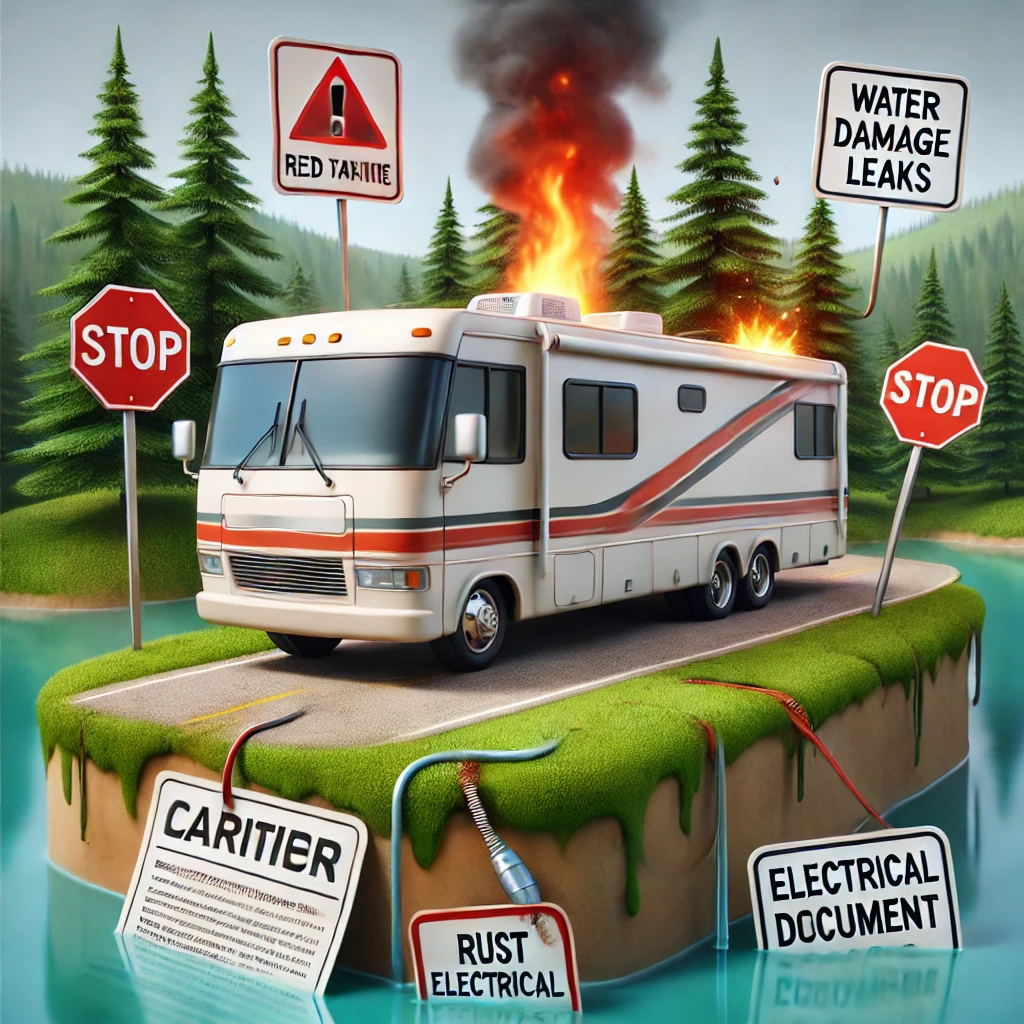
Buying a used RV can be a great way to save money and get on the road without the hefty price tag of a brand-new model. But not all used RVs are created equal—some come with hidden problems that can turn your dream adventure into a costly nightmare.
Before you hand over your hard-earned cash, here are the biggest red flags to watch for when shopping for a used RV.
1. Water Damage (The Silent Killer of RVs)
Water damage is one of the most expensive and problematic issues in used RVs. Even a small leak can lead to rot, mold, and structural failure.
🔎 What to check:
- Look for stains, soft spots, or bubbling on walls, ceilings, and floors.
- Check around windows, vents, skylights, and seams for discoloration or moisture.
- Inspect inside cabinets, under sinks, and behind cushions for dampness or mildew smells.
🚩 Red flag: If you press on the walls or floor and it feels soft, walk away—this could be a sign of extensive water damage.
2. A Bad Smell (Trust Your Nose!)
That "RV smell" might be more than just an old camper—it could indicate mold, mildew, or sewage problems.
🔎 What to check:
- If the RV smells musty, it could have hidden mold from leaks.
- A strong sewage smell might mean black tank or plumbing issues.
- Chemical or fuel-like odors could signal propane leaks or engine trouble.
🚩 Red flag: If the seller tries to mask odors with air fresheners, be extra cautious.
3. Signs of Rodents or Pests
Mice, squirrels, and insects love making their homes in RVs—especially those that have been sitting for a while.
🔎 What to check:
- Look for chewed wires, insulation, or plastic under the hood or in storage compartments.
- Check for droppings or nesting materials in hidden corners.
- Inspect the underside of the RV for holes or gaps where pests could enter.
🚩 Red flag: If the RV has been parked in a field or barn for months, it may have some unwanted guests.
4. Rust and Frame Damage
An RV’s frame is its foundation—if it’s rusted or damaged, the entire structure could be at risk.
🔎 What to check:
- Inspect the undercarriage and chassis for excessive rust, especially near welds and joints.
- Look inside storage compartments and wheel wells for corrosion.
- Check the hitch or towing components for cracks or signs of wear.
🚩 Red flag: Surface rust is normal, but deep corrosion or holes in the frame can be a dealbreaker.
5. Slide-Out and Roof Issues
Slide-outs are great for extra space, but they’re also one of the most common failure points in older RVs.
🔎 What to check:
- Test the slide-outs multiple times to see if they extend and retract smoothly.
- Look for misalignment, gaps, or sticking when moving in and out.
- Inspect the roof for cracks, peeling sealant, or sagging—these could mean water damage or structural issues.
🚩 Red flag: If a slide-out is stuck or feels wobbly, repairs could be expensive.
6. Electrical and Plumbing Problems
Faulty electrical systems and leaky pipes can turn into costly repairs fast.
🔎 What to check:
- Flip every light switch, appliance, and outlet to see if they work.
- Test the water pump, faucets, and toilet for leaks or weak pressure.
- Look at the battery and wiring for corrosion or exposed wires.
🚩 Red flag: If the RV has dimming lights, flickering power, or water stains around pipes, be cautious.
7. A Mysterious or Missing Title
If the seller doesn’t have a clean, clear title, you could be walking into legal trouble.
🔎 What to check:
- Make sure the VIN number on the RV matches the title.
- Avoid RVs with salvage titles unless you’re comfortable with a major project.
- Ask if the RV has any unpaid loans, liens, or past accidents.
🚩 Red flag: If the seller makes excuses about the title or wants to sell with a "bill of sale only," think twice.
8. A Rushed or Pushy Seller
A good seller will let you take your time inspecting the RV—a bad seller will rush you into buying it.
🔎 What to check:
- If the seller won’t let you get an inspection, that’s a major red flag.
- If the RV is priced way below market value, be skeptical.
- If they say, "I have another buyer interested, so decide now!", don’t let them pressure you.
🚩 Red flag: If something feels off, trust your gut. A great deal shouldn’t feel like a scam.
Final Thoughts
Buying a used RV can be a fantastic investment—but only if you know what to look for. By taking the time to inspect carefully, ask questions, and avoid these red flags, you’ll increase your chances of finding a great RV that’s ready for adventure—without surprise headaches.
🚐 Ready to find the perfect RV? Take your time, do your research, and happy camping!